
Topzle Topzle

Taiwan

Updated: Wikipedia source
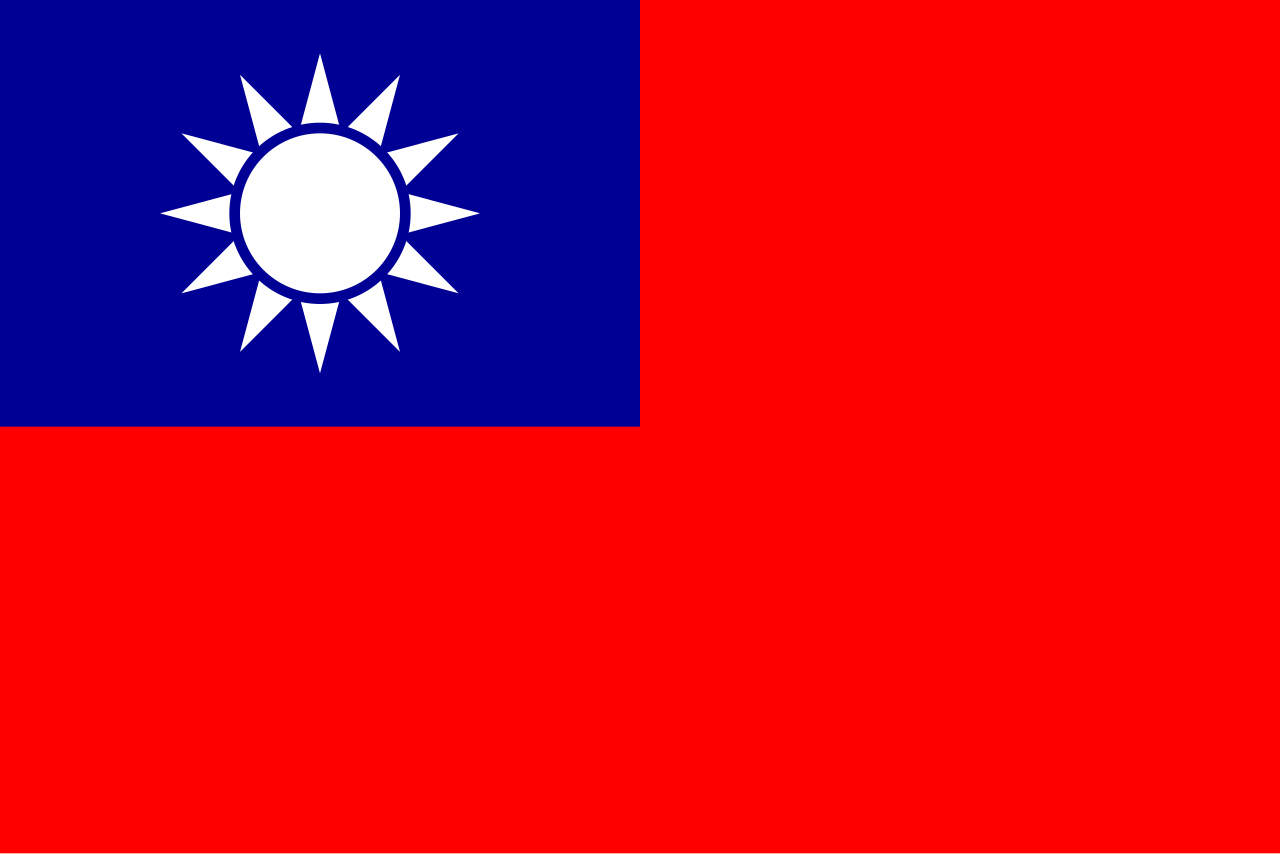
Taiwan

Taiwan, officially the Republic of China (ROC), is a country in East Asia. The main island of Taiwan, also known as Formosa, lies between the East and South China Seas in the northwestern Pacific Ocean, with the People's Republic of China (PRC) to the northwest, Japan to the northeast, and the Philippines to the south. It has an area of 35,808 square kilometers (13,826 square miles), with mountain ranges dominating the eastern two-thirds and plains in the western third, where its highly urbanized population is concentrated. The combined territories under ROC control consist of 168 islands in total covering 36,193 square kilometers (13,974 square miles). The largest metropolitan area is formed by Taipei (the capital), New Taipei City, and Keelung. With around 23 million inhabitants, Taiwan is among the most densely populated countries. Taiwan has been settled for at least 25,000 years. Ancestors of Taiwanese indigenous peoples settled the island around 6,000 years ago. In the 17th century, large-scale Han Chinese immigration began under Dutch colonial rule and continued under the Kingdom of Tungning, the first predominantly Han Chinese state in Taiwanese history. The island was annexed in 1683 by the Qing dynasty and ceded to the Empire of Japan in 1895. The Republic of China, which had overthrown the Qing in 1912 under the leadership of Sun Yat-sen, assumed control following the surrender of Japan in World War II. With the loss of mainland China to the Communists in the Chinese Civil War, the government of the Republic of China moved to Taiwan in 1949 under the Kuomintang (KMT). From the early 1960s, Taiwan saw rapid economic growth and industrialization known as the "Taiwan Miracle". In the late 1980s and early 1990s, the ROC transitioned from a one-party state under martial law to a multi-party democracy, with democratically elected presidents beginning in 1996. Taiwan's export-oriented economy is the 21st-largest in the world by nominal GDP and the 20th-largest by PPP measures, with a focus on steel, machinery, electronics, and chemicals manufacturing. Taiwan is a developed country. It is ranked highly in terms of civil liberties, healthcare, and human development. The political and international status of Taiwan is contentious. Despite being a founding member, the ROC no longer represents China as a member of the United Nations after UN members voted in 1971 to recognize the PRC instead. The ROC maintained its claim to be the sole legitimate representative of China and its territory until 1991, when it ceased to regard the Chinese Communist Party as a rebellious group and acknowledged its control over mainland China. Taiwan is claimed by the PRC, which refuses to establish diplomatic relations with countries that recognize the ROC. Taiwan maintains official diplomatic relations with 11 out of 193 UN member states and the Holy See. Many others maintain unofficial diplomatic ties through representative offices and institutions that function as de facto embassies and consulates. International organizations in which the PRC participates either refuse to grant membership to Taiwan or allow it to participate on a non-state basis. Domestically, the major political contention is between the Pan-Blue Coalition, which favors eventual Chinese unification under the ROC and promoting a pan-Chinese identity, contrasted with the Pan-Green Coalition, which favors eventual Taiwan independence and promoting a Taiwanese identity; in the 21st century, both sides have moderated their positions to broaden their appeal.

Infobox

Capital
Taipei 25°04′N 121°31′E / 25 °N 121 °E / 25 ; 121
Largest city
New Taipei City
Official languages
Standard Chinese
Official script
Traditional Chinese
National languages
Mandarin Hokkien Hakka Formosan Matsu Wuqiu Taiwan Sign Language
Ethnic groups (2024)
95% Han 2 % Indigenous 2 % Others
Religion (2023)
28% Buddhism 27% No religion 24% Taoism 7% Christianity 13% Others
Demonym
Taiwanese
Government
Unitary semi-presidential republic
• President
Lai Ching-te
• Vice President
Hsiao Bi-khim
• Executive Yuan President / Premier
Cho Jung-tai
• Legislative Yuan President
Han Kuo-yu
• Judicial Yuan President
Shieh Ming-yan (acting)
Legislature
Legislative Yuan
• Dutch Formosa
1624
• Kingdom of Tungning
1 February 1662
• Qing rule
1683
• Japanese rule
17 April 1895
• ROC rule
25 October 1945
• Retreat of ROC to Taiwan
7 December 1949
• Total
$976 billion (21st)
• December 2025 estimate
23,299,132 (59th)
• 2020 census
23,829,897
• Density
644/km2 (1,668 /sq mi) (17th)
GDP (PPP)
2026 estimate
• Per capita
$42,103 (30th)
GDP (nominal)
2026 estimate
Gini (2022)
34 medium inequality
HDI (2023)
0 very high (21st)
Currency
New Taiwan dollar (NT$) (TWD)
Time zone
UTC 8 (National Standard Time)
ISO 3166 code
TW
Internet TLD
tw, .台灣, .台湾

Tables

Overview of administrative divisions of the Republic of China · Government and politics › Administrative divisions
Free area
Free area
Republic of China
Free area
Republic of China
Mainland area
Special municipalities
Republic of China
Special municipalities
Republic of China
Provinces
Republic of China
Not administered
Counties
Counties
Republic of China
Counties
Republic of China
Autonomous municipalities
Districts
Districts
Republic of China
Districts
Republic of China
Mountain indigenous districts
Republic of China
County- administered cities
Republic of China
Townships
Republic of China
Districts
Villages
Villages
Republic of China
Villages
Neighborhoods
Neighborhoods
Republic of China
Neighborhoods
Republic of China
Taipei New Taipei Keelung Taoyuan Hsinchu County Hsinchu Miaoli Taichung Changhua Penghu Nantou Yunlin Chiayi County Chiayi Tainan Kaohsiung Pingtung Yilan Hualien Taitung Taiwan Province Kinmen Lienchiang (Matsu) Fuchien Province Taiwan Strait South China Sea East China Sea Pescadores Channel Bashi Channel Philippine Sea (Pacific Ocean)
Free area
Mainland area
Special municipalities
Provinces
Not administered
Counties
Autonomous municipalities
Districts
Mountain indigenous districts
County- administered cities
Townships
Districts
Villages
Neighborhoods

References

  1. Has an elected executive and an elected legislative council.
  2. Has an appointed district administrator for managing local affairs and carrying out tasks commissioned by superior agenc
  3. Has an elected village administrator for managing local affairs and carrying out tasks commissioned by superior agency.
  4. See here for other local languages
  5. In October 2002, the ROC recognized Mongolia as independent and began excluding it from its official maps.
  6. Taipei is the official seat of government of the Republic of China although the Constitution of the Republic of China do
  7. Mandarin as the standard variety of Chinese Vernacular Chinese (used in most occasions) Classical Chinese (used in form
  8. A national language in Taiwan is legally defined as "a natural language used by an original people group of Taiwan and t
  9. Not designated but meets legal definition.
  10. Colloquially known as "Taiwanese", it is considered a variety of Hokkien.
  11. Mixed indigenous-Han ancestry is included in the figure for Han.
  12. While the tricameral parliament continues to exist de jure, the National Assembly (electoral college) was de facto suspe
  13. The HDI annual report compiled by the UNDP does not include Taiwan because it is no longer a UN member state, and is nei
  14. There are four contemporary geopolitical definitions of the extent of "Taiwan": The common name referring to the state,
  15. Bellwood's definition: "Island Southeast Asia includes Taiwan, the Philippines, Brunei and the Sarawak and Sabah provinc
  16. Robert Blust: "The major western island groups include the great Indonesian, or Malay Archipelago, to its north the smal
  17. Despite the conventional definition to include Taiwan as part of East Asia, there is some variability as to whether Taiw
  18. According to official data from Executive Yuan and local governments of Taiwan, Taiwan Area consists of total 168 natura
  19. The HDI annual report compiled by the UNDP does not include Taiwan because it is no longer a UN member state, and is nei
  20. Although this is the present meaning of guó, in Old Chinese (when its pronunciation was something like /*qʷˤək/) it mean
Image
Source:
Tip: Wheel or +/− to zoom, drag to pan, Esc to close.