
Topzle Topzle

Penny (United States coin)

Updated: Wikipedia source
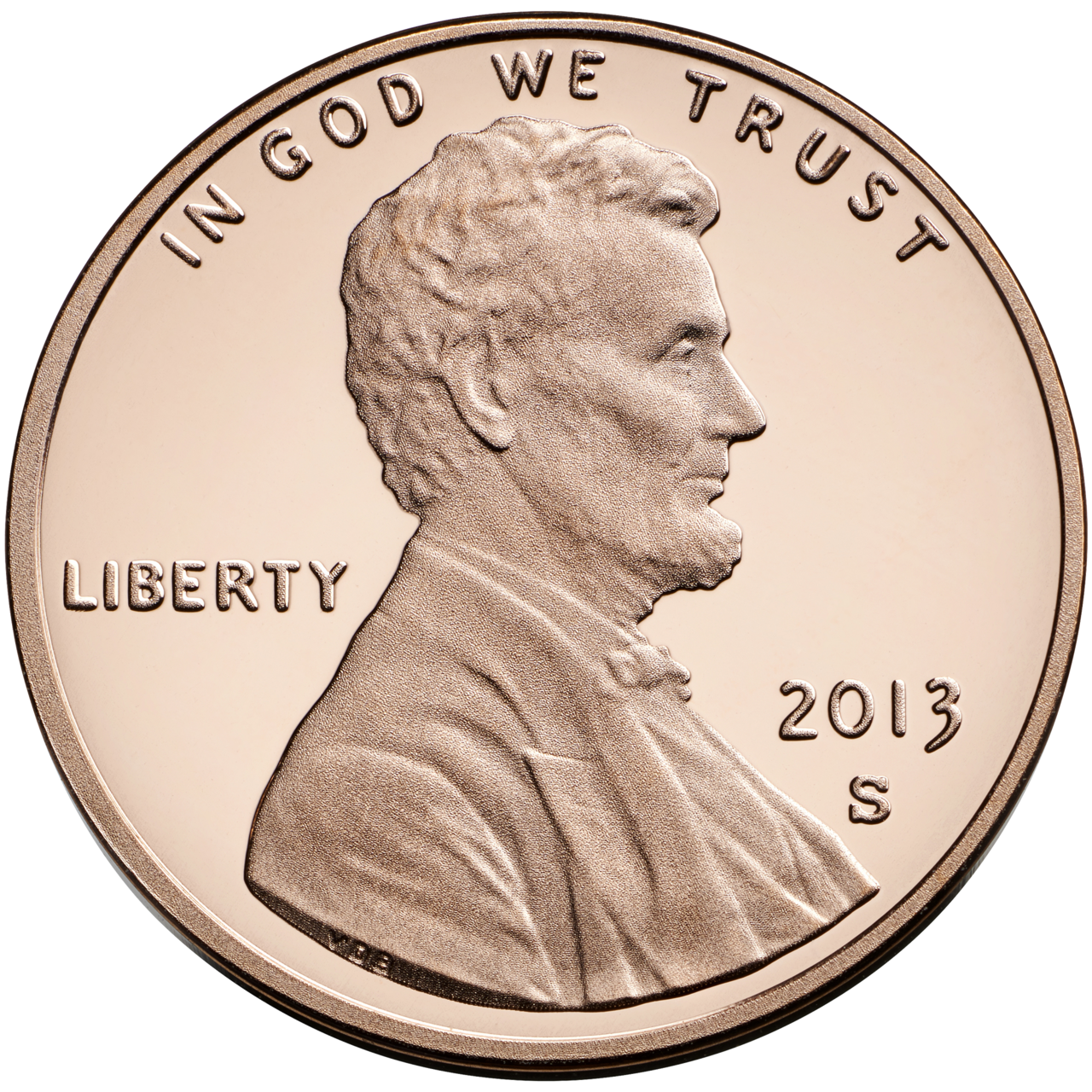
Penny (United States coin)

The penny, officially the cent, is a coin in the United States representing one-hundredth of a dollar. It has been the lowest face-value physical unit of U . currency since the abolition of the half-cent in 1857. Introduced in 1793, it was produced for circulation until 2025 and remains legal tender in the United States. The United States Mint's official name for the coin is "cent" and the U . Treasury's official name is "one cent piece". The colloquial term penny derives from the British coin of the same name, which occupies a similar place in the British system. Pennies is the plural form, not to be confused with pence, which refers to the unit of currency. The first U . cent was produced in 1787, and the cent has been issued primarily as a copper or copper-plated coin throughout its history. In 1792, Congress established the U . Mint, which began producing coins. In the same year, the Coinage Act of 1792 mandated that the penny be valued at one hundredth part of a dollar and contain precisely eleven penny-weights of copper. In March of 1793, the newly established Mint in Philadelphia distributed the first set of circulating U . currency – 11,178 copper cents. The penny was issued in its current form as the Lincoln cent, with its obverse featuring the profile of President Abraham Lincoln since 1909, the centennial of his birth. From 1959 (the sesquicentennial of Lincoln's birth) to 2008, the reverse featured the Lincoln Memorial. Four different reverse designs in 2009 honored Lincoln's 200th birthday and a new, "permanent" reverse – the Union Shield – was introduced in 2010. The coin is 0 inches (19 mm) in diameter and 0 inches (1 mm) in thickness. The current copper-plated zinc cent issued since 1982 weighs 2 grams, while the previous 95% copper cent still found in circulation weighed 3 g. In the early 2010s, the price of metal used to make pennies rose to a noticeable cost to the Mint which peaked at more than 2¢, a negative seigniorage, for the 1¢ face-value coin. This pushed the Mint to again look for alternative metals for the coin. Due to inflation, a single penny has lost virtually all its purchasing power. The coin was viewed as a burden to businesses, banks, government (especially mints) and the public in general; one survey found that two percent of Americans throw pennies in the trash. Debate mounted over eliminating the coin, which can only be done through an act of Congress. In November 2025, the Mint suspended the production of pennies for circulation, largely due to cost. The penny continues to circulate and remains legal tender, and is still minted for collectors.

Infobox

Value
0 U . Dollar
Mass
(1982–present) 2 g (0 troy oz)
Diameter
19 mm (0 in)
Thickness
1 mm (0 in)
Edge
Plain
Composition
(1982–present) copper-plated zinc 97 % Zn, 2 % Cu
Years of minting
1793–present (after 2025 produced for collectors only)
Design
Union Shield
Designer
Lyndall Bass
Design date
2010–present

Tables

· History of composition
1793–1795
1793–1795
Years
1793–1795
Material
~100% copper
Weight (grains)
208 gr
Weight (grams)
13 g
1795–1857
1795–1857
Years
1795–1857
Material
~100% copper
Weight (grains)
168 gr
Weight (grams)
10 g
1856–1864
1856–1864
Years
1856–1864
Material
88% copper, 12% nickel (also known as NS-12)
Weight (grains)
72 gr
Weight (grams)
4 g
1864–1942
1864–1942
Years
1864–1942
Material
bronze (95% copper, 5% tin and zinc)
Weight (grains)
48 gr
Weight (grams)
3 g
1943
1943
Years
1943
Material
zinc-coated steel (also known as 1943 steel cent)
Weight (grains)
42 gr
Weight (grams)
2 g
1944–1946
1944–1946
Years
1944–1946
Material
gilding metal (95% copper, 5% zinc)
Weight (grains)
48 gr
Weight (grams)
3 g
1947–1962
1947–1962
Years
1947–1962
Material
bronze (95% copper, 5% tin and zinc)
Weight (grains)
48 gr
Weight (grams)
3 g
1962 – September 1982
Years
1962 – September 1982
Material
gilding metal (95% copper, 5% zinc)
Weight (grains)
48 gr
Weight (grams)
3 g
October 1982 – present
Years
October 1982 – present
Material
copper-plated zinc (97 % zinc, 2 % copper)
Weight (grains)
38 gr
Weight (grams)
2 g
Years
Material
Weight (grains)
Weight (grams)
1793–1795
~100% copper
208 gr
13 g
1795–1857
~100% copper
168 gr
10 g
1856–1864
88% copper, 12% nickel (also known as NS-12)
72 gr
4 g
1864–1942
bronze (95% copper, 5% tin and zinc)
48 gr
3 g
1943
zinc-coated steel (also known as 1943 steel cent)
42 gr
2 g
1944–1946
gilding metal (95% copper, 5% zinc)
48 gr
3 g
1947–1962
bronze (95% copper, 5% tin and zinc)
48 gr
3 g
1962 – September 1982
gilding metal (95% copper, 5% zinc)
48 gr
3 g
October 1982 – present
copper-plated zinc (97 % zinc, 2 % copper)
38 gr
2 g
Cost to manufacture and distribute a penny, in cents · Manufacturing costs and debate over elimination › Manufacturing costs
Cost (cents)
Cost (cents)
Fiscal year
Cost (cents)
2010
1
2011
2
2012
2
2013
1
2014
1
2015
1
2016
1
2017
1
2018
2
2019
1
2022
2
Fiscal year
2010
2011
2012
2013
2014
2015
2016
2017
2018
2019
2022
Cost (cents)
1
2
2
1
1
1
1
1
2
1
2

References

  1. The abstract mill, which has never been minted, equal to a tenth of a cent, continues to see limited use in the fields o
  2. The 1868 large cent was not a regular issue coin.
  3. It was not circulated; instead, it was sold at auction in a set of three pennies, which sold for $800,000 (all of the 69
  4. "The United States Mint Coin Specifications"
    https://web.archive.org/web/20091111035023/http://www.usmint.gov/about_the_mint/index.cfm?action=Coin_specifications
  5. "Denominations"
    http://www.treasury.gov/resource-center/faqs/Coins/Pages/denominations.aspx
  6. www
    https://www.usmint.gov/content/usmint/us/en/learn/history/us-circulating-coins
  7. www
    https://www.usmint.gov/content/usmint/us/en/learn/history/historical-documents/coinage-act-of-april-2-1792
  8. www
    https://www.usmint.gov/content/usmint/us/en/learn/history/us-circulating-coins
  9. Money
    https://money.com/get-rid-of-penny-jacob-lew/
  10. NBC News
    https://www.nbcnews.com/id/wbna13561777
  11. WSJ
    https://www.wsj.com/finance/penny-coin-mint-ending-2026-b1717de0
  12. CNN
    https://edition.cnn.com/2025/05/22/business/us-discontinue-penny
  13. www
    https://www.usmint.gov/news/press-releases/united-states-mint-hosts-historic-ceremonial-strike-for-final-production-of-the-circulating-one-cent-coin
  14. "Coin Specifications"
    https://www.usmint.gov/learn/coin-and-medal-programs/coin-specifications
  15. "Coin Production"
    https://www.usmint.gov/learn/history/coin-production#composition
  16. Journal of Archaeological Science
    https://ui.adsabs.harvard.edu/abs/2009JArSc..36..430M
  17. United States Mint
    https://www.usmint.gov/learn/history/historic-coin-production
  18. "Is my Penny a Copper, or a Zinc Cent?"
    https://web.archive.org/web/20110707074834/http://coins.about.com/od/uscoins/f/copper_to_zinc.htm
  19. www
    https://www.usmint.gov/learn/coins-and-medals/circulating-coins/penny
  20. Smithsonian Institution
    https://www.si.edu/object/1-cent-pattern-united-states-1792%3Anmah_835234
Image
Source:
Tip: Wheel or +/− to zoom, drag to pan, Esc to close.