
Papua New Guinea
Updated: Wikipedia source
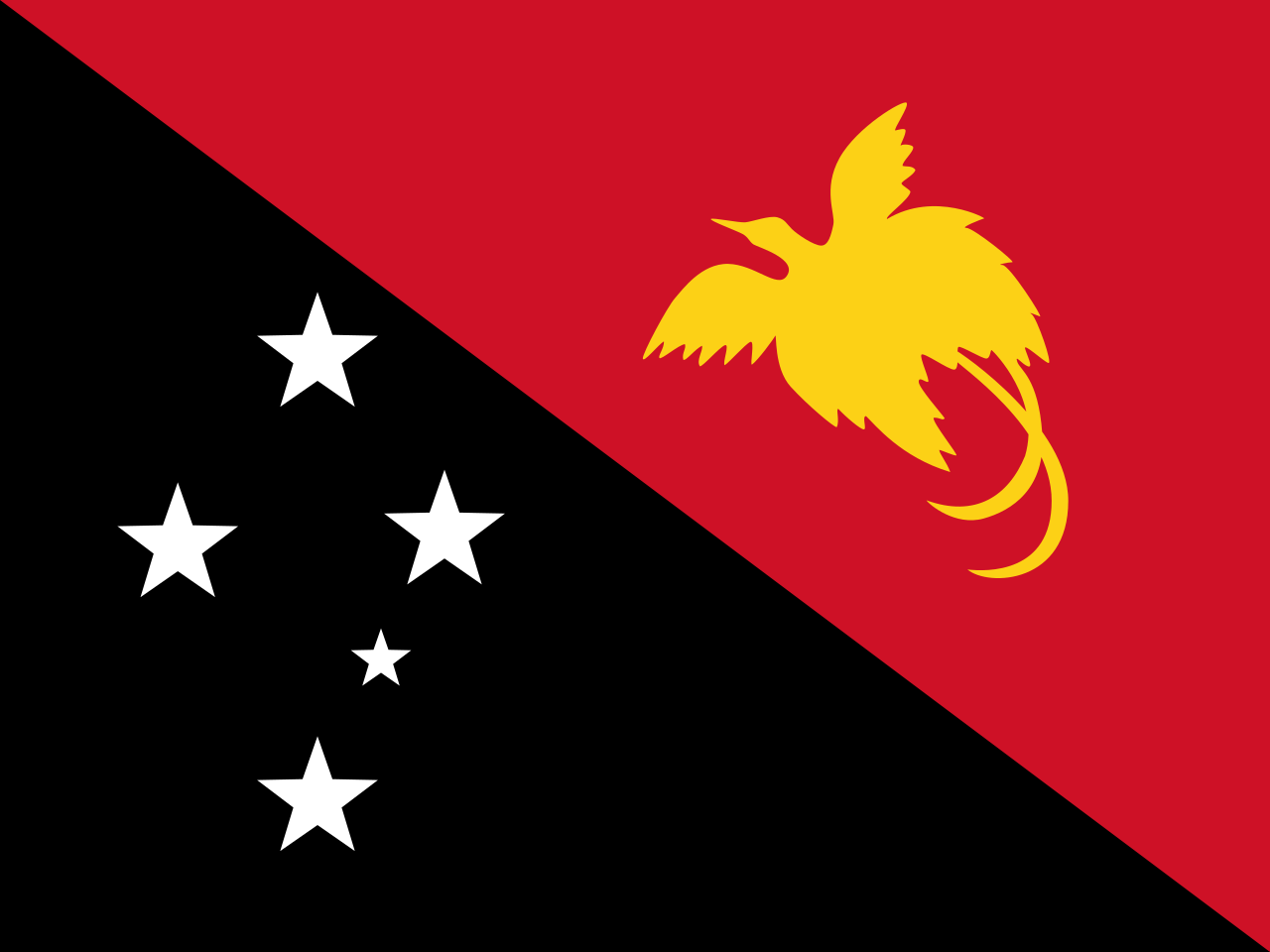
Papua New Guinea (PNG), officially the Independent State of Papua New Guinea, is an island country in Oceania that comprises the eastern half of the island of New Guinea and offshore islands in Melanesia, a region of the southwestern Pacific Ocean north of Australia. It has a land border with Indonesia to the west and maritime borders with Australia to the south and the Solomon Islands to the east. Its capital is Port Moresby. The country's 462,840 km2 (178,700 mi2) includes a large mainland and hundreds of islands. The eastern half of New Guinea was divided in 1884 between German New Guinea in the north and British New Guinea in the south, with the latter ceded to Australia in 1902 and reorganised as the Territory of Papua. Australia occupied German New Guinea during World War I and then administered the territory as a League of Nations mandate. The nation was the site of fierce fighting during the New Guinea campaign of World War II, following which the two territories were united in 1949. Papua New Guinea was granted independence as a Commonwealth realm in 1975. Representing the King is a Governor-General. Politics take place within a Westminster system, with the government led by a prime minister. Members of the National Parliament, the unicameral legislative body, also serve as provincial leaders. The population is highly rural, with only 14% living in urban centres in 2023. The persistence of traditional communities and lifestyles are explicitly protected by the Papua New Guinea Constitution. While official population estimates suggest the population is around 11 million, estimates using satellite data put the number closer to 17 million. The population is extremely diverse. There are 840 known spoken languages, making it the most linguistically diverse country in the world. Cultural practices are similarly diverse. Many cultural and linguistic groups are small, although English and Tok Pisin serve as common languages. This diversity has led to friction, especially in politics, and the government has struggled to combat violence against women. The country has a large Christian majority population, of several different denominations, and in March 2025 its constitution was amended to adopt Christianity as the official state religion. The rural and diverse population is a result of highly mountainous geography. The land supports around 5% of all known species, and the export-driven economy is also dependent on natural resources. Papua New Guinea is a developing economy where nearly 40% of the population are subsistence farmers living relatively independently of the cash economy. The country retains close ties to Australia, and has enhanced ties with both Asia and the Pacific.