
Topzle Topzle

Pakistan

Updated: Wikipedia source
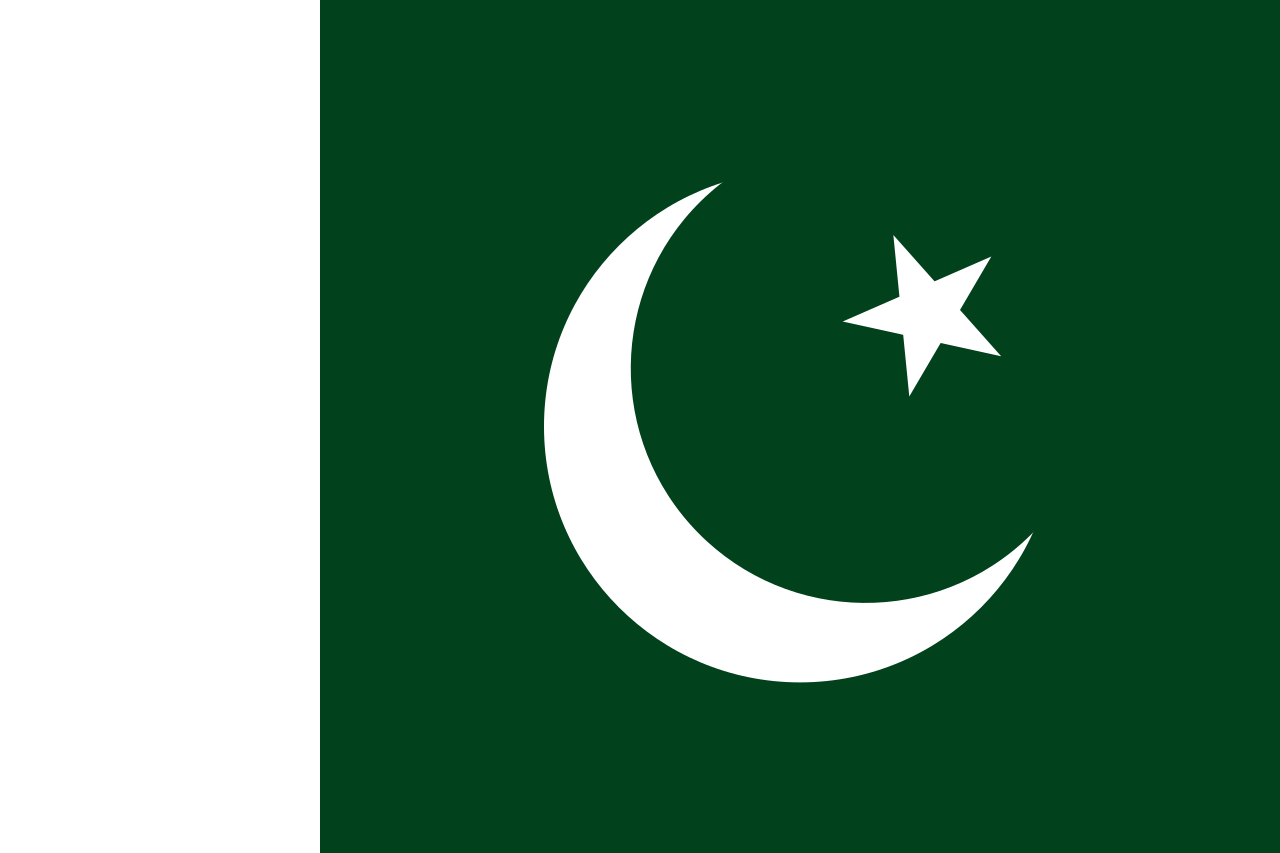
Pakistan

Pakistan, officially the Islamic Republic of Pakistan, is a country in South Asia. It is the fifth-most populous country, with a population of over 241 million, having the second-largest Muslim population as of 2023. Islamabad is the nation's capital, while Karachi is its largest city and financial centre. Pakistan is the 33rd-largest country by area. Bounded by the Arabian Sea on the south, the Gulf of Oman on the southwest, and the Sir Creek on the southeast, it shares land borders with India to the east; Afghanistan to the west; Iran to the southwest; and China to the northeast. It shares a maritime border with Oman in the Gulf of Oman, and is separated from Tajikistan in the northwest by Afghanistan's narrow Wakhan Corridor. Pakistan is the site of several ancient cultures, including the 8,500-year-old Neolithic site of Mehrgarh in Balochistan, the Indus Valley Civilisation of the Bronze Age, and the ancient Gandhara civilisation. The regions that compose the modern state of Pakistan were the realm of multiple empires and dynasties, including the Achaemenid, the Maurya, the Kushan, the Gupta; the Umayyad Caliphate in its southern regions, the Hindu Shahis, the Ghaznavids, the Delhi Sultanate, the Samma, the Shah Miris, the Mughals, and finally, the British Raj from 1858 to 1947. Spurred by the Pakistan Movement, which sought a homeland for the Muslims of British India, and election victories in 1946 by the All-India Muslim League, Pakistan gained independence in 1947 after the partition of British India, which awarded separate statehood to its Muslim-majority regions and was accompanied by an unparalleled mass migration and loss of life. Initially a dominion of the British Commonwealth, Pakistan adopted a republican constitution in 1956 and became an Islamic republic with two geographically separate provinces, East Pakistan and West Pakistan. East Pakistan seceded as the new country of Bangladesh in 1971 after a nine-month-long civil war. In the following four decades, Pakistan has been ruled by governments that alternated between civilian and military, democratic and authoritarian, relatively secular and Islamist. Pakistan is considered a middle power and is a declared nuclear-weapon state, with the world's seventh-largest standing armed forces. The Pakistani economy is ranked amongst the world's emerging and growth-leading economies, with a large and rapidly growing middle class. Pakistan's political history since independence has been characterised by periods of significant economic and military growth as well as those of political and economic instability. It is an ethnically and linguistically diverse country, with similarly diverse geography and wildlife. The country continues to face poverty, illiteracy, corruption, and terrorism. Pakistan is a member of the United Nations, the Shanghai Cooperation Organisation, the Organisation of Islamic Cooperation, the Commonwealth of Nations, the South Asian Association for Regional Cooperation, and the Islamic Military Counter-Terrorism Coalition, and is designated as a major non-NATO ally by the United States.

Infobox

Capital
Islamabad 33°41′30″N 73°3′0″E / 33 °N 73 °E / 33 ; 73
Largest city
Karachi 24°51′36″N 67°0′36″E / 24 °N 67 °E / 24 ; 67
Official languages
Urdu English
Native languages
Over 77 languages
Religion (2023)
96 % Islam (official) 2 % Hinduism 1 % Christianity 0 % other
Demonym
Pakistani
Government
Federal parliamentary Islamic republic
• President
Asif Ali Zardari
• Prime Minister
Shehbaz Sharif
Legislature
Parliament
• Upper house
Senate
• Lower house
National Assembly
• Declaration
23 March 1940
• Recognised dominion
14 August 1947
• Republic
23 March 1956
• Last territory's acquisition
8 December 1958
• Eastern territory withdrawn
16 December 1971
• Current constitution
14 August 1973
• Total
$407 billion (42nd)
• Water (%)
2
• 2023 census
241,499,431 (5th)
• Density
273 /km2 (709 /sq mi) (56th)
GDP (PPP)
2026 estimate
• Per capita
$1,700 (160th)
GDP (nominal)
2025 estimate
Gini (2018)
29 low inequality
HDI (2023)
0 low (168th)
Currency
Pakistani rupee (₨) (PKR)
Time zone
UTC 5 (PKT)
Date format
dd-mm-yyyy
Calling code
92
ISO 3166 code
PK
Internet TLD
pk پاکستان.

Tables

· Government and politics › Administrative units
Balochistan
Balochistan
Administrative unit
Balochistan
Capital
Quetta
Population
14,894,402
Punjab
Punjab
Administrative unit
Punjab
Capital
Lahore
Population
127,688,922
Sindh
Sindh
Administrative unit
Sindh
Capital
Karachi
Population
55,696,147
Khyber Pakhtunkhwa
Khyber Pakhtunkhwa
Administrative unit
Khyber Pakhtunkhwa
Capital
Peshawar
Population
40,856,097
Gilgit-Baltistan
Gilgit-Baltistan
Administrative unit
Gilgit-Baltistan
Capital
Gilgit
Population
1,492,924
Azad Kashmir
Azad Kashmir
Administrative unit
Azad Kashmir
Capital
Muzaffarabad
Population
4,179,428
Islamabad Capital Territory
Administrative unit
Islamabad Capital Territory
Capital
Islamabad
Population
2,363,863
Administrative unit
Capital
Population
Balochistan
Quetta
14,894,402
Punjab
Lahore
127,688,922
Sindh
Karachi
55,696,147
Khyber Pakhtunkhwa
Peshawar
40,856,097
Gilgit-Baltistan
Gilgit
1,492,924
Azad Kashmir
Muzaffarabad
4,179,428
Islamabad Capital Territory
Islamabad
2,363,863

References

  1. Article 251 of the Constitution of Pakistan
  2. The Constitution designates Islam as the state religion.
  3. "Includes data for Pakistani territories of Kashmir; Azad Kashmir (13,297 km2 or 5,134 sq mi) and Gilgit–Baltistan (72,5
  4. "This figure does not include data for Pakistan-administered areas of Kashmir; Azad Kashmir and Gilgit-Baltistan, which,
  5. See Date and time notation in Pakistan.
  6. Urdu: پَاکِسْتَان, Urdu pronunciation: [ˈpɑːkɪstɑːn] ⓘ; Pronounced variably in English as /ˈpækɪstæn/ ⓘ, /ˈpɑːkɪstɑːn/ ⓘ
  7. ISO: اِسْلامی جُمْہُورِیَہ پَاکِسْتَان, Islāmi Jumhūriyāh Pākistān
  8. The precise time span of the period is uncertain. Philological and linguistic evidence indicates that the Rigveda, the o
  9. The World Bank data lists the total area of Pakistan as 770,880 km², excluding Gilgit-Baltistan, Azad Kashmir, and water
  10. In the framework of their regional security complex theory (RSCT), Barry Buzan and Ole Waever differentiate between supe
  11. This number includes population of the Hindu (Jati) and the scheduled castes.
  12. Minahan 2009.
  13. Jaffrelot 2015, p. 97.
  14. Ayres 2009.
  15. Eberhard, Simons & Fennig 2022.
  16. James 2022.
  17. Bhandari 2022.
  18. Haleem 2013.
  19. Wright (2009) "The Indus civilisation is one of three in the 'Ancient East' that, along with Mesopotamia and Pharaonic E
  20. Badian 1987.
Image
Source:
Tip: Wheel or +/− to zoom, drag to pan, Esc to close.