
Topzle Topzle

Oliver Cromwell

Updated: Wikipedia source
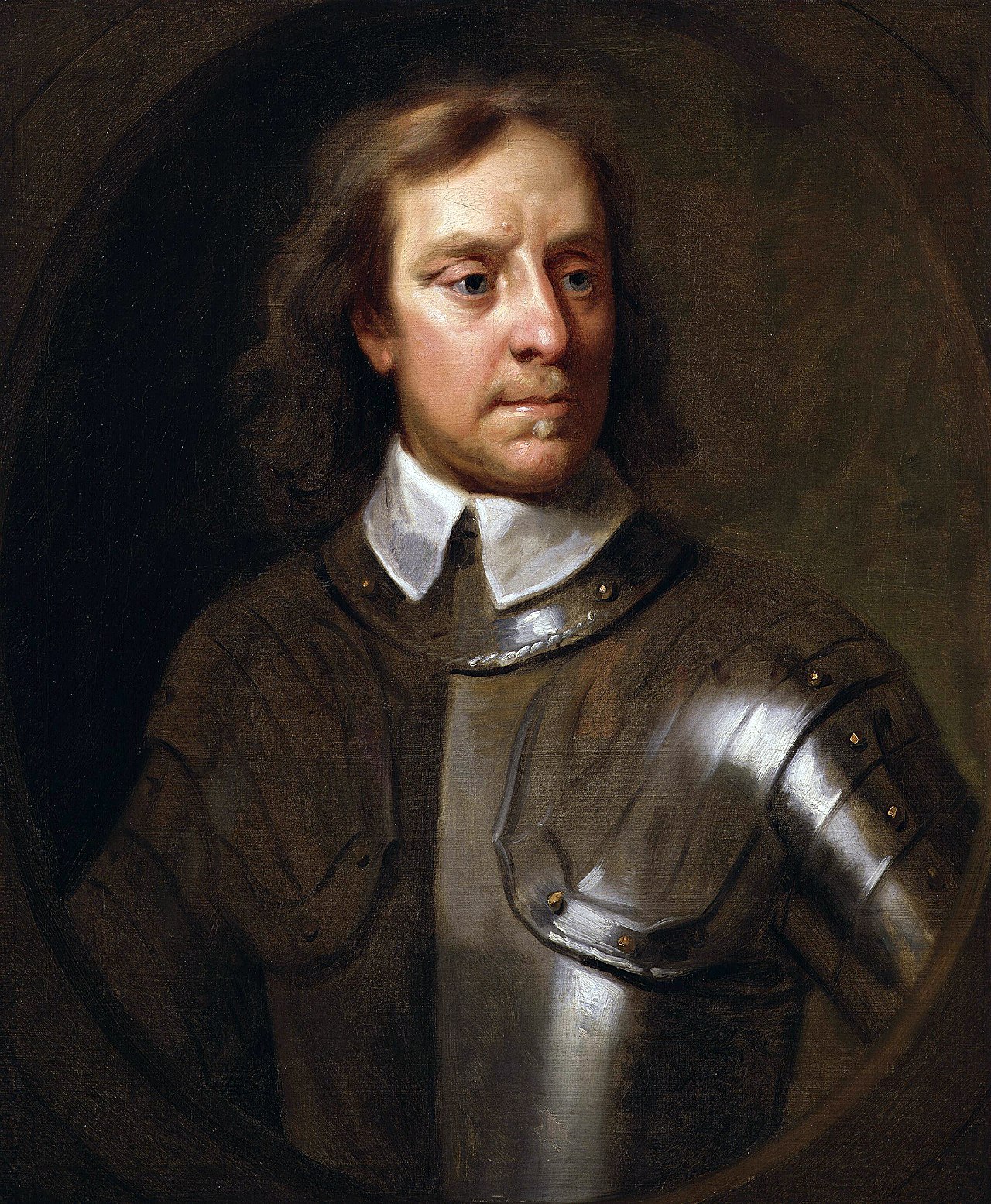
Oliver Cromwell

Oliver Cromwell (25 April 1599 – 3 September 1658) was an English statesman, farmer and soldier, widely regarded as one of the most important figures in British history. He came to prominence during the Wars of the Three Kingdoms, initially as a senior commander in the Parliamentarian army and later as a politician. A leading advocate of the execution of Charles I in January 1649, which led to the establishment of the Commonwealth of England, Cromwell ruled as Lord Protector from December 1653 until his death. Although elected Member of Parliament (MP) for Huntingdon in 1628, much of Cromwell's life prior to 1640 was marked by financial and personal failure. He briefly contemplated emigration to New England but became a religious Independent in the 1630s and thereafter believed his successes were the result of divine providence. In 1640, he served as MP for Cambridge in the Short and Long Parliaments. He joined the Parliamentarian army when the First English Civil War began in August 1642 and quickly demonstrated his military prowess. In 1645, he was appointed commander of the New Model Army cavalry under Thomas Fairfax, and he played a key role in winning the English Civil War. The death of Charles I and exile of his son Charles II, followed by military victories in Ireland and in Scotland, firmly established the Commonwealth and Cromwell's dominance of the new regime. In December 1653, he was named Lord Protector, a position he retained for the remaining five years of his life. After his death in 1658, he was succeeded by his son Richard, whose weakness led to a power vacuum. This culminated in the 1660 Stuart Restoration, after which Cromwell's body was removed from Westminster Abbey and hanged at Tyburn on 30 January 1661 as a posthumous execution. His head was cut off and displayed on the roof of Westminster Hall. It remained there until at least 1684. Cromwell's historical reputation is continually debated. He is a controversial figure due to his use of military force to acquire and retain political power, his role in the execution of Charles I, and the brutality of his 1649 conquest of Ireland. Winston Churchill described Cromwell as a military dictator, while others view him a hero of liberty. First proposed in 1856, his statue outside the Houses of Parliament was not erected until 1895, with most of the funds privately supplied by Prime Minister Archibald Primrose.

Infobox

Preceded by
Arthur Mainwaring
Succeeded by
Parliament dissolved
Constituency
Huntingdon
Born
25 April 1599 (1599-04-25) Huntingdon, Kingdom of England
Died
3 September 1658(1658-09-03) (aged 59) Westminster, The Protectorate
Resting place
Sidney Sussex College, Cambridge (head)
Spouse
Elizabeth Bourchier (m. 1620)
Relatives
Cromwell family
Alma mater
Sidney Sussex College, Cambridge
Occupation
Soldier and statesman
Nicknames
Old Noll Old Ironsides
Allegiance
Kingdom of England (pre-1642) Parliamentarian (1642–1651) Commonwealth of England, Scotland and Ireland (1651–1658)
Branch/service
Militia (pre-1642) Eastern Association (1642–1645) New Model Army (1645–1653)
Years of service
Pre-1642 (militia service) 1642–1651 (civil war)
Rank
Colonel (1642 – bef. 1644) Lieutenant-General of Horse (bef. 1644 – 1645) Lieutenant-General of Cavalry (1645–1646)
Commands
Cambridgeshire Ironsides (1643 – bef. 1644) Eastern Association (bef. 1644 – 1645) New Model Army (1645–1653)
Battles/wars
See list Wars of the Three Kingdoms Gainsborough Marston Moor 2nd Newbury Naseby Langport Preston Siege of Drogheda Sack of Wexford First Siege of Waterford Dunbar Worcester First Anglo-Dutch War Anglo-Spanish War (1654–1660)

Tables

· External links
Preceded byArthur Mainwaring John Goldsborough
Parliament of England
Preceded byArthur Mainwaring John Goldsborough
Parliament of England
Member of Parliament for Huntingdon 1628–1629 With: James Montagu
Parliament of England
VacantParliament suspended until 1640Title next held byRobert Bernard
VacantParliament suspended since 1629Title last held byThomas Purchase
Parliament of England
VacantParliament suspended since 1629Title last held byThomas Purchase
Parliament of England
Member of Parliament for Cambridge 1640–1653 With: Thomas Meautys 1640 John Lowry 1640–1653
Parliament of England
VacantNot represented in Barebones ParliamentTitle next held byRichard Timbs
Military offices
Military offices
Parliament of England
Military offices
Preceded byThomas Fairfax
Parliament of England
Preceded byThomas Fairfax
Parliament of England
Captain General and Commander-in-Chief of the Forces 1650–1653
Parliament of England
VacantCromwell elected Lord ProtectorTitle next held byGeorge Monck
Political offices
Political offices
Parliament of England
Political offices
Council of State
Council of State
Parliament of England
Council of State
Parliament of England
Lord Protector of England, Scotland and Ireland 16 December 1653 – 3 September 1658
Parliament of England
Succeeded byRichard Cromwell
Academic offices
Academic offices
Parliament of England
Academic offices
Preceded byEarl of Pembroke
Parliament of England
Preceded byEarl of Pembroke
Parliament of England
Chancellor of the University of Oxford 1650–1653
Parliament of England
Succeeded byRichard Cromwell
Parliament of England
Preceded byArthur Mainwaring John Goldsborough
Member of Parliament for Huntingdon 1628–1629 With: James Montagu
VacantParliament suspended until 1640Title next held byRobert Bernard
VacantParliament suspended since 1629Title last held byThomas Purchase
Member of Parliament for Cambridge 1640–1653 With: Thomas Meautys 1640 John Lowry 1640–1653
VacantNot represented in Barebones ParliamentTitle next held byRichard Timbs
Military offices
Preceded byThomas Fairfax
Captain General and Commander-in-Chief of the Forces 1650–1653
VacantCromwell elected Lord ProtectorTitle next held byGeorge Monck
Political offices
Council of State
Lord Protector of England, Scotland and Ireland 16 December 1653 – 3 September 1658
Succeeded byRichard Cromwell
Academic offices
Preceded byEarl of Pembroke
Chancellor of the University of Oxford 1650–1653
Succeeded byRichard Cromwell

References

  1. The period from Cromwell's appointment in 1653 until his son's resignation in 1659 is known as The Protectorate.
  2. Although there is debate over whether Cromwell and Ireton were the authors of the Heads of Proposals or acting on behalf
  3. A Child's History of England volume 3
  4. Ó Siochrú 2008, pp. 1–2.
  5. Churchill 1956, p. 314.
  6. New Histories
    https://newhistories.sites.sheffield.ac.uk/volumes/2011-12/volume-3/issue-7-open-theme/oliver-cromwell-regicidal-dictator-or-a-hero-of-liberty
  7. Burch 2003, pp. 228–284.
  8. "Oliver Cromwell 1599–1658"
    https://web.archive.org/web/20130731093538/http://www.british-civil-wars.co.uk/biog/oliver-cromwell.htm
  9. Lauder-Frost, Gregory, F . Scot., "East Anglian Stewarts" in The Scottish Genealogist, Dec. 2004, vol. LI, no. 4., pp. 1
    https://search.worldcat.org/issn/0300-337X
  10. National Heritage List for England
    https://HistoricEngland.org.uk/listing/the-list/list-entry/1128611?section=official-list-entry
  11. Morrill, John S.
    https://www.britannica.com/biography/Oliver-Cromwell
  12. Gaunt 2004, p. 31.
  13. Speech to the First Protectorate Parliament, 4 September 1654, (Roots 1989, p. 42).
  14. Oliver Cromwell's letters and speeches
    https://books.google.com/books?id=lroNAQAAMAAJ&pg=PA17
  15. British Civil Wars, Commonwealth and Protectorate 1638–1660
  16. A Cambridge Alumni Database
    https://venn.lib.cam.ac.uk/cgi-bin/search-2018.pl?sur=&suro=w&fir=&firo=c&cit=&cito=c&c=all&z=all&tex=CRML616O&sye=&eye=&col=all&maxcount=50
  17. Dictionary of National Biography
    https://en.wikisource.org/wiki/Dictionary_of_National_Biography,_1885-1900/Cromwell,_Oliver_(1599%E2%80%931658)
  18. Fraser 1973, p. 24.
  19. Morrill 1990b, p. 24.
  20. "Cromwell's family"
    http://olivercromwell.org/faqs6.htm
Image
Source:
Tip: Wheel or +/− to zoom, drag to pan, Esc to close.