
Topzle Topzle

New Zealand

Updated: Wikipedia source
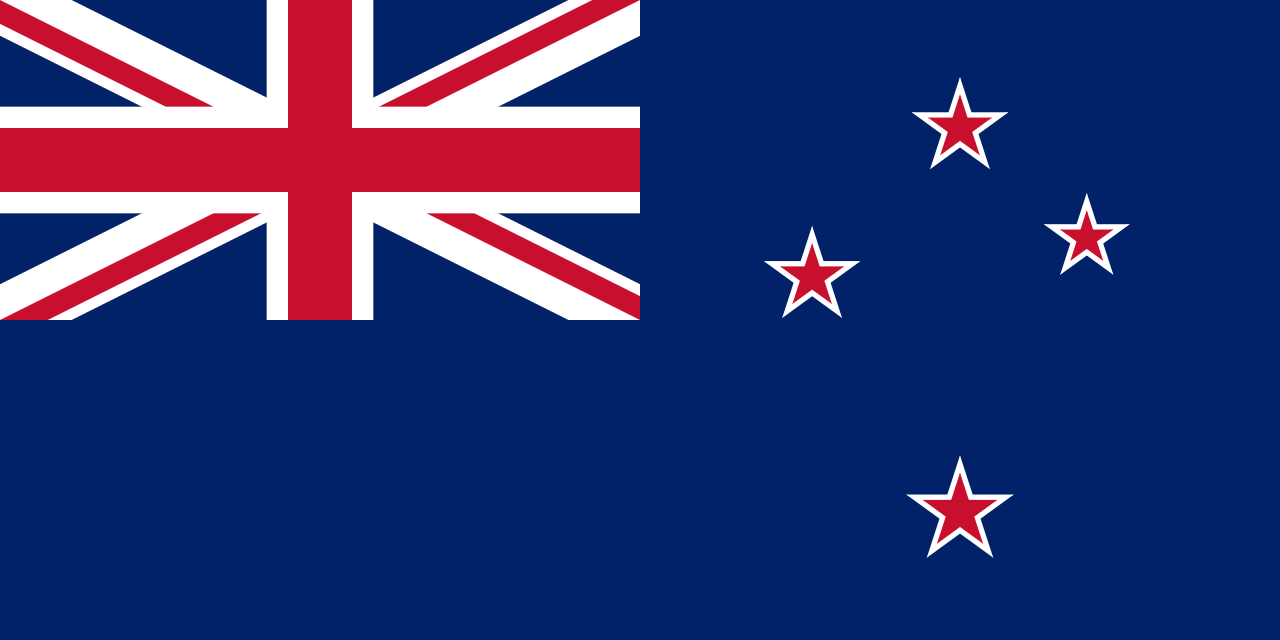
New Zealand

New Zealand is an island country in the southwestern Pacific Ocean. It consists of two main landmasses—the North Island (Te Ika-a-Māui) and the South Island (Te Waipounamu)—and over 600 smaller islands. It is the sixth-largest island country by area and lies east of Australia across the Tasman Sea and south of the islands of New Caledonia, Fiji, and Tonga. The country's varied topography and sharp mountain peaks, including the Southern Alps (Kā Tiritiri o te Moana), owe much to tectonic uplift and volcanic eruptions. New Zealand's capital city is Wellington, and its most populous city is Auckland. The islands of New Zealand were the last large habitable land to be settled by humans. Between about 1280 and 1350, Polynesians began to settle in the islands and subsequently developed a distinctive Māori culture. In 1642, the Dutch explorer Abel Tasman became the first European to sight and record New Zealand. In 1769, the British explorer Captain James Cook became the first European to set foot on and map New Zealand. In 1840, representatives of the United Kingdom and Māori chiefs signed the Treaty of Waitangi, which paved the way for Britain's declaration of sovereignty later that year and the establishment of the Crown Colony of New Zealand in 1841. Subsequently, a series of conflicts between the colonial government and Māori tribes resulted in the alienation and confiscation of large amounts of Māori land. New Zealand became a dominion in 1907; it gained full statutory independence in 1947, retaining the monarch as head of state. Today, the majority of New Zealand's population of around 5 million is of European descent; the indigenous Māori are the largest minority, followed by Asians and Pasifika. Reflecting this, New Zealand's culture mainly derives from Māori and early British settlers but has recently broadened from increased immigration. The official languages are English, Māori, and New Zealand Sign Language, with the local dialect of English being dominant. A developed country, New Zealand was the first to introduce a minimum wage and to give women the right to vote. Recognised as a middle power, New Zealand ranks very highly in international measures of quality of life and human rights and has one of the lowest levels of perceived corruption in the world. It retains visible levels of inequality, including structural disparities between its Māori and European populations. During the 1980s, New Zealand underwent major economic changes that transformed it from a protectionist to a liberalised free-trade economy. The service sector dominates the country's economy, followed by the industrial sector, and agriculture; international tourism is also a significant source of revenue. New Zealand and Australia have a strong relationship and are considered to share a strong Trans-Tasman identity, stemming from centuries of British colonisation. The country is part of multiple international organisations and forums. Nationally, legislative authority is vested in an elected, unicameral Parliament, while executive political power is exercised by the Government, led by the prime minister, currently Christopher Luxon. Charles III is the country's king and is represented by the governor-general, Cindy Kiro. New Zealand is organised into 11 regional councils and 67 territorial authorities for local government purposes. The Realm of New Zealand also includes Tokelau (a dependent territory); the Cook Islands and Niue (self-governing states in free association with New Zealand); and the Ross Dependency, which is New Zealand's territorial claim in Antarctica.

Infobox

Capital
Wellington 41°18′S 174°47′E / 41 °S 174 °E / -41 ; 174
Largest city
Auckland 36°52′S 174°45′E / 36 °S 174 °E / -36 ; 174
Official languages
English Māori NZ Sign Language
Ethnic groups (2023)
67 % European 19 % Māori 17 % Asian 8 % Pacific peoples 1 % ME/LA/African 1 % other
Religion (2023)
51 % no religion 32 % Christianity 2 % Hinduism 6 % other 6 % undeclared
Demonyms
New Zealander Kiwi (colloquial)
Government
Unitary parliamentary constitutional monarchy
• Monarch
Charles III
• Governor-General
Cindy Kiro
• Prime Minister
Christopher Luxon
Legislature
Parliament
• Treaty of Waitangi
6 February 1840
• Responsible government
7 May 1856
• Dominion
26 September 1907
• Balfour Declaration
15 November 1926
• Statute of Westminster Adoption Act
25 November 1947
• Constitution Act 1986
1 January 1987
• Total
$278 billion (52nd)
• Water (%)
1
• May 2026 estimate
5,348,790 (121st)
• 2023 census
4,993,923
• Density
19 /km2 (51 /sq mi) (204th)
GDP (PPP)
2026 estimate
• Per capita
$52,023 (23rd)
GDP (nominal)
2026 estimate
Gini (2022)
30 medium inequality
HDI (2023)
0 very high (17th)
Currency
New Zealand dollar ($) (NZD)
Time zone
UTC 12 (NZST)
• Summer (DST)
UTC 13 (NZDT)
Date format
dd/mm/yyyy
Calling code
64
ISO 3166 code
NZ
Internet TLD
nz

Tables

Average daily temperatures and rainfall for selected towns and cities of New Zealand · Geography and environment › Climate
Auckland
Auckland
Location
Auckland
January high °C (°F)
23 (73)
January low °C (°F)
15 (59)
July high °C (°F)
15 (59)
July low °C (°F)
8 (46)
Annual rainfall mm (in)
1,212 (47 )
Wellington
Wellington
Location
Wellington
January high °C (°F)
20 (68)
January low °C (°F)
14 (57)
July high °C (°F)
11 (52)
July low °C (°F)
6 (43)
Annual rainfall mm (in)
1,207 (47 )
Hokitika
Hokitika
Location
Hokitika
January high °C (°F)
20 (68)
January low °C (°F)
12 (54)
July high °C (°F)
12 (54)
July low °C (°F)
3 (37)
Annual rainfall mm (in)
2,901 (114 )
Christchurch
Christchurch
Location
Christchurch
January high °C (°F)
23 (73)
January low °C (°F)
12 (54)
July high °C (°F)
11 (52)
July low °C (°F)
2 (36)
Annual rainfall mm (in)
618 (24 )
Alexandra
Alexandra
Location
Alexandra
January high °C (°F)
25 (77)
January low °C (°F)
11 (52)
July high °C (°F)
8 (46)
July low °C (°F)
−2 (28)
Annual rainfall mm (in)
359 (14 )
Location
January high °C (°F)
January low °C (°F)
July high °C (°F)
July low °C (°F)
Annual rainfall mm (in)
Auckland
23 (73)
15 (59)
15 (59)
8 (46)
1,212 (47 )
Wellington
20 (68)
14 (57)
11 (52)
6 (43)
1,207 (47 )
Hokitika
20 (68)
12 (54)
12 (54)
3 (37)
2,901 (114 )
Christchurch
23 (73)
12 (54)
11 (52)
2 (36)
618 (24 )
Alexandra
25 (77)
11 (52)
8 (46)
−2 (28)
359 (14 )

References

  1. Māori: Aotearoa, pronounced [aɔˈtɛaɾɔa] ⓘ
  2. "God Save the King" is officially one of New Zealand's two national anthems, but is usually reserved for situations rele
  3. English is a de facto official language due to its widespread use.
  4. Ethnicity figures add to more than 100% as people could choose more than one ethnic group in the census.
  5. Excluding the Māori-based churches of Rātana and Ringatū
  6. The proportion of New Zealand's area (excluding estuaries) covered by rivers, lakes and ponds, based on figures from the
  7. The Chatham Islands have a separate time zone, 45 minutes ahead of the rest of New Zealand.
  8. Clocks are advanced by an hour from the last Sunday in September until the first Sunday in April. Daylight saving time i
  9. A person born on or after 1 January 2006 acquires New Zealand citizenship at birth only if at least one parent is a New
  10. A provisional estimate initially indicated the milestone was reached six months later in March 2020, before population e
  11. In 2015, 55% of Māori adults (aged 15 years and over) reported knowledge of te reo Māori. Of these speakers, 64% use Māo
  12. "Protocol for using New Zealand's National Anthems"
    https://web.archive.org/web/20110511022303/http://www.mch.govt.nz/nz-identity-heritage/national-anthems/protocols
  13. NZHistory
    https://nzhistory.govt.nz/media/video/new-zealands-national-anthems
  14. de facto
    https://web.archive.org/web/20150124193521/http://mfat.govt.nz/downloads/humanrights/5th-ICCPR-report.pdf
  15. Statistics New Zealand
    https://www.stats.govt.nz/information-releases/2023-census-population-counts-by-ethnic-group-age-and-maori-descent-and-dwelling-counts/
  16. Statistics New Zealand
    https://explore.data.stats.govt.nz/vis?fs%5B0%5D=2023%20Census%2C0%7CTotals%20by%20topic%23CAT_TOTALS_BY_TOPIC%23&pg=0&fc=Variable%20codes&bp=true&snb=9&df%5Bds%5D=ds-nsiws-disseminate&df%5Bid%5D=CEN23_TBT_008&df%5Bag%5D=STATSNZ&df%5Bvs%5D=1.0&dq=ra06%2Bra07%2Bra08%2BraTS%2Bra05%2Bra04%2Bra03%2Bra02%2Bra01%2Bra80%2Bra99%2Bra00%2BraTotal.12%2B13%2B14%2B15%2B16%2B17%2B18%2B99%2B9999%2B01%2B02%2B03%2B04%2B05%2B06%2B07%2B08%2B09.2013%2B2018%2B2023&ly%5Brw%5D=CEN23_TBT_IND_003&ly%5Bcl%5D=CEN23_YEAR_001&ly%5Brs%5D=CEN23_TBT_GEO_006&to%5BTIME%5D=false
  17. mch
    https://web.archive.org/web/20230622103149/https://mch.govt.nz/treatyofwaitangi
  18. Worldometers
    https://www.worldometers.info/world-population/new-zealand-population/
  19. New Zealand Land Cover Database 2
    https://web.archive.org/web/20110314113106/http://www.mfe.govt.nz/issues/land/land-cover-dbase/index.html
  20. "Population clock"
    https://www.stats.govt.nz/tools/population-clock
Image
Source:
Tip: Wheel or +/− to zoom, drag to pan, Esc to close.