
Topzle Topzle

Mongolia

Updated: Wikipedia source
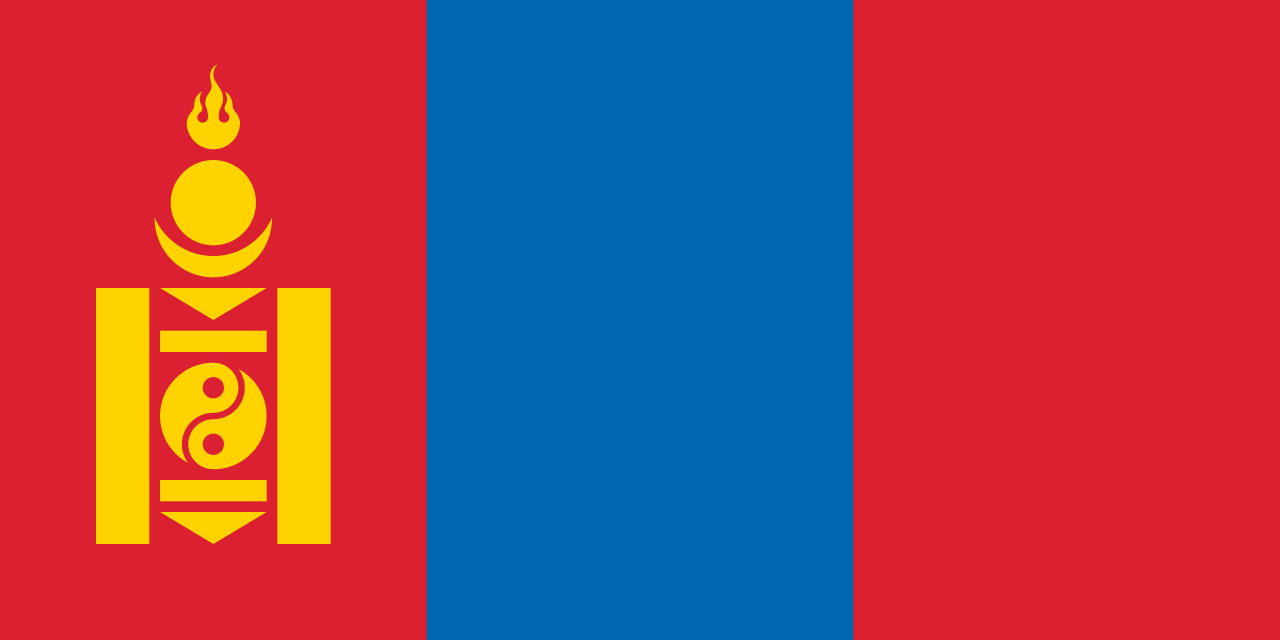
Mongolia

Mongolia is a landlocked country in the East Asia region. It is bordered by Russia to the north and China to the south, and covers an area of 1,564,116 square kilometers (603,909 square miles), making it the 18th-largest country in the world and the second largest landlocked country after Kazakhstan, as well as the largest landlocked country that does not border an inland sea. With a population of 3 million, Mongolia is the world's most sparsely populated sovereign state, excluding partially unrecognized Western Sahara. The country constitutes a significant portion of the Mongolian Plateau, and its natural environment is characterized by grassy steppe, mountains to the north and west, and the Gobi Desert to the south. Ulaanbaatar, the capital and largest city, is home to roughly half of the country's population. The territory of modern-day Mongolia has been ruled by various nomadic empires, including the Xiongnu, the Xianbei, the Rouran, the First Turkic Khaganate, the Second Turkic Khaganate, the Uyghur Khaganate and others. In 1206, Genghis Khan founded the Mongol Empire, which became the largest contiguous land empire in history. His grandson Kublai Khan conquered China proper and established the Yuan dynasty. After the collapse of the Yuan, the Mongols retreated to Mongolia and resumed their earlier pattern of factional conflict, except during the era of Dayan Khan and Tumen Zasagt Khan. In the 16th century, Tibetan Buddhism spread to Mongolia, being further led by the Manchu-founded Qing dynasty, which absorbed the country in the 17th century. By the early 20th century, almost one-third of the adult male population were Buddhist monks. After the collapse of the Qing dynasty in 1911, Mongolia declared independence, and achieved actual independence from the Republic of China in 1921. Shortly thereafter, the country became a satellite state of the Soviet Union. In 1924, the Mongolian People's Republic was founded as a socialist state. After the anti-communist revolutions of 1989, Mongolia conducted its own peaceful democratic revolution in early 1990. This led to a multi-party system, a new constitution of 1992, and transition to a market economy. Approximately 30% of the population is nomadic or semi-nomadic; horse culture remains integral. Mahayana Buddhism is the majority religion (51 %), with the irreligious being the second-largest group (40 %). Islam is the third-largest religious identification (3 %), concentrated among ethnic Kazakhs. The vast majority of citizens are ethnic Mongols, with roughly 5% of the population being Kazakhs, Tuvans, and other ethnic minorities, who are especially concentrated in the western regions. Mongolia is a member of the United Nations, Asia Cooperation Dialogue, G77, Asian Infrastructure Investment Bank, Non-Aligned Movement and a NATO global partner. Mongolia joined the World Trade Organization in 1997 and seeks to expand its participation in regional economic and trade groups.

Infobox

Capitaland largest city
Ulaanbaatar 47°55′19″N 106°54′55″E / 47 °N 106 °E / 47 ; 106
Official languages
Mongolian (Buriat Khalkha Oirat)
Official scripts
Mongolian Cyrillic
Ethnic groups (2020)
95 % Mongols 3 % Kazakhs 0 % other
Religion (2020)
51 % Buddhism 40 % No religion 3 % Islam 2 % Shamanism 1 % Christianity 0 % other
Demonyms
Mongolian, Mongol
Government
Unitary semi-presidential republic
• President
Ukhnaagiin Khürelsükh
• Prime Minister
Nyam-Osoryn Uchral
• Chairman of the State Great Khural
Sandagiin Byambatsogt
Legislature
State Great Khural
• Mongol Empire
1206
• Yuan dynasty
1260
• Northern Yuan
1368
• Completion of Qing dynasty conquest
1691
• Declaration of independence from the Qing dynasty
29 December 1911
• Mongolian People's Republic established
26 November 1924
• Current constitution
12 February 1992
• Total
$25 billion (118th)
• Water (%)
0
• 2025 estimate
3,591,120 (131st)
• Density
2 /km2 (5 /sq mi)
GDP (PPP)
2025 estimate
• Per capita
$7,200 (97th)
GDP (nominal)
2025 estimate
Gini (2018)
32 medium inequality
HDI (2023)
0 high (104th)
Currency
Tögrög (MNT)
Time zone
UTC 7/ 8
Calling code
976
ISO 3166 code
MN
Internet TLD
mn, .мон

Tables

Religions in Mongolia (population aged 15 and above) · Demographics › Religion
Non-religious
Non-religious
Religion
Non-religious
Population
1,338,528
Share
40 %
Religious
Religious
Religion
Religious
Population
1,958,338
Share
59 %
Buddhism
Buddhism
Religion
Buddhism
Population
1,704,480
Share
51 %
Islam
Islam
Religion
Islam
Population
105,500
Share
3 %
Shamanism
Shamanism
Religion
Shamanism
Population
82,422
Share
2 %
Christianity
Christianity
Religion
Christianity
Population
42,859
Share
1 %
Other religions
Other religions
Religion
Other religions
Population
23,078
Share
0 %
Total
Total
Religion
Total
Population
3,296,866
Share
100 %
Religion
Population
Share
Non-religious
1,338,528
40 %
Religious
1,958,338
59 %
Buddhism
1,704,480
51 %
Islam
105,500
3 %
Shamanism
82,422
2 %
Christianity
42,859
1 %
Other religions
23,078
0 %
Total
3,296,866
100 %

References

  1. Also spelled as "Ulan Bator"
  2. Mongolian: Монгол Улс, romanized: Mongol Uls; Mongolian script: ᠮᠤᠩᠭᠤᠯ ᠤᠯᠤᠰ, Mongolian pronunciation: [mɔŋɢəɮ ʊɮs], moŋɣ
  3. ᡏᡆᡊᡎᡆᠯ ᡇᠯᡇᠰ (Oirat) Моңһл Улс (Oirat) Монгол Улас (Buryat)
  4. UB Post
    https://web.archive.org/web/20111101013639/http://ubpost.mongolnews.mn/index.php?option=com_content&task=view&id=6478&Itemid=36
  5. "Хун ам, орон сууцны 2020 оны улсын ээлжит тооллогы нэгдсэн дун"
    https://web.archive.org/web/20201107230731/https://tuv.nso.mn/uploads/users/87/files/Khun_am_toollogo.pdf
  6. ConstitutionNet
    http://www.constitutionnet.org/news/mongolia-vain-constitutional-attempt-consolidate-parliamentary-democracy
  7. The World Factbook
    https://www.cia.gov/the-world-factbook/countries/mongolia/
  8. household/1_Population%2C household/DT_NSO_0300_003V1 "POPULATION OF MONGOLIA, by sex, age group, and by year"
    https://www.1212.mn/en/statcate/table-view/Population%2C
  9. International Monetary Fund
    https://www.imf.org/en/Publications/WEO/weo-database/2025/april
  10. data
    https://data.worldbank.org/indicator/SI.POV.GINI?locations=MN
  11. "Human Development Report 2025"
    https://hdr.undp.org/system/files/documents/global-report-document/hdr2025reporten.pdf
  12. "Mongolia Standard Time is GMT (UTC) +8, some areas of Mongolia use GMT (UTC) +7"
    http://www.timetemperature.com/asia/mongolia_time_zone.shtml
  13. Michael Jerryson, Mongolian Buddhism: The Rise and Fall of the Sangha, (Chiang Mai: Silkworm Books, 2007), 89.
  14. Michigan State University
    https://web.archive.org/web/20150315082839/http://asia.isp.msu.edu/wbwoa/east_asia/mongolia/religion.htm
  15. Nationality and International Law in Asian Perspective
    https://books.google.com/books?id=H1ecjepq80QC&pg=PA39
  16. Монголын эртний түүх судлал, III боть
  17. The Phonology of Mongolian
  18. Lexicon of Reconstructed Pronunciation in Early Middle Chinese, Late Middle Chinese, and Early Mandarin
    https://books.google.com/books?id=qBvsXylluO4C
  19. "Baxter–Sagart Old Chinese Reconstruction"
    https://web.archive.org/web/20120425064509/http://crlao.ehess.fr/docannexe.php?id=1207
  20. Encyclopædia Britannica
    https://www.britannica.com/eb/article-27420/Mongolia#394579.hook
Image
Source:
Tip: Wheel or +/− to zoom, drag to pan, Esc to close.