
Topzle Topzle

McDonnell Douglas DC-10

Updated: Wikipedia source
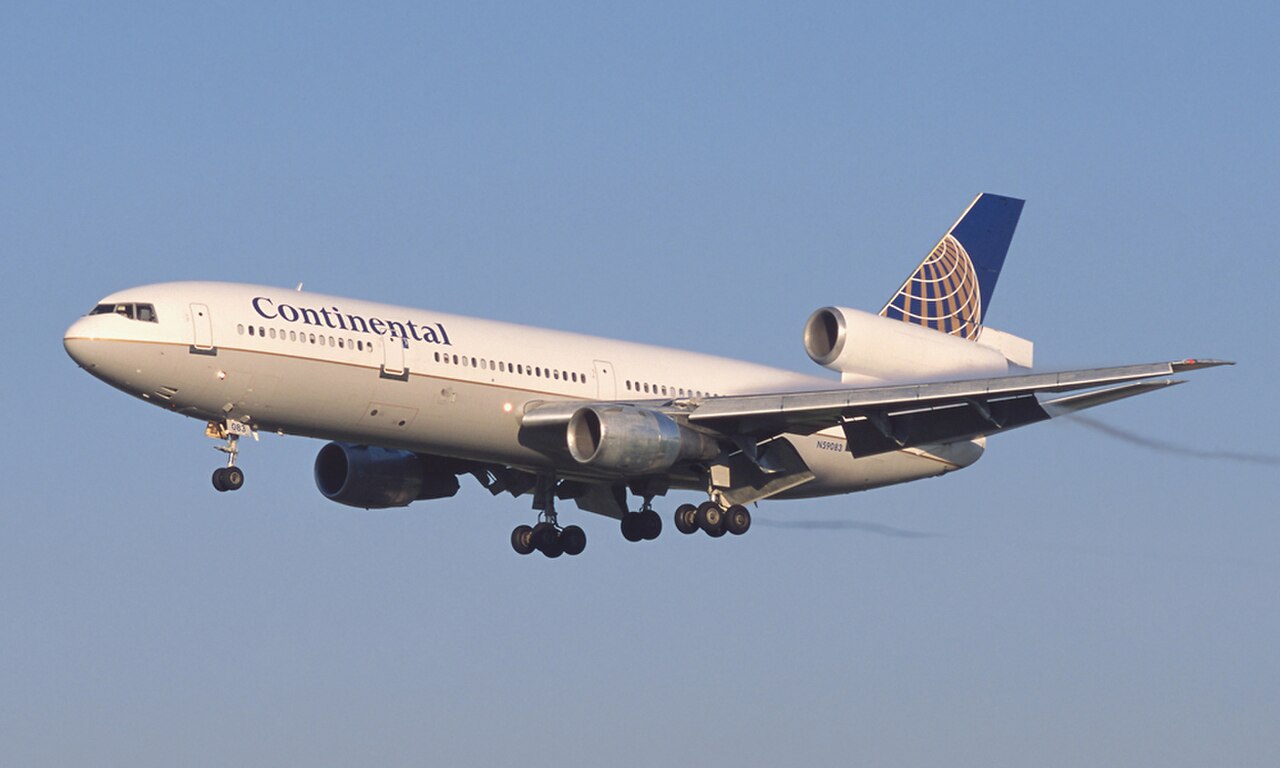
McDonnell Douglas DC-10

The McDonnell Douglas DC-10 is an American trijet wide-body aircraft manufactured by McDonnell Douglas. The DC-10 was intended to succeed the DC-8 for long-range flights. It first flew on August 29, 1970; it was introduced on August 5, 1971, by American Airlines. The trijet has two turbofans on underwing pylons and a third one at the base of the vertical stabilizer. The twin-aisle layout has a typical seating for 270 in two classes. The initial DC-10-10 had a 3,500-nautical-mile [nmi] (6,500 km; 4,000 mi) range for transcontinental flights. The DC-10-15 had more powerful engines for hot and high airports. The DC-10-30 and –40 models (with a third main landing gear leg to support higher weights) each had intercontinental ranges of up to 5,200 nmi (9,600 km; 6,000 mi). The KC-10 Extender (based on the DC-10-30) is a tanker aircraft that was primarily operated by the United States Air Force. Early operations of the DC-10 were afflicted by its poor safety record, which was partially attributable to a design flaw in the original cargo doors that caused multiple incidents, including fatalities. Most notable was the crash of Turkish Airlines Flight 981 near Paris in 1974, the deadliest crash in aviation history up to that time. Following the crash of American Airlines Flight 191, the deadliest aviation accident in US history, the US Federal Aviation Administration (FAA) temporarily banned all DC-10s from American airspace in June 1979. In August 1983, McDonnell Douglas announced that production would end due to a lack of orders, as it had widespread public apprehension after the 1979 crash and a poor fuel economy reputation. As design flaws were rectified and fleet hours increased, the DC-10 achieved a long-term safety record comparable to those of similar-era passenger jets. However, following the crash of UPS Airlines Flight 2976 in 2025, which occurred with the airplane's successor McDonnell Douglas MD-11, all DC-10s were again grounded globally. The grounding ended in May 2026 when the FAA approved an inspection and maintenance protocol for the engine pylon mounting hardware. The DC-10 outsold the similar Lockheed L-1011 TriStar due to the latter's delayed introduction and high cost. Production of the DC-10 ended in 1989, with 386 delivered to airlines along with 60 KC-10 tankers. After merging with McDonnell Douglas in 1997, Boeing upgraded many in-service DC-10s as the MD-10 with a glass cockpit that eliminated the need for a flight engineer. In February 2014, the DC-10 made its last commercial passenger flight. Its cargo service continued for a few more years until it was retired. Today only a small handful of airlines fly the DC-10, mainly for cargo and aerial firefighting.

Infobox

Type
Wide-body airliner
National origin
United States
Manufacturer
McDonnell Douglas
Status
In limited non-passenger service
Primary users
FedEx Express (historical) American Airlines (historical) United Airlines (historical) Northwest Airlines (historical)
Number built
386
Manufactured
1969–1989
Introduction date
August 5, 1971, with American Airlines
First flight
August 29, 1970 (1970-08-29)
Retired
February 24, 2014 (passenger service)
Variants
McDonnell Douglas KC-10 Extender McDonnell Douglas DC-10 Twin DC-10 Air Tanker
Developed into
McDonnell Douglas MD-11

Tables

DC-10 Airplane Characteristics · Specifications
Cockpit crew
Cockpit crew
Variant
Cockpit crew
-10
Three
Std. seating
Std. seating
Variant
Std. seating
-10
270 (222Y 8-abreast @ 34" + 48J 6-abreast @ 38")
Max. seating
Max. seating
Variant
Max. seating
-10
399Y (10-abreast @ 29–34" pitch) layout, FAA exit limit: 380
Cargo
Cargo
Variant
Cargo
-10
26 LD3 layout, main deck: 22 88×125″ or 30 88×108″ pallets
Length
Length
Variant
Length
-10
182 ft 3 in / 55 m
-30
181 ft 7 in / 55 m
-40
182 ft 2 in / 55 m
Height
Height
Variant
Height
-10
57 ft 6 in / 17 m
-30
57 ft 7 in / 17 m
Wingspan
Wingspan
Variant
Wingspan
-10
155 ft 4 in / 47 m
-30
165 ft 4 in / 50 m
Wing area
Wing area
Variant
Wing area
-10
3,550 sq ft (330 m2)
-30
3,647 sq ft (338 m2)
Width
Width
Variant
Width
-10
19 ft 9 in (6 m) fuselage, 224 in (569 cm) interior
OEW (pax)
OEW (pax)
Variant
OEW (pax)
-10
240,171 lb / 108,940 kg
-30
266,191 lb / 120,742 kg
-40
270,213 lb / 122,567 kg
MTOW
MTOW
Variant
MTOW
-10
430,000 lb / 195,045 kg
-30
555,000 lb / 251,744 kg
Max. payload
Max. payload
Variant
Max. payload
-10
94,829 lb / 43,014 kg
-30
101,809 lb / 46,180 kg
-40
97,787 lb 44,356 kg
Fuel capacity
Fuel capacity
Variant
Fuel capacity
-10
21,762 US gal / 82,376 L
-30
36,652 US gal / 137,509 L
Engines ×3
Engines ×3
Variant
Engines ×3
-10
GE CF6-6D
-30
GE CF6-50C
-40
PW JT9D-20 / -59A
Thrust ×3
Thrust ×3
Variant
Thrust ×3
-10
40,000 lbf / 177 kN
-30
51,000 lbf / 226 kN
-40
53,000 lbf / 235 kN
Cruise
Cruise
Variant
Cruise
-10
Mach 0 (473 kn; 876 km/h; 544 mph) typical, Mach 0 (507 kn; 940 km/h; 584 mph) MMo
Range
Range
Variant
Range
-10
3,500 nmi (6,500 km; 4,000 mi)
-30
5,200 nmi (9,600 km; 6,000 mi)
-40
5,100 nmi (9,400 km; 5,900 mi)
Takeoff
Takeoff
Variant
Takeoff
-10
9,000 ft (2,700 m)
-30
10,500 ft (3,200 m)
-40
9,500 ft (2,900 m)
Ceiling
Ceiling
Variant
Ceiling
-10
42,000 ft (12,800 m)
Variant
-10
-30
-40
Cockpit crew
Three
Std. seating
270 (222Y 8-abreast @ 34" + 48J 6-abreast @ 38")
Max. seating
399Y (10-abreast @ 29–34" pitch) layout, FAA exit limit: 380
Cargo
26 LD3 layout, main deck: 22 88×125″ or 30 88×108″ pallets
Length
182 ft 3 in / 55 m
181 ft 7 in / 55 m
182 ft 2 in / 55 m
Height
57 ft 6 in / 17 m
57 ft 7 in / 17 m
Wingspan
155 ft 4 in / 47 m
165 ft 4 in / 50 m
Wing area
3,550 sq ft (330 m2)
3,647 sq ft (338 m2)
Width
19 ft 9 in (6 m) fuselage, 224 in (569 cm) interior
OEW (pax)
240,171 lb / 108,940 kg
266,191 lb / 120,742 kg
270,213 lb / 122,567 kg
MTOW
430,000 lb / 195,045 kg
555,000 lb / 251,744 kg
Max. payload
94,829 lb / 43,014 kg
101,809 lb / 46,180 kg
97,787 lb 44,356 kg
Fuel capacity
21,762 US gal / 82,376 L
36,652 US gal / 137,509 L
Engines ×3
GE CF6-6D
GE CF6-50C
PW JT9D-20 / -59A
Thrust ×3
40,000 lbf / 177 kN
51,000 lbf / 226 kN
53,000 lbf / 235 kN
Cruise
Mach 0 (473 kn; 876 km/h; 544 mph) typical, Mach 0 (507 kn; 940 km/h; 584 mph) MMo
Range
3,500 nmi (6,500 km; 4,000 mi)
5,200 nmi (9,600 km; 6,000 mi)
5,100 nmi (9,400 km; 5,900 mi)
Takeoff
9,000 ft (2,700 m)
10,500 ft (3,200 m)
9,500 ft (2,900 m)
Ceiling
42,000 ft (12,800 m)
Deliveries by year · Deliveries
13
13
1971
13
1972
52
1973
57
1974
47
1975
43
1976
19
1977
14
1978
18
1979
35
1980
41
1981
25
1982
11
1971
1972
1973
1974
1975
1976
1977
1978
1979
1980
1981
1982
13
52
57
47
43
19
14
18
35
41
25
11

References

  1. M0 , 270 pax @ 205 lb or 93 kg each
  2. MTOW, SL, ISA
  3. Boeing
    https://web.archive.org/web/20101213153605/http://boeing.com/commercial/dc-10/index.html
  4. A Crash Where The "Plane's Design Is To Blame" | Behind Closed Doors | Mayday: Air Disaster
    https://www.youtube.com/watch?v=s8kqN4rf7Uc
  5. The New York Times
    https://www.nytimes.com/1989/07/20/us/troubled-history-of-the-dc-10-includes-four-major-crashes.html
  6. FlightGlobal
    https://www.flightglobal.com/safety/us-faa-broadens-md-11-grounding-order-to-remaining-dc-10-fleets/165313.article
  7. The Seattle Times
    https://www.seattletimes.com/business/boeing-aerospace/faa-approves-boeings-fix-to-return-the-md-11-to-service/
  8. 10/10? Australian Aviation issue 314 April 2014 pages 76-80
  9. Fielder & Birsch 1992, pp. 1–2
  10. Norris & Wagner 1999, pp. 9–10
  11. Norris & Wagner 1999, p. 34
  12. Francillon 1990, pp. 275–276.
  13. Waddington 2000, pp. 6–18
  14. Norris & Wagner 1999, p. 36
  15. Endres 1998, p. 13.
  16. Francillon 1990, p. 276.
  17. Fielder & Birsch 1992, pp. 4, 165
  18. Fielder & Birsch 1992, pp. 3–4
  19. Fielder & Birsch 1992, p. 2
  20. Porter 2013
Image
Source:
Tip: Wheel or +/− to zoom, drag to pan, Esc to close.