
Topzle Topzle

Magna Carta

Updated: Wikipedia source
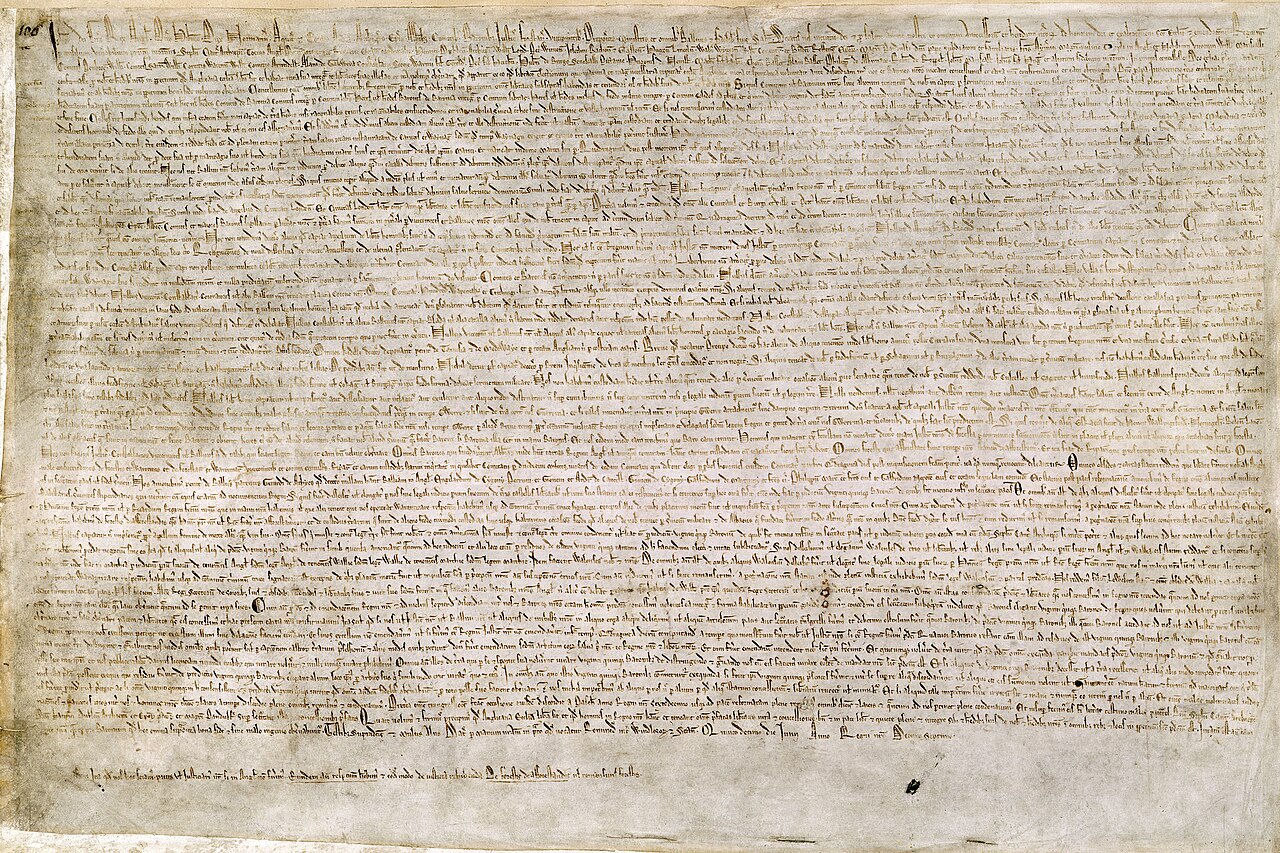
Magna Carta

Magna Carta (Medieval Latin for "Great Charter"), sometimes spelled Magna Charta, is a royal charter of rights sealed by King John of England at Runnymede, near Windsor, on 15 June 1215. First drafted by the Archbishop of Canterbury, Cardinal Stephen Langton, to make peace between the unpopular king and a group of rebel barons who demanded that the King confirm the Charter of Liberties, it promised the protection of church rights, protection for the barons from illegal imprisonment, access to swift and impartial justice, and limitations on feudal payments to the Crown, to be implemented through a council of 25 barons. Neither side stood by their commitments, and the charter was annulled by Pope Innocent III, leading to the First Barons' War. After John's death, the regency government of his young son, Henry III, reissued the document in 1216, stripped of some of its more radical content, in an unsuccessful bid to build political support for their cause. At the end of the war in 1217, it formed part of the peace treaty agreed at Lambeth, where the document acquired the name "Magna Carta", to distinguish it from the smaller Charter of the Forest, which was issued at the same time. Short of funds, Henry reissued the charter again in 1225 in exchange for a grant of new taxes. His son, Edward I, repeated the exercise in 1297, this time confirming it as part of England's statute law. However, Magna Carta was not unique; other legal documents of its time, both in England and beyond, made broadly similar statements of rights and limitations on the powers of the Crown. The charter became part of English political life and was typically renewed by each monarch in turn. As time went by and the fledgling Parliament of England passed new laws, it lost some of its practical significance. At the end of the 16th century, there was an upsurge of interest in Magna Carta. Lawyers and historians at the time believed that there was an ancient English constitution, going back to the days of the Anglo-Saxons, that protected individual English freedoms. They argued that the Norman invasion of 1066 had overthrown these rights and that Magna Carta had been a popular attempt to restore them, making the charter an essential foundation for the contemporary powers of Parliament and legal principles such as habeas corpus. Although this historical account was badly flawed, jurists such as Sir Edward Coke invoked Magna Carta extensively in the early 17th century, arguing against the divine right of kings. Both James I and his son Charles I attempted to suppress the discussion of Magna Carta. The political myth of Magna Carta as a medieval revival of ancient personal liberties persisted after the Glorious Revolution of 1688 until well into the 19th century. It influenced the early American colonists in the Thirteen Colonies and the formation of the United States Constitution, which became the supreme law of the land in the new republic of the United States. Research by Victorian historians showed that the original 1215 charter had concerned the medieval relationship between the monarch and the barons, and not ordinary subjects. The majority of historians now see the interpretation of the charter as a unique and early charter of universal legal rights as a myth that was created centuries later. Despite the changes in views of historians, the charter has remained a powerful, iconic document, even after almost all of its content was repealed from the statute books in the 19th and 20th centuries. Magna Carta still forms an important symbol of liberty today, often cited by politicians and campaigners, and is held in great respect by the British and American legal communities, Lord Denning describing it in 1956 as "the greatest constitutional document of all times—the foundation of the freedom of the individual against the arbitrary authority of the despot". In the 21st century, four exemplifications of the original 1215 charter remain in existence, two at the British Library, one at Lincoln Castle and one at Salisbury Cathedral. These are recognised by UNESCO on its Memory of the World international register. There are also a handful of the subsequent charters in public and private ownership, including copies of the 1297 charter in both the United States and Australia. The 800th anniversary of Magna Carta in 2015 included extensive celebrations and discussions, and the four original 1215 charters were displayed together at the British Library. None of the original 1215 Magna Carta is currently in force since it has been repealed; however, three clauses of the original charter are enshrined in the 1297 reissued Magna Carta and do still remain in force in England and Wales.

Infobox

Created
1215 (1215)
Location
Two at the British Library; one each in Lincoln Castle and in Salisbury Cathedral
Authors
John, King of England His barons Stephen Langton, Archbishop of Canterbury
Purpose
Peace treaty

Tables

1
1
1215 clause
1
Description
Guaranteed the freedom of the English Church.
Included in later charters
Y
Notes
Still in UK (England and Wales) law as clause 1 in the 1297 statute.
2
2
1215 clause
2
Description
Regulated the operation of feudal relief upon the death of a baron.
Included in later charters
Y
Notes
Repealed by Statute Law Revision Act 1863 and Statute Law Revision (Ireland) Act 1872.
3
3
1215 clause
3
Description
Regulated the operation of feudal relief and minors' coming of age.
Included in later charters
Y
Notes
Repealed by Statute Law Revision Act 1863 and Statute Law Revision (Ireland) Act 1872.
4
4
1215 clause
4
Description
Regulated the process of wardship, and the role of the guardian.
Included in later charters
Y
Notes
Repealed by Statute Law Revision Act 1863 and Statute Law Revision (Ireland) Act 1872.
5
5
1215 clause
5
Description
Forbade the exploitation of a ward's property by his guardian.
Included in later charters
Y
Notes
Repealed by Statute Law Revision Act 1863 and Statute Law Revision (Ireland) Act 1872.
6
6
1215 clause
6
Description
Forbade guardians from marrying a ward to a partner of lower social standing.
Included in later charters
Y
Notes
Repealed by Statute Law Revision Act 1863 and Statute Law Revision (Ireland) Act 1872.
7
7
1215 clause
7
Description
Referred to the rights of a widow to receive promptly her dowry and inheritance.
Included in later charters
Y
Notes
Repealed by Statute Law Revision Act 1863 and Statute Law Revision (Ireland) Act 1872.
8
8
1215 clause
8
Description
Forbade the forcible remarrying of widows and confirmed the royal veto over baronial marriages.
Included in later charters
Y
Notes
Repealed by Administration of Estates Act 1925, Administration of Estates Act (Northern Ireland) 1955 and Statute Law (Repeals) Act 1969.
9
9
1215 clause
9
Description
Established protection for debtors, confirming that a debtor should not have his lands seized as long as he had other means to pay the debt.
Included in later charters
Y
Notes
Repealed by Statute Law (Repeals) Act 1969.
10
10
1215 clause
10
Description
Regulated Jewish money lending, stating that children would not pay interest on a debt they had inherited while they were under age.
Included in later charters
N
11
11
1215 clause
11
Description
Further addressed Jewish money lending, stating that a widow and children should be provided for before paying an inherited debt.
Included in later charters
N
12
12
1215 clause
12
Description
Determined that scutage or aid, forms of medieval taxation, could be levied and assessed only by the common consent of the realm.
Included in later charters
N
Notes
Some exceptions to this general rule were given, such as for the payment of ransoms.
13
13
1215 clause
13
Description
Confirmed the liberties and customs of the City of London and other boroughs.
Included in later charters
Y
Notes
Still in UK (England and Wales) law as clause 9 in the 1297 statute.
14
14
1215 clause
14
Description
Described how senior churchmen and barons would be summoned to give consent for scutage and aid.
Included in later charters
N
15
15
1215 clause
15
Description
Prohibited anyone from levying aid on their free men.
Included in later charters
N
Notes
Some exceptions to this general rule were given, such as for the payment of ransoms.
16
16
1215 clause
16
Description
Placed limits on the level of service required for a knight's fee.
Included in later charters
Y
Notes
Repealed by Statute Law Revision Act 1948.
17
17
1215 clause
17
Description
Established a fixed law court rather than one which followed the movements of the King.
Included in later charters
Y
Notes
Repealed by Civil Procedure Acts Repeal Act 1879.
18
18
1215 clause
18
Description
Defined the authority and frequency of county courts.
Included in later charters
Y
Notes
Repealed by Civil Procedure Acts Repeal Act 1879.
19
19
1215 clause
19
Description
Determined how excess business of a county court should be dealt with.
Included in later charters
Y
20
20
1215 clause
20
Description
Stated that an amercement, a type of medieval fine, should be proportionate to the offence, but even for a serious offence the fine should not be so heavy as to deprive a man of his livelihood. Fines should be imposed only through local assessment.
Included in later charters
Y
Notes
Repealed by Statute Law Revision Act 1863 and Statute Law Revision (Ireland) Act 1872.
21
21
1215 clause
21
Description
Determined that earls and barons should be fined only by other earls and barons.
Included in later charters
Y
Notes
Repealed by Statute Law Revision Act 1863 and Statute Law Revision (Ireland) Act 1872.
22
22
1215 clause
22
Description
Determined that the size of a fine on a member of the clergy should be independent of the ecclesiastical wealth held by the individual churchman.
Included in later charters
Y
Notes
Repealed by Statute Law Revision Act 1863 and Statute Law Revision (Ireland) Act 1872.
23
23
1215 clause
23
Description
Limited the right of feudal lords to demand assistance in building bridges across rivers.
Included in later charters
Y
Notes
Repealed by Statute Law (Repeals) Act 1969.
24
24
1215 clause
24
Description
Prohibited royal officials, such as sheriffs, from trying a crime as an alternative to a royal judge.
Included in later charters
Y
Notes
Repealed by Statute Law (Repeals) Act 1969.
25
25
1215 clause
25
Description
Fixed the royal rents on lands, with the exception of royal demesne manors.
Included in later charters
N
26
26
1215 clause
26
Description
Established a process for dealing with the death of those owing debts to the Crown.
Included in later charters
Y
Notes
Repealed by Crown Proceedings Act 1947.
27
27
1215 clause
27
Description
Laid out the process for dealing with intestacy.
Included in later charters
N
28
28
1215 clause
28
Description
Determined that a royal officer requisitioning goods must offer immediate payment to their owner.
Included in later charters
Y
Notes
Repealed by Statute Law Revision Act 1863 and Statute Law Revision (Ireland) Act 1872.
29
29
1215 clause
29
Description
Regulated the exercise of castle-guard duty.
Included in later charters
Y
Notes
Repealed by Statute Law Revision Act 1863 and Statute Law Revision (Ireland) Act 1872.
30
30
1215 clause
30
Description
Prevented royal officials from requisitioning horses or carts without the owner's consent.
Included in later charters
Y
Notes
Repealed by Statute Law Revision Act 1863 and Statute Law Revision (Ireland) Act 1872.
31
31
1215 clause
31
Description
Prevented royal officials from requisitioning timber without the owner's consent.
Included in later charters
Y
Notes
Repealed by Statute Law Revision Act 1863 and Statute Law Revision (Ireland) Act 1872.
32
32
1215 clause
32
Description
Prevented the Crown from confiscating the lands of felons for longer than a year and a day, after which they were to be returned to the relevant feudal lord.
Included in later charters
Y
Notes
Repealed by Statute Law Revision Act 1948.
33
33
1215 clause
33
Description
Ordered the removal of all fish weirs from rivers.
Included in later charters
Y
Notes
Repealed by Statute Law (Repeals) Act 1969.
34
34
1215 clause
34
Description
Forbade the issuing of writ precipes if doing so would undermine the right of trial in a local feudal court.
Included in later charters
Y
Notes
Repealed by Statute Law Revision Act 1863 and Statute Law Revision (Ireland) Act 1872.
35
35
1215 clause
35
Description
Ordered the establishment of standard measures for wine, ale, corn, and cloth.
Included in later charters
Y
Notes
Repealed by Statute Law Revision Act 1948.
36
36
1215 clause
36
Description
Determined that writs for loss of life or limb were to be freely given without charge.
Included in later charters
Y
Notes
Repealed by Offences Against the Person Act 1828 and Offences Against the Person (Ireland) Act 1829.
37
37
1215 clause
37
Description
Regulated the inheritance of Crown lands held by "fee-farm".
Included in later charters
Y
Notes
Repealed by Statute Law Revision Act 1863 and Statute Law Revision (Ireland) Act 1872.
38
38
1215 clause
38
Description
Stated that no one should be put on trial based solely on the unsupported word of a royal official.
Included in later charters
Y
Notes
Repealed by Statute Law Revision Act 1863 and Statute Law Revision (Ireland) Act 1872.
39
39
1215 clause
39
Description
Stated that no free man could be imprisoned or stripped of his rights or possessions without due process being legally applied.
Included in later charters
Y
Notes
Still in UK (England and Wales) law as part of clause 29 in the 1297 statute.
40
40
1215 clause
40
Description
Forbade the selling of justice, or its denial or delay.
Included in later charters
Y
Notes
Still in UK (England and Wales) law as part of clause 29 in the 1297 statute.
41
41
1215 clause
41
Description
Guaranteed the safety and the right of entry and exit of foreign merchants.
Included in later charters
Y
Notes
Repealed by Statute Law (Repeals) Act 1969.
42
42
1215 clause
42
Description
Permitted men to leave England for short periods without prejudicing their allegiance to the King, with the exceptions for outlaws and wartime.
Included in later charters
N
43
43
1215 clause
43
Description
Established special provisions for taxes due on estates temporarily held by the Crown.
Included in later charters
Y
Notes
Repealed by Statute Law Revision Act 1863 and Statute Law Revision (Ireland) Act 1872.
44
44
1215 clause
44
Description
Limited the need for people to attend forest courts, unless they were actually involved in the proceedings.
Included in later charters
Y
45
45
1215 clause
45
Description
Stated that the King should appoint only justices, constables, sheriffs, or bailiffs who knew and would enforce the law.
Included in later charters
N
46
46
1215 clause
46
Description
Permitted barons to take guardianship of monasteries in the absence of an abbot.
Included in later charters
Y
Notes
Repealed by Statute Law Revision Act 1863 and Statute Law Revision (Ireland) Act 1872.
47
47
1215 clause
47
Description
Abolished those royal forests newly created under King John's reign.
Included in later charters
Y
48
48
1215 clause
48
Description
Established an investigation of "evil customs" associated with royal forests, with an intent to abolishing them.
Included in later charters
N
49
49
1215 clause
49
Description
Ordered the return of hostages held by the King.
Included in later charters
N
50
50
1215 clause
50
Description
Forbade any member of the d'Athée family from serving as a royal officer.
Included in later charters
N
51
51
1215 clause
51
Description
Ordered that all foreign knights and mercenaries leave England once peace was restored.
Included in later charters
N
52
52
1215 clause
52
Description
Established a process for giving restitution to those who had been unlawfully dispossessed of their "lands, castles, liberties, or of his right".
Included in later charters
N
53
53
1215 clause
53
Description
Established a process for giving restitution to those who had been mistreated by forest law.
Included in later charters
N
54
54
1215 clause
54
Description
Prevented men from being arrested or imprisoned on the testimony of a woman, unless the case involved the death of her husband.
Included in later charters
Y
Notes
Repealed by Statute Law Revision Act 1863 and Statute Law Revision (Ireland) Act 1872.
55
55
1215 clause
55
Description
Established a process for remitting any unjust fines imposed by the King.
Included in later charters
N
Notes
Repealed by Statute Law Revision Act 1863 and Statute Law Revision (Ireland) Act 1872.
56
56
1215 clause
56
Description
Established a process for dealing with Welshmen who had been unlawfully dispossessed of their property or rights.
Included in later charters
Y
57
57
1215 clause
57
Description
Established a process for returning the possessions of Welshmen who had been unlawfully dispossessed.
Included in later charters
N
58
58
1215 clause
58
Description
Ordered the return of Welsh hostages, including Prince Llywelyn's son.
Included in later charters
N
59
59
1215 clause
59
Description
Established a process for the return of Scottish hostages, including King Alexander's sisters.
Included in later charters
N
60
60
1215 clause
60
Description
Encouraged others in England to deal with their own subjects as the King dealt with his.
Included in later charters
Y
61
61
1215 clause
61
Description
Provided for the application and observation of the charter by twenty-five of the barons.
Included in later charters
N
62
62
1215 clause
62
Description
Pardoned those who had rebelled against the King.
Included in later charters
N
Notes
Sometimes considered a subclause, "Suffix A", of clause 61.
63
63
1215 clause
63
Description
Stated that the charter was binding on King John and his heirs.
Included in later charters
N
Notes
Sometimes considered a subclause, "Suffix B", of clause 61.
1215 clause
Description
Included in later charters
Notes
1
Guaranteed the freedom of the English Church.
Y
Still in UK (England and Wales) law as clause 1 in the 1297 statute.
2
Regulated the operation of feudal relief upon the death of a baron.
Y
Repealed by Statute Law Revision Act 1863 and Statute Law Revision (Ireland) Act 1872.
3
Regulated the operation of feudal relief and minors' coming of age.
Y
Repealed by Statute Law Revision Act 1863 and Statute Law Revision (Ireland) Act 1872.
4
Regulated the process of wardship, and the role of the guardian.
Y
Repealed by Statute Law Revision Act 1863 and Statute Law Revision (Ireland) Act 1872.
5
Forbade the exploitation of a ward's property by his guardian.
Y
Repealed by Statute Law Revision Act 1863 and Statute Law Revision (Ireland) Act 1872.
6
Forbade guardians from marrying a ward to a partner of lower social standing.
Y
Repealed by Statute Law Revision Act 1863 and Statute Law Revision (Ireland) Act 1872.
7
Referred to the rights of a widow to receive promptly her dowry and inheritance.
Y
Repealed by Statute Law Revision Act 1863 and Statute Law Revision (Ireland) Act 1872.
8
Forbade the forcible remarrying of widows and confirmed the royal veto over baronial marriages.
Y
Repealed by Administration of Estates Act 1925, Administration of Estates Act (Northern Ireland) 1955 and Statute Law (Repeals) Act 1969.
9
Established protection for debtors, confirming that a debtor should not have his lands seized as long as he had other means to pay the debt.
Y
Repealed by Statute Law (Repeals) Act 1969.
10
Regulated Jewish money lending, stating that children would not pay interest on a debt they had inherited while they were under age.
N
11
Further addressed Jewish money lending, stating that a widow and children should be provided for before paying an inherited debt.
N
12
Determined that scutage or aid, forms of medieval taxation, could be levied and assessed only by the common consent of the realm.
N
Some exceptions to this general rule were given, such as for the payment of ransoms.
13
Confirmed the liberties and customs of the City of London and other boroughs.
Y
Still in UK (England and Wales) law as clause 9 in the 1297 statute.
14
Described how senior churchmen and barons would be summoned to give consent for scutage and aid.
N
15
Prohibited anyone from levying aid on their free men.
N
Some exceptions to this general rule were given, such as for the payment of ransoms.
16
Placed limits on the level of service required for a knight's fee.
Y
Repealed by Statute Law Revision Act 1948.
17
Established a fixed law court rather than one which followed the movements of the King.
Y
Repealed by Civil Procedure Acts Repeal Act 1879.
18
Defined the authority and frequency of county courts.
Y
Repealed by Civil Procedure Acts Repeal Act 1879.
19
Determined how excess business of a county court should be dealt with.
Y
20
Stated that an amercement, a type of medieval fine, should be proportionate to the offence, but even for a serious offence the fine should not be so heavy as to deprive a man of his livelihood. Fines should be imposed only through local assessment.
Y
Repealed by Statute Law Revision Act 1863 and Statute Law Revision (Ireland) Act 1872.
21
Determined that earls and barons should be fined only by other earls and barons.
Y
Repealed by Statute Law Revision Act 1863 and Statute Law Revision (Ireland) Act 1872.
22
Determined that the size of a fine on a member of the clergy should be independent of the ecclesiastical wealth held by the individual churchman.
Y
Repealed by Statute Law Revision Act 1863 and Statute Law Revision (Ireland) Act 1872.
23
Limited the right of feudal lords to demand assistance in building bridges across rivers.
Y
Repealed by Statute Law (Repeals) Act 1969.
24
Prohibited royal officials, such as sheriffs, from trying a crime as an alternative to a royal judge.
Y
Repealed by Statute Law (Repeals) Act 1969.
25
Fixed the royal rents on lands, with the exception of royal demesne manors.
N
26
Established a process for dealing with the death of those owing debts to the Crown.
Y
Repealed by Crown Proceedings Act 1947.
27
Laid out the process for dealing with intestacy.
N
28
Determined that a royal officer requisitioning goods must offer immediate payment to their owner.
Y
Repealed by Statute Law Revision Act 1863 and Statute Law Revision (Ireland) Act 1872.
29
Regulated the exercise of castle-guard duty.
Y
Repealed by Statute Law Revision Act 1863 and Statute Law Revision (Ireland) Act 1872.
30
Prevented royal officials from requisitioning horses or carts without the owner's consent.
Y
Repealed by Statute Law Revision Act 1863 and Statute Law Revision (Ireland) Act 1872.
31
Prevented royal officials from requisitioning timber without the owner's consent.
Y
Repealed by Statute Law Revision Act 1863 and Statute Law Revision (Ireland) Act 1872.
32
Prevented the Crown from confiscating the lands of felons for longer than a year and a day, after which they were to be returned to the relevant feudal lord.
Y
Repealed by Statute Law Revision Act 1948.
33
Ordered the removal of all fish weirs from rivers.
Y
Repealed by Statute Law (Repeals) Act 1969.
34
Forbade the issuing of writ precipes if doing so would undermine the right of trial in a local feudal court.
Y
Repealed by Statute Law Revision Act 1863 and Statute Law Revision (Ireland) Act 1872.
35
Ordered the establishment of standard measures for wine, ale, corn, and cloth.
Y
Repealed by Statute Law Revision Act 1948.
36
Determined that writs for loss of life or limb were to be freely given without charge.
Y
Repealed by Offences Against the Person Act 1828 and Offences Against the Person (Ireland) Act 1829.
37
Regulated the inheritance of Crown lands held by "fee-farm".
Y
Repealed by Statute Law Revision Act 1863 and Statute Law Revision (Ireland) Act 1872.
38
Stated that no one should be put on trial based solely on the unsupported word of a royal official.
Y
Repealed by Statute Law Revision Act 1863 and Statute Law Revision (Ireland) Act 1872.
39
Stated that no free man could be imprisoned or stripped of his rights or possessions without due process being legally applied.
Y
Still in UK (England and Wales) law as part of clause 29 in the 1297 statute.
40
Forbade the selling of justice, or its denial or delay.
Y
Still in UK (England and Wales) law as part of clause 29 in the 1297 statute.
41
Guaranteed the safety and the right of entry and exit of foreign merchants.
Y
Repealed by Statute Law (Repeals) Act 1969.
42
Permitted men to leave England for short periods without prejudicing their allegiance to the King, with the exceptions for outlaws and wartime.
N
43
Established special provisions for taxes due on estates temporarily held by the Crown.
Y
Repealed by Statute Law Revision Act 1863 and Statute Law Revision (Ireland) Act 1872.
44
Limited the need for people to attend forest courts, unless they were actually involved in the proceedings.
Y
45
Stated that the King should appoint only justices, constables, sheriffs, or bailiffs who knew and would enforce the law.
N
46
Permitted barons to take guardianship of monasteries in the absence of an abbot.
Y
Repealed by Statute Law Revision Act 1863 and Statute Law Revision (Ireland) Act 1872.
47
Abolished those royal forests newly created under King John's reign.
Y
48
Established an investigation of "evil customs" associated with royal forests, with an intent to abolishing them.
N
49
Ordered the return of hostages held by the King.
N

References

  1. The document's Latin name is spelled either Magna Carta or Magna Charta (the pronunciation is the same), and may appear
    https://en.wiktionary.org/wiki/charta
  2. Within this article, dates before 14 September 1752 are in the Julian calendar. Later dates are in the Gregorian calenda
  3. These were 1 (part), 13, 39, and 40 of the 1215 charter, being clauses 1, 9, and 29 of the 1297 statute. Although schola
  4. The Runnymede Charter of Liberties did not apply to Chester, which at the time was a separate feudal domain. Earl Ranulf
  5. Louis's claim to the English throne, described as "debatable" by the historian David Carpenter, derived from his wife, B
  6. Roger de Montbegon is named in only one of the four early sources (BL, Harley MS 746, fol. 64); whereas the others name
  7. Among the historians to have discussed the "myth" of Magna Carta and the ancient English constitution are Claire Breay,
  8. I ., section 1 of the 31st statute issued in the 9th year of George IV; "nor will We not" in clause 29 is correctly quot
  9. Du Cange s . 1 carta
    http://ducange.enc.sorbonne.fr/charta#CHARTA1
  10. A Dictionary of Modern Legal Usage
    https://books.google.com/books?id=35dZpfMmxqsC&pg=PA541
  11. Oxford English Dictionary
    https://www.oed.com/search/dictionary/?q=Magna+Carta
  12. "Magna Carta 1215"
    https://www.bl.uk/collection-items/magna-carta-1215
  13. History Ireland
    https://www.historyireland.com/volume-23/exporting-magna-carta-exclusionary-liberties-in-ireland-and-the-world/
  14. Carpenter 1990, p. 8.
  15. Turner 2009, p. 149.
  16. Carpenter 1990, p. 7.
  17. Danziger & Gillingham 2004, p. 168.
  18. Turner 2009, p. 139.
  19. Warren 1990, p. 181.
  20. Carpenter 1990, pp. 6–7.
Image
Source:
Tip: Wheel or +/− to zoom, drag to pan, Esc to close.