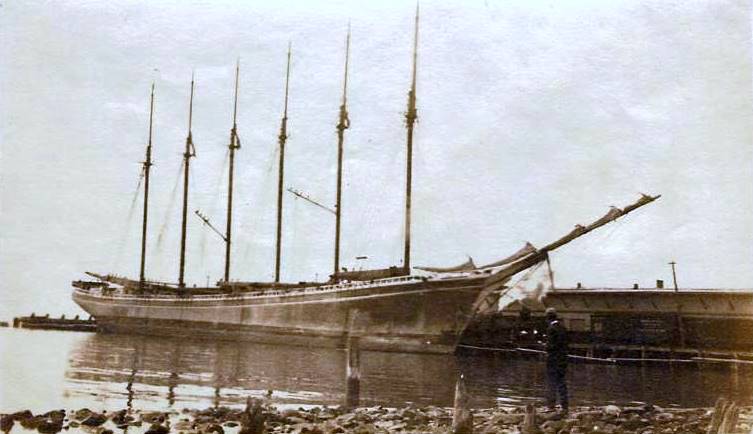
This is a list of the world's longest wooden ships. The vessels are sorted by ship length including bowsprit, if known.
Finding the world's longest wooden ship is not straightforward since there are several contenders, depending on which definitions are used. For example, some of these ships benefited from substantial iron or even steel components since the flexing of wood members can lead to significant leaking as the wood members become longer. Some of these ships were not very seaworthy, and a few sank either immediately after launch or soon thereafter. Some of the more recent large ships were never able or intended to leave their berths, and function as floating museums. Finally, not all of the claims to the title of the world's longest wooden ship are credible or verifiable.
A further problem is that especially wooden ships have more than one "length". The most used measure in length for registering a ship is the "length of the topmost deck"—the "length on deck" (LOD)—'measured from leading edge of stem post to trailing edge of stern post on deck level' or the "length between perpendiculars" (LPP, LBP)—'measured from leading edge of stem post to trailing edge of stern post in the construction waterline (CWL)'. In this method of measuring bowsprit including jibboom and out-board part of spanker boom if any have both no effect on the ship's length. The longest length for comparing ships, the total "overall" length (LOA) based on sparred length, should be given if known.
The longest wooden ship ever built, the six-masted New England gaff schooner Wyoming, had a "total length" of 137 metres (449 ft) (measured from tip of jibboom (30 metres) to tip of spanker boom (27 metres) and a "length on deck" of 107 m (351 ft). The 30 m (98 ft)-difference is due to her extremely long jibboom of 30 m (98 ft) her out-board length being 27 m (89 ft).
Tables
· Longest known wooden ships › Over 100 meters (328 feet)
Multi-metric bars
World heat map
Wyoming
Wyoming
Length
140 m
(450 ft)
Beam
15 m
(50 ft 1 in)
Name
Wyoming
Service
1909–1924
Fate
sunk
Notes
This ship had a tendency to flex in heavy seas, causing the planks to twist and buckle due to their extreme length despite being fitted with metal bracing. Water was evacuated nearly constantly by steam pumps. It foundered in heavy seas with loss of all hands.
Solano
Solano
Length
130 m
(425 ft)
Beam
35 m
(116 ft)
Name
Solano
Service
1878–1931
Fate
scuttled
Notes
A paddle steamer used to ferry passengers and trains across the Carquinez Strait between Benicia and Port Costa, California. At the time of its construction, it was the largest ferryboat ever built. Unlike its later sister, the Contra Costa which had a steel hull, the wooden-hulled Solano had tall masts in the center of mass ("hogposts") anchoring
USS Dunderberg
(later Rochambeau)
USS Dunderberg
(later Rochambeau)
Length
115 m
(377 ft)
Beam
22 m
(72 ft)
Name
USS Dunderberg
(later Rochambeau)
Service
1865–1874
Fate
broken up 1874
Notes
Ironclad built in New York City, originally intended for the United States Navy during the American Civil War, but eventually sold to the French Navy. About 50 feet (15 m) of her length was a ram. She was not particularly stable or seaworthy and only made one oceanic voyage to reach her new owners.
Columbus
Columbus
Length
108 m
(356 ft)
Beam
15 m
(50 ft)
Name
Columbus
Service
1824–1825
Fate
sunk
Notes
First timber ship or disposable ship with a four-masted barque rigging. Built in Quebec to avoid taxes on timber, her cargo and components were intended to be sold after the ship's arrival in London; however, the owner had only the cargo sold and ordered the ship back for a second voyage with a timber cargo; the ship broke apart and sunk in the Eng
Adriatic
Adriatic
Length
108 m
(354 ft)
Beam
15 m
(50 ft)
Name
Adriatic
Service
1857–1885
Fate
beached and abandoned in 1885
Notes
SS Adriatic was the largest passenger ship in the world when she was launched. She displaced 5,233 tons at her design draft of 20 feet (6 m). Her hull was constructed of live and white oak, reinforced with iron strapping 5 inches (13 cm) wide and inches (2 cm) thick. It was divided into eight watertight compartments, with bulkheads 6 inch
Eleanor A. Percy
Eleanor A. Percy
Length
105 m
(347 ft)
Beam
15 m
(50 ft)
Name
Eleanor A. Percy
Service
1900–1919
Fate
sunk
Notes
Six-masted schooner with hull measuring 323 feet and 347 feet including the bowsprit, that foundered off Ireland on December 26, 1919.
Pretoria
Pretoria
Length
103 m
(338 ft)
Beam
13 m
(44 ft)
Name
Pretoria
Service
1900–1905
Fate
sunk
Notes
A barge built for use on the Great Lakes. To strengthen the wooden frame and hull, steel keelson plates, chords, and arches were included, and was also diagonally strapped with steel. A donkey engine powered a pump to keep the interior dry.
Great Republic
(later Denmark)
Great Republic
(later Denmark)
Length
102 m
(335 ft)
Beam
16 m
(53 ft)
Name
Great Republic
(later Denmark)
Service
1853–1872
Fate
sunk
Notes
The largest wooden clipper ship ever built. It used iron bolts and was reinforced with steel, including ninety 36-foot (11 m) 4x1-inch cross braces, and metal keelsons. The MIT Museum noted that "With this behemoth, McKay had pushed wooden ship construction to its practical limits." The ship was abandoned leaking after encountering a hurricane near
HMS Orlando
HMS Mersey
HMS Orlando
HMS Mersey
Length
102 m
(335 ft)
Beam
18 m
(60 ft)
Name
HMS Orlando
HMS Mersey
Service
1858–1871, 1858–1875 respectively
Fate
broken up
Notes
Sister British warships that suffered structural problems due to their length despite having internal iron strapping to support the hull.
Trident
Trident
Length
102 m
(335 ft)
Beam
17 m
(58 ft 1 in)
Name
Trident
Service
1878–1909
Fate
scrapped
Notes
The largest Colbert-class ironclad of the French Navy's Mediterranean Squadron. It saw action at the French conquest of Tunisia
William D. Lawrence
(later Kommandør Svend Foyn)
William D. Lawrence
(later Kommandør Svend Foyn)
Length
102 m
(335 ft)
Beam
15 m
Name
William D. Lawrence
(later Kommandør Svend Foyn)
Service
1874–1891
Fate
sunk
Notes
Largest wooden cargo ship ever built in Canada. It passed to Norwegian ownership in 1883 and was converted into a barge in 1891. Sank while under tow at Dakar.
Richelieu
Richelieu
Length
101 m
(333 ft 8 in)
Beam
17 m
(57 ft 1 in)
Name
Richelieu
Service
1873–1911
Fate
scrapped
Notes
A wooden-hulled central battery ironclad that served in the French Navy's Mediterranean Squadron.
Colbert
Colbert
Length
101 m
(331 ft 8 in)
Beam
17 m
(57 ft 1 in)
Name
Colbert
Service
1877–1909
Fate
scrapped
Notes
Lead ship of the Colbert-class ironclads and part of the French Navy's Mediterranean Squadron. It saw action at the French conquest of Tunisia.
Ranked list
Length
Beam
Name
Service
Fate
Notes
140 m (450 ft)
15 m (50 ft 1 in)
Wyoming
1909–1924
sunk
This ship had a tendency to flex in heavy seas, causing the planks to twist and buckle due to their extreme length despite being fitted with metal bracing. Water was evacuated nearly constantly by steam pumps. It foundered in heavy seas with loss of all hands.
130 m (425 ft)
35 m (116 ft)
Solano
1878–1931
scuttled
A paddle steamer used to ferry passengers and trains across the Carquinez Strait between Benicia and Port Costa, California. At the time of its construction, it was the largest ferryboat ever built. Unlike its later sister, the Contra Costa which had a steel hull, the wooden-hulled Solano had tall masts in the center of mass ("hogposts") anchoring
115 m (377 ft)
22 m (72 ft)
USS Dunderberg (later Rochambeau)
1865–1874
broken up 1874
Ironclad built in New York City, originally intended for the United States Navy during the American Civil War, but eventually sold to the French Navy. About 50 feet (15 m) of her length was a ram. She was not particularly stable or seaworthy and only made one oceanic voyage to reach her new owners.
108 m (356 ft)
15 m (50 ft)
Columbus
1824–1825
sunk
First timber ship or disposable ship with a four-masted barque rigging. Built in Quebec to avoid taxes on timber, her cargo and components were intended to be sold after the ship's arrival in London; however, the owner had only the cargo sold and ordered the ship back for a second voyage with a timber cargo; the ship broke apart and sunk in the Eng
108 m (354 ft)
15 m (50 ft)
Adriatic
1857–1885
beached and abandoned in 1885
SS Adriatic was the largest passenger ship in the world when she was launched. She displaced 5,233 tons at her design draft of 20 feet (6 m). Her hull was constructed of live and white oak, reinforced with iron strapping 5 inches (13 cm) wide and inches (2 cm) thick. It was divided into eight watertight compartments, with bulkheads 6 inch
105 m (347 ft)
15 m (50 ft)
Eleanor A. Percy
1900–1919
sunk
Six-masted schooner with hull measuring 323 feet and 347 feet including the bowsprit, that foundered off Ireland on December 26, 1919.
103 m (338 ft)
13 m (44 ft)
Pretoria
1900–1905
sunk
A barge built for use on the Great Lakes. To strengthen the wooden frame and hull, steel keelson plates, chords, and arches were included, and was also diagonally strapped with steel. A donkey engine powered a pump to keep the interior dry.
102 m (335 ft)
16 m (53 ft)
Great Republic (later Denmark)
1853–1872
sunk
The largest wooden clipper ship ever built. It used iron bolts and was reinforced with steel, including ninety 36-foot (11 m) 4x1-inch cross braces, and metal keelsons. The MIT Museum noted that "With this behemoth, McKay had pushed wooden ship construction to its practical limits." The ship was abandoned leaking after encountering a hurricane near
102 m (335 ft)
18 m (60 ft)
HMS Orlando HMS Mersey
1858–1871, 1858–1875 respectively
broken up
Sister British warships that suffered structural problems due to their length despite having internal iron strapping to support the hull.
102 m (335 ft)
17 m (58 ft 1 in)
Trident
1878–1909
scrapped
The largest Colbert-class ironclad of the French Navy's Mediterranean Squadron. It saw action at the French conquest of Tunisia
102 m (335 ft)
15 m
William D. Lawrence (later Kommandør Svend Foyn)
1874–1891
sunk
Largest wooden cargo ship ever built in Canada. It passed to Norwegian ownership in 1883 and was converted into a barge in 1891. Sank while under tow at Dakar.
101 m (333 ft 8 in)
17 m (57 ft 1 in)
Richelieu
1873–1911
scrapped
A wooden-hulled central battery ironclad that served in the French Navy's Mediterranean Squadron.
101 m (331 ft 8 in)
17 m (57 ft 1 in)
Colbert
1877–1909
scrapped
Lead ship of the Colbert-class ironclads and part of the French Navy's Mediterranean Squadron. It saw action at the French conquest of Tunisia.
· Longest known wooden ships › 100–90 meters (328–295 feet)
Multi-metric bars
World heat map
Belyana type ships
Belyana type ships
Length
100 m
(328 ft)
Beam
6 m
(50 ft 1 in)
Name
Belyana type ships
Service
16th–20th century
Fate
disassembled
Notes
Belyanas were Russian freshwater ships used for log driving on the Volga and Vetluga rivers. Their bottom was made from fir and sidings from pine and featured a complement of 60 to 80 workers. The largest Belyanas could transport up to 13,000,000 kilograms (29,000,000 lb) of logs all stacked on their deck in the form of an inverted pyramid.
Santiago
Santiago
Length
98 m
(324 ft)
Beam
15 m
(46 ft)
Name
Santiago
Service
1899–1918
Fate
sunk
Notes
A schooner-barge on the Great Lakes, towed by Appomattox until 1905 and then the steamer John F. Morrow until 1918.
Edward J. Lawrence
Edward J. Lawrence
Length
97 m
(320 ft)
Beam
15 m
(50 ft)
Name
Edward J. Lawrence
Service
1908–1925
Fate
sunk
Notes
Six-masted schooner sunk in 1925 after fire while moored off Portland, Maine.
Roanoke
Roanoke
Length
97 m
(311 ft)
Beam
15 m
(49 ft)
Name
Roanoke
Service
1892–1905
Fate
burned, then sunk
Notes
A huge four-masted barque with skysails of a total length of 360 ft (110 m) and 3,539 GRT. In 1905 she was under the command of Captain Jabez A. Amesbury when she caught fire while loading at the anchorage of Noumea and burned to the waterline. This ship used iron bolts and steel reinforcements.
Appomattox
Appomattox
Length
97 m
(319 ft)
Beam
12 m
(42 ft)
Name
Appomattox
Service
1896–1905
Fate
run aground and sunk
Notes
A Great Lakes steamship capable of carrying 3,000 tons of bulk cargo. Built with metallic cross bracing, keelson plates, and multiple arches because of her extreme length. Several syphons and steam-driven pumps were required to keep her afloat. Towed the steamer barge Santiago.
Caligula's giant ship
Caligula's giant ship
Length
10495 m
Beam
21 m
Name
Caligula's giant ship
Service
c. 37 AD
Fate
reused as foundation of lighthouse
Notes
Traces of this Roman barge were found during the construction of Leonardo da Vinci International Airport at Fiumicino, Italy, just north of the ancient port of Ostia. According to Pliny, this or a similar ship was used to transport the obelisk in St. Peter's Square from Egypt on the orders of Emperor Caligula.
L . Doty
L . Doty
Length
95 m
(312 ft)
Beam
12 m
(41 ft)
Name
L . Doty
Service
1893–1898
Fate
wrecked
Notes
A lake freighter that sank on Lake Michigan with the loss of all hands. Her wreck was located in 2010.
Iosco
Iosco
Length
95 m
(312 ft)
Beam
12 m
(41 ft)
Name
Iosco
Service
1891–1905
Fate
sunk
Notes
A lake freighter that sank on September 2, 1905, on Lake Superior with the loss of all hands.
Derzhava
Derzhava
Length
94 m
(311 ft)
Beam
unknown
Name
Derzhava
Service
1871–1905
Fate
decommissioned
Notes
A steam-propelled yacht for personal use of the Russian Imperial Family in the Baltic Sea.
Baron of Renfrew
Baron of Renfrew
Length
92 m
(304 ft)
Beam
18 m
(61 ft)
Name
Baron of Renfrew
Service
1825
Fate
stranded and broken apart
Notes
This unseaworthy British ship was a disposable ship. Created to avoid taxes on timber, she was built of components intended to be sold after the ship's arrival from Quebec to London. The ship stranded on the Goodwin Sands and broke apart while being towed with a pilot aboard. Parts of her timber were found on the French coast. The ship had 5,294 GR
Frank O'Connor
Frank O'Connor
Length
91 m
(301 ft)
Beam
13 m
(42 ft)
Name
Frank O'Connor
Service
1892–1919
Fate
burned
Notes
A steam screw operating on the Great Lakes, it required an innovative iron and steel-reinforced hull to be a viable vessel.
HMS Bellerophon
HMS Bellerophon
Length
91 m
(300 ft 4 in)
Beam
17 m
(56 ft 5)
Name
HMS Bellerophon
Service
1865–1923
Fate
sold for scrap
Notes
A Royal Navy central battery ironclad. It served in the Channel Fleet and North America.
Shenandoah
Shenandoah
Length
91 m
(300 ft)
Beam
15 m
(49 ft)
Name
Shenandoah
Service
1890–1915
Fate
accidentally rammed and sunk
Notes
Another huge four-masted barque of the fleet of Arthur Sewell & Co. of Bath, Maine, with double top-sails, single topgallant sails, royal and sky sails of a total length of 360 ft (110 m) and 3,406 GRT. It was rammed by the steamer Powhattan near Fire Island, Long Island, New York in 1915.
Eureka
Eureka
Length
91 m
(299 ft)
Beam
23 m
(78 ft)
Name
Eureka
Service
1890–1957
Fate
museum ship
Notes
A steamboat with twin, 27-foot paddlewheels that carried railcars, cars and passengers across San Francisco Bay. Currently a National Historic Landmark at the San Francisco Maritime National Historical Park, and the longest wooden ship that is still afloat.
Haian
Yuyuen
Haian
Yuyuen
Length
91 m
(300 ft)
Beam
13 m
(42 ft)
Name
Haian
Yuyuen
Service
1872–?
1873–1885
(respectively)
Fate
hulked and scrapped
sunk
(respectively)
Notes
Twin steam-powered frigates of the Imperial Chinese Navy, and the largest vessels built in China until the 1930s. Yuyuen was sunk in action during the Sino-French War; Haian survived, but was hulked after being used as a blockship in the same war, and was scrapped years later.
Ranked list
Length
Beam
Name
Service
Fate
Notes
100 m (328 ft)
6 m (50 ft 1 in)
Belyana type ships
16th–20th century
disassembled
Belyanas were Russian freshwater ships used for log driving on the Volga and Vetluga rivers. Their bottom was made from fir and sidings from pine and featured a complement of 60 to 80 workers. The largest Belyanas could transport up to 13,000,000 kilograms (29,000,000 lb) of logs all stacked on their deck in the form of an inverted pyramid.
98 m (324 ft)
15 m (46 ft)
Santiago
1899–1918
sunk
A schooner-barge on the Great Lakes, towed by Appomattox until 1905 and then the steamer John F. Morrow until 1918.
97 m (320 ft)
15 m (50 ft)
Edward J. Lawrence
1908–1925
sunk
Six-masted schooner sunk in 1925 after fire while moored off Portland, Maine.
97 m (311 ft)
15 m (49 ft)
Roanoke
1892–1905
burned, then sunk
A huge four-masted barque with skysails of a total length of 360 ft (110 m) and 3,539 GRT. In 1905 she was under the command of Captain Jabez A. Amesbury when she caught fire while loading at the anchorage of Noumea and burned to the waterline. This ship used iron bolts and steel reinforcements.
97 m (319 ft)
12 m (42 ft)
Appomattox
1896–1905
run aground and sunk
A Great Lakes steamship capable of carrying 3,000 tons of bulk cargo. Built with metallic cross bracing, keelson plates, and multiple arches because of her extreme length. Several syphons and steam-driven pumps were required to keep her afloat. Towed the steamer barge Santiago.
10495 m
21 m
Caligula's giant ship
c. 37 AD
reused as foundation of lighthouse
Traces of this Roman barge were found during the construction of Leonardo da Vinci International Airport at Fiumicino, Italy, just north of the ancient port of Ostia. According to Pliny, this or a similar ship was used to transport the obelisk in St. Peter's Square from Egypt on the orders of Emperor Caligula.
95 m (312 ft)
12 m (41 ft)
L . Doty
1893–1898
wrecked
A lake freighter that sank on Lake Michigan with the loss of all hands. Her wreck was located in 2010.
95 m (312 ft)
12 m (41 ft)
Iosco
1891–1905
sunk
A lake freighter that sank on September 2, 1905, on Lake Superior with the loss of all hands.
94 m (311 ft)
unknown
Derzhava
1871–1905
decommissioned
A steam-propelled yacht for personal use of the Russian Imperial Family in the Baltic Sea.
92 m (304 ft)
18 m (61 ft)
Baron of Renfrew
1825
stranded and broken apart
This unseaworthy British ship was a disposable ship. Created to avoid taxes on timber, she was built of components intended to be sold after the ship's arrival from Quebec to London. The ship stranded on the Goodwin Sands and broke apart while being towed with a pilot aboard. Parts of her timber were found on the French coast. The ship had 5,294 GR
91 m (301 ft)
13 m (42 ft)
Frank O'Connor
1892–1919
burned
A steam screw operating on the Great Lakes, it required an innovative iron and steel-reinforced hull to be a viable vessel.
91 m (300 ft 4 in)
17 m (56 ft 5)
HMS Bellerophon
1865–1923
sold for scrap
A Royal Navy central battery ironclad. It served in the Channel Fleet and North America.
91 m (300 ft)
15 m (49 ft)
Shenandoah
1890–1915
accidentally rammed and sunk
Another huge four-masted barque of the fleet of Arthur Sewell & Co. of Bath, Maine, with double top-sails, single topgallant sails, royal and sky sails of a total length of 360 ft (110 m) and 3,406 GRT. It was rammed by the steamer Powhattan near Fire Island, Long Island, New York in 1915.
91 m (299 ft)
23 m (78 ft)
Eureka
1890–1957
museum ship
A steamboat with twin, 27-foot paddlewheels that carried railcars, cars and passengers across San Francisco Bay. Currently a National Historic Landmark at the San Francisco Maritime National Historical Park, and the longest wooden ship that is still afloat.
91 m (300 ft)
13 m (42 ft)
Haian Yuyuen
1872–? 1873–1885 (respectively)
hulked and scrapped sunk (respectively)
Twin steam-powered frigates of the Imperial Chinese Navy, and the largest vessels built in China until the 1930s. Yuyuen was sunk in action during the Sino-French War; Haian survived, but was hulked after being used as a blockship in the same war, and was scrapped years later.
· Longest known wooden ships › 89–80 meters (291–262 feet)
Multi-metric bars
World heat map
Sagunto
(also Amadeo I)
Sagunto
(also Amadeo I)
Length
89 m
(283 ft 8 in)
Beam
17 m
(56 ft 9 in)
Name
Sagunto
(also Amadeo I)
Service
1869–1896
Fate
hulked and broken up
Notes
Designed as a 100-gun screw-propelled frigate but turned into an armored frigate during construction. The hull was wooden but fully covered by iron plates. Turned into a hulk in 1887.
Dom Fernando II e Glória
Dom Fernando II e Glória
Length
87 m
(284 ft)
Beam
13 m
(42 ft)
Name
Dom Fernando II e Glória
Service
1845–1940
Fate
museum ship
Notes
A 50-gun frigate of the Portuguese Navy. It became a training ship in 1865 and was permanently moored at Lisbon after 1878. Despite this, it was named the flagship of Portugal's European squadron in 1938. Two years later it became a naval school and museum ship. It is currently displayed in Almada.
Australasia
Australasia
Length
87 m
(285 ft)
Beam
12 m
(29 ft)
Name
Australasia
Service
1884–1896
Fate
burned
Notes
A steamship that burned down on Lake Michigan.
Rappahannock
Rappahannock
Length
86 m
(287 ft)
Beam
15 m
(49 ft)
Name
Rappahannock
Service
1889–1891
Fate
burned
Notes
A three-masted wooden full-rigged ship of 3,054 GRT, built and owned by Arthur Sewall & Co., with double top-sails and topgallant sails, royal and sky sails of a total length of 347 ft (106 m). The ship burned down near Juan Fernández while transporting soft charcoal from Liverpool to San Francisco, but everyone aboard reached Robinson Crusoe islan
Zaragoza
Zaragoza
Length
85 m
(280 ft 2 in)
Beam
16 m
(54 ft 6 in)
Name
Zaragoza
Service
1867–1899
Fate
scuttled
Notes
A Spanish armored frigate built in Cartagena with a wooden hull covered by iron plates. Became a torpedo training ship in 1892.
Cutty Sark
Cutty Sark
Length
85 m
(280 ft)
Beam
10 m
(36 ft)
Name
Cutty Sark
Service
1869–1954
Fate
museum ship
Notes
Built as one of the last and fastest clippers for the tea trade with China, it switched to transporting wool from Australia after the Suez Canal was built. It was sold to a Portuguese company and used as a cargo ship between 1895 and 1922, when it was reacquired by British citizens and eventually restored for exhibition.
HMS Lord Clyde
HMS Lord Warden
HMS Lord Clyde
HMS Lord Warden
Length
85 m
(280 ft)
Beam
18 m
(58 ft 11 in)
Name
HMS Lord Clyde
HMS Lord Warden
Service
1864–1875
1865–1889
(respectively)
Fate
run aground and sold for scrap
broken up
(respectively)
Notes
Sister ships reputed at once to be the heaviest wooden ships ever built, the fastest steaming wooden ships, and the slowest-sailing ironclads in the Royal Navy. Both served in the Channel Fleet and the Mediterranean Squadron. Lord Clyde was plagued with engineering problems and was sold for scrap after it run aground and its hull was found to be ro
Arapiles
Arapiles
Length
85 m
(280 ft)
Beam
15 m
(52 ft 2 in)
Name
Arapiles
Service
1868–1883
Fate
broken up
Notes
A Spanish ironclad with a wooden hull covered entirely by iron plates. It served mostly in the Caribbean.
HMS Galatea
HMS Galatea
Length
85 m
(280 ft)
Beam
15 m
(50 ft)
Name
HMS Galatea
Service
1859–1883
Fate
broken up
Notes
A 26-gun sixth-rate screw frigate of the Royal Navy's North America and West Indies Station.
Tetuán
Tetuán
Length
85 m
(279 ft 1 in)
Beam
17 m
(55 ft 9 in)
Name
Tetuán
Service
1863–1874
Fate
burned and sunk
Notes
First armored frigate built in Spain, in the Ferrol royal shipyard, with a wooden hull covered by iron plates. She burned as a result of sabotage during the Cantonal Revolution.
Al-Hashemi-II
Al-Hashemi-II
Length
83 m
(274 ft)
Beam
18 m
(60 ft)
Name
Al-Hashemi-II
Service
2001–
Fate
museum and restaurant
Notes
A Kuwaiti non-seagoing model of a dhow, reputed to be the largest ever built.
Susquehanna
Susquehanna
Length
83 m
(274 ft)
Beam
13 m
(45 ft)
Name
Susquehanna
Service
1891–1905
Fate
sunk
Notes
The third hugest four-masted wooden barque of the fleet of Arthur Sewell & Co. with double top-sails, single topgallant sails, royal and sky sails of 2,745 GRT. Lost in a heavy storm three days after leaving Nouméa, New Caledonia, for Delaware with a cargo of 3,558 tons of nickel ore. This ship used also iron bolts and steel reinforcements.
Livadia
Livadia
Length
81 m
Beam
10 m
Name
Livadia
Service
1873–1878
Fate
run aground and sunk
Notes
A steam-propelled yacht for personal use of the Russian Imperial Family in the Black Sea. It sank at night, due to unruly weather, but without loss of life or cargo.
Bretagne
Bretagne
Length
81 m
(266 ft)
Beam
18 m
(59 ft)
Name
Bretagne
Service
1855–1880
Fate
broken up
Notes
A 130-gun three-decker ship of the line, built as an improvement over the successful Océan class. It was equipped with an 8-boiler steam engine and a propeller that could be retracted to streamline the hull when sailing under sail only. It saw action during the Crimean War, and was used as a school ship after 1866.
Morning Light
(later Jacob Fritz)
Morning Light
(later Jacob Fritz)
Length
80 m
(265 ft)
Beam
13 m
(44 ft)
Name
Morning Light
(later Jacob Fritz)
Service
1856–1889
Fate
wrecked
Notes
Largest vessel in British North America at the time of its construction. Sold to a German company in 1881, and found wrecked and abandoned north of New Jersey, in 1889.
Ranked list
Length
Beam
Name
Service
Fate
Notes
89 m (283 ft 8 in)
17 m (56 ft 9 in)
Sagunto (also Amadeo I)
1869–1896
hulked and broken up
Designed as a 100-gun screw-propelled frigate but turned into an armored frigate during construction. The hull was wooden but fully covered by iron plates. Turned into a hulk in 1887.
87 m (284 ft)
13 m (42 ft)
Dom Fernando II e Glória
1845–1940
museum ship
A 50-gun frigate of the Portuguese Navy. It became a training ship in 1865 and was permanently moored at Lisbon after 1878. Despite this, it was named the flagship of Portugal's European squadron in 1938. Two years later it became a naval school and museum ship. It is currently displayed in Almada.
87 m (285 ft)
12 m (29 ft)
Australasia
1884–1896
burned
A steamship that burned down on Lake Michigan.
86 m (287 ft)
15 m (49 ft)
Rappahannock
1889–1891
burned
A three-masted wooden full-rigged ship of 3,054 GRT, built and owned by Arthur Sewall & Co., with double top-sails and topgallant sails, royal and sky sails of a total length of 347 ft (106 m). The ship burned down near Juan Fernández while transporting soft charcoal from Liverpool to San Francisco, but everyone aboard reached Robinson Crusoe islan
85 m (280 ft 2 in)
16 m (54 ft 6 in)
Zaragoza
1867–1899
scuttled
A Spanish armored frigate built in Cartagena with a wooden hull covered by iron plates. Became a torpedo training ship in 1892.
85 m (280 ft)
10 m (36 ft)
Cutty Sark
1869–1954
museum ship
Built as one of the last and fastest clippers for the tea trade with China, it switched to transporting wool from Australia after the Suez Canal was built. It was sold to a Portuguese company and used as a cargo ship between 1895 and 1922, when it was reacquired by British citizens and eventually restored for exhibition.
85 m (280 ft)
18 m (58 ft 11 in)
HMS Lord Clyde HMS Lord Warden
1864–1875 1865–1889 (respectively)
run aground and sold for scrap broken up (respectively)
Sister ships reputed at once to be the heaviest wooden ships ever built, the fastest steaming wooden ships, and the slowest-sailing ironclads in the Royal Navy. Both served in the Channel Fleet and the Mediterranean Squadron. Lord Clyde was plagued with engineering problems and was sold for scrap after it run aground and its hull was found to be ro
85 m (280 ft)
15 m (52 ft 2 in)
Arapiles
1868–1883
broken up
A Spanish ironclad with a wooden hull covered entirely by iron plates. It served mostly in the Caribbean.
85 m (280 ft)
15 m (50 ft)
HMS Galatea
1859–1883
broken up
A 26-gun sixth-rate screw frigate of the Royal Navy's North America and West Indies Station.
85 m (279 ft 1 in)
17 m (55 ft 9 in)
Tetuán
1863–1874
burned and sunk
First armored frigate built in Spain, in the Ferrol royal shipyard, with a wooden hull covered by iron plates. She burned as a result of sabotage during the Cantonal Revolution.
83 m (274 ft)
18 m (60 ft)
Al-Hashemi-II
2001–
museum and restaurant
A Kuwaiti non-seagoing model of a dhow, reputed to be the largest ever built.
83 m (274 ft)
13 m (45 ft)
Susquehanna
1891–1905
sunk
The third hugest four-masted wooden barque of the fleet of Arthur Sewell & Co. with double top-sails, single topgallant sails, royal and sky sails of 2,745 GRT. Lost in a heavy storm three days after leaving Nouméa, New Caledonia, for Delaware with a cargo of 3,558 tons of nickel ore. This ship used also iron bolts and steel reinforcements.
81 m
10 m
Livadia
1873–1878
run aground and sunk
A steam-propelled yacht for personal use of the Russian Imperial Family in the Black Sea. It sank at night, due to unruly weather, but without loss of life or cargo.
81 m (266 ft)
18 m (59 ft)
Bretagne
1855–1880
broken up
A 130-gun three-decker ship of the line, built as an improvement over the successful Océan class. It was equipped with an 8-boiler steam engine and a propeller that could be retracted to streamline the hull when sailing under sail only. It saw action during the Crimean War, and was used as a school ship after 1866.
80 m (265 ft)
13 m (44 ft)
Morning Light (later Jacob Fritz)
1856–1889
wrecked
Largest vessel in British North America at the time of its construction. Sold to a German company in 1881, and found wrecked and abandoned north of New Jersey, in 1889.
· Longest known wooden ships › 79–70 meters (259–230 feet)
Multi-metric bars
World heat map
HMS Victoria
HMS Howe
HMS Victoria
HMS Howe
Length
79 m
(260 ft)
Beam
18 m
(60 ft)
Name
HMS Victoria
HMS Howe
Service
1859–1893
1860–1921
(respectively)
Fate
both scrapped
Notes
Sister 121-gun ships that were the last commissioned three-deckers ships of the line of the Royal Navy. The hulls were strapped with diagonal iron riders for extra stability, and they combined sail propulsion with a two-funnel marine steam engine that made them among the fastest ships of the line ever built.
Adler von Lübeck
Adler von Lübeck
Length
78 m
(256 ft)
Beam
14 m
(47 ft)
Name
Adler von Lübeck
Service
1567–1588
Fate
disassembled
Notes
Built in Lübeck to serve as the main fighting ship of the Hanseatic League. This galleon featured 138 guns, and space for 650 marines and a 350-man-strong crew. She was the largest ship of her time.
Gloire
Gloire
Length
78 m
(256 ft 8 in)
Beam
17 m
(55 ft 9 in)
Name
Gloire
Service
1859–1883
Fate
scrapped
Notes
First ocean-going ironclad, developed in response to the use of explosive shells in the Crimean War.
Canada
Canada
Length
78 m
(257 ft)
Beam
14 m
(45 ft)
Name
Canada
Service
1891–1926
Fate
broken up
Notes
A full-rigged ship intended to be the largest wooden ship built in Canada, but the hull had to be shortened after the keel's timber was damaged during construction. It transported cargo between South America and Australia, and between the United States and Canada, during her career.
HMS Algiers
HMS Algiers
Length
77 m
(255 ft 6 in)
Beam
18 m
(60 ft)
Name
HMS Algiers
Service
1854–1870
Fate
broken up
Notes
A screw-propelled, 91-gun second rate ship of the line of the Royal Navy, launched after several changes in design since first conceived in 1839. Saw action at the Crimean War before being transferred to Malta and British home waters.
Napoléon
Napoléon
Length
77 m
(255 ft 3 in)
Beam
17 m
(55 ft 9 in)
Name
Napoléon
Service
1850–1876
Fate
struck
Notes
A 90-gun ship of the line of the French Navy, the first purpose-built steam battleship in the world, and the first screw battleship. Its design was used as a basis for the slightly smaller Algésiras and Ville de Nantes classes.
HMS Prince of Wales
(later HMS Britannia)
HMS Prince of Wales
(later HMS Britannia)
Length
76 m
(252 ft)
Beam
18 m
(60 ft 2 in)
Name
HMS Prince of Wales
(later HMS Britannia)
Service
1860–1917
Fate
hulked and broken up
Notes
A 121-gun screw-propelled first-rate three-decker line-of-battle ship of the Royal Navy. Renamed in 1869 and hulked in 1909.
Sovereign of the Seas
Sovereign of the Seas
Length
76 m
(252 ft)
Beam
13 m
45 ft
Name
Sovereign of the Seas
Service
1852–1859
Fate
wrecked
Notes
This clipper is the fastest sailing ship ever built, recording an unbeaten 22 knots (41 km/h; 25 mph) in 1854. It wrecked on the Strait of Malacca while covering the route between Hamburg and China.
Mahmudiye
Mahmudiye
Length
76 m
(249 ft)
Beam
21 (69 ft)
Name
Mahmudiye
Service
1829–1874
Fate
disassembled
Notes
Ordered by Sultan Mahmud II and built by the Ottoman Imperial Naval Arsenal on the Golden Horn in Constantinople. It was the largest warship in the world for several years. The ship-of-the-line that was 76 m (249 ft) long with a beam of 21 m (69 ft), was armed with 128 cannon on three decks with complement of 1,280. She participated in many naval b
SMS Danzig (1851) (later Kaiten Maru)
SMS Danzig (1851) (later Kaiten Maru)
Length
75 m
(248 ft 3 in)
Beam
16 m
(54 ft 2 in)
Name
SMS Danzig (1851) (later Kaiten Maru)
Service
1853–1869
Fate
burned
SS British Queen
(later British Queen)
SS British Queen
(later British Queen)
Length
75 m
(245 ft)
Beam
12 m
(40 ft)
Name
SS British Queen
(later British Queen)
Service
1839–1844
Fate
scrapped
Notes
A paddle steamer that was the second steamship built for the trans-Atlantic route and the largest passenger liner at the time it was built. It passed to Belgian ownership after the British and American Steam Navigation Company collapsed on the wake of the loss of SS President.
HMS Atlas
(later Atlas)
HMS Atlas
(later Atlas)
Length
74 m
(245 ft)
Beam
unknown
Name
HMS Atlas
(later Atlas)
Service
1860–1904
Fate
broken up
Notes
A 91-gun second rate ship of the line that was never completed and spent her entire career in reserve and later, as a civilian-owned hospital ship.
City of Adelaide
City of Adelaide
Length
74 m
(244 ft 1 in)
Beam
10 m
(33 ft)
Name
City of Adelaide
Service
1864–1948
Fate
museum ship
Notes
A clipper ship built to transport passengers and goods between Britain and Australia. In 1893 she became a floating hospital, and between 1923 and 1948 she served in the Royal Navy as a school ship, HMS Carrick. After being displayed in Scotland for decades, it was moved to its namesake Port Adelaide in 2014.
Audacieuse
Audacieuse
Length
74 m
(242 ft 9 in)
Beam
14 m (48 ft 3 in)
Name
Audacieuse
Service
1856–1879
Fate
decommissioned
Notes
A mixed frigate of the French Navy active in the Second Opium War.
County of Yarmouth
County of Yarmouth
Length
74 m
(243 ft)
Beam
13 m
(44 ft)
Name
County of Yarmouth
Service
1884–?
Fate
unknown
Notes
A full-rigged ship built for trade with South America. It was dismasted and set to be broken up in 1895, but it was purchased in the last moment by the Argentinian Navy. Its later fate is unknown.
SS President
SS President
Length
74 m
(243 ft)
Beam
12 m
(41 ft)
Name
SS President
Service
1840–1841
Fate
lost at sea
Notes
The largest passenger liner in the world, and the first steamship lost on the trans-Atlantic route when it disappeared on its third voyage with all 136 people on board. Although one meter shorter than British Queen overall, it had 25% more capacity and an additional deck that made it top heavy, slow, and under-powered in rough weather.
George Spencer
George Spencer
Length
74 m
(242 ft)
Beam
11 m (37 ft)
Name
George Spencer
Service
1884–1905
Fate
wrecked
Notes
A lake freighter built to carry iron ore on the Great Lakes. She wrecked in the infamous Mataafa Storm of 1905.
HMS Royal Sovereign
HMS Royal Sovereign
Length
73 m
(240 ft 6 in)
Beam
19 m
(62 ft)
Name
HMS Royal Sovereign
Service
1857–1885
Fate
broken up
Notes
Designed as a 121-gun first rate ship of the line but modified to a 131-gun screw ship during construction. In 1862, she was razed and further converted to an experimental armored turret ship for coastal defence, the first built in Britain as well as the smallest and only with a wooden hull.
HMS Conqueror
HMS Donegal
(later HMS Vernon)
HMS Conqueror
HMS Donegal
(later HMS Vernon)
Length
73 m
(240 ft)
Beam
16 m
(55 ft 4 in)
Name
HMS Conqueror
HMS Donegal
(later HMS Vernon)
Service
1855–1861
1858–1925
(respectively)
Fate
wrecked
hulked, then scrapped
(respectively)
Notes
Sister 101-gun screw-propelled, first rate ships of the line of the Royal Navy. Conqueror was wrecked in the Bahamas while carrying troops to the French Intervention in Mexico, but all aboard could be saved. Donegal served in Mexico, Liverpool and China until 1886, when it was hulked and merged into the Torpedo School at Portsmouth under the name V
Great Michael
(later Grande Nef d'Ecosse)
Great Michael
(later Grande Nef d'Ecosse)
Length
73 m
(249 ft)
Beam
11 m (36 ft)
Name
Great Michael
(later Grande Nef d'Ecosse)
Service
1512–?
Fate
unknown
Notes
Michael, the flagship of the Royal Scots Navy, ordered by James IV of Scotland, and built at Newhaven, Edinburgh. Nicknamed Great Michael, she was sold to France following the Scottish defeat at the Battle of Flodden.
Second Nemi ship
Second Nemi ship
Length
73 m
(240 ft)
Beam
24 m (79 ft)
Name
Second Nemi ship
Service
1st century AD
Fate
sunk, then burned
Notes
Believed to have been used as a pleasure barge or floating palace by Caligula. Its remains were recovered from Lake Nemi in 1929 and housed in a Roman museum until they were destroyed in World War II.
HMS St Jean d'Acre
HMS St Jean d'Acre
Length
73 m
(238 ft)
Beam
16 m
(55 ft 4 in)
Name
HMS St Jean d'Acre
Service
1853–1875
Fate
broken up
Notes
First 101-gun screw two-decker ship of the line of the Royal Navy. This experimental ship recycled materials from an 1844 copy of HMS Albion that was never completed and incorporated new designs made for the 1854 HMS James Watt. It later served as inspiration for the slightly longer HMS Conqueror. Saw action at the Crimean War.
Japanese frigate Kaiyō Maru
Japanese frigate Kaiyō Maru
Length
72 m
(236 ft 11 in)
Beam
13 m
(42 ft 9 in)
Name
Japanese frigate Kaiyō Maru
Service
1865–1868
Fate
wrecked
Lealtad class
Lealtad class
Length
72 m
(236 ft 2 in)
Beam
15 m
(49 ft 3 in)
Name
Lealtad class
Service
1860–1897
Fate
varied
Notes
Three sister steam and sail-powered armored frigates with wooden hulls that served in the French Intervention in Mexico, the Chincha Islands War and the Cantonal Revolution.
Great Western
Great Western
Length
71 m
(236 ft)
Beam
10 m
(35 ft)
Name
Great Western
Service
1837–1856
Fate
disassembled
Notes
A steamship designed by Isambard Kingdom Brunel for regular transatlantic steam "packet boat" service. In addition to the paddle wheels, she carried four masts for supplementary propulsion and stability.
Ville de Nantes class
Ville de Nantes class
Length
71 m
(235 ft 3 in)
Beam
16 m
(55 ft 1 in)
Name
Ville de Nantes class
Service
1862–1894
Fate
all broken up
Notes
90-gun ship of the line class of the French Navy, powered both by sail and steam power.
Sovereign of the Seas
(later HMS Royal Sovereign)
Sovereign of the Seas
(later HMS Royal Sovereign)
Length
71 m
(234 ft)
Beam
14 m
(48 ft)
Name
Sovereign of the Seas
(later HMS Royal Sovereign)
Service
1637–1696
Fate
burned
Notes
A prestige flagship of the English Royal Navy, designed as a 90-gun first-rate ship of the line but launched with 102 guns at the insistence of Charles I. Her most extravagant decoration earned her the nickname of "Golden Devil". After serving in the Anglo-Dutch Wars and the War of the Grand Alliance, she was permanently moored at Chatham until she
Algésiras class
Algésiras class
Length
71 m
(234 ft 5 in)
Beam
16 m
(55 ft 4 in)
Name
Algésiras class
Service
1855–1921
Fate
varied
Notes
90-gun ship of the line class of the French Navy, powered both by sail and steam power.
Jylland
Jylland
Length
71 m
(233 ft)
Beam
13 m
(44 ft)
Name
Jylland
Service
1860–1908
Fate
museum ship
Notes
A screw-propelled steam frigate of the Royal Danish Navy, it saw action at the Battle of Heligoland (1864). Currently preserved in Ebeltoft.
HMS Agamemnon
HMS Victor Emmanuel
HMS Agamemnon
HMS Victor Emmanuel
Length
70 m
(230 ft 3 in)
Beam
16 m
(55 ft 4 in)
Name
HMS Agamemnon
HMS Victor Emmanuel
Service
1852–1870
1855–1899?
Fate
broken up
unknown
Notes
91-gun Royal Navy steam battleships ordered in response to the French Napoléon. Agamemnon was one of two ships used to lay the first Transatlantic telegraph cable in 1858. Victor Emmanuel served in the English Channel, Mediterranean and Africa during the Anglo-Ashanti wars before it was stationed as a hospital and receiving ship in Hong Kong, in 18
First Nemi ship
First Nemi ship
Length
70 m
(230 ft)
Beam
20 m
(66 ft)
Name
First Nemi ship
Service
1st century AD
Fate
sunk, then burned
Notes
A slightly smaller ship discovered in Lake Nemi and built around the same time as the second ship; its purpose is unknown. Also destroyed in World War II.
Ranked list
Length
Beam
Name
Service
Fate
Notes
79 m (260 ft)
18 m (60 ft)
HMS Victoria HMS Howe
1859–1893 1860–1921 (respectively)
both scrapped
Sister 121-gun ships that were the last commissioned three-deckers ships of the line of the Royal Navy. The hulls were strapped with diagonal iron riders for extra stability, and they combined sail propulsion with a two-funnel marine steam engine that made them among the fastest ships of the line ever built.
78 m (256 ft)
14 m (47 ft)
Adler von Lübeck
1567–1588
disassembled
Built in Lübeck to serve as the main fighting ship of the Hanseatic League. This galleon featured 138 guns, and space for 650 marines and a 350-man-strong crew. She was the largest ship of her time.
78 m (256 ft 8 in)
17 m (55 ft 9 in)
Gloire
1859–1883
scrapped
First ocean-going ironclad, developed in response to the use of explosive shells in the Crimean War.
78 m (257 ft)
14 m (45 ft)
Canada
1891–1926
broken up
A full-rigged ship intended to be the largest wooden ship built in Canada, but the hull had to be shortened after the keel's timber was damaged during construction. It transported cargo between South America and Australia, and between the United States and Canada, during her career.
77 m (255 ft 6 in)
18 m (60 ft)
HMS Algiers
1854–1870
broken up
A screw-propelled, 91-gun second rate ship of the line of the Royal Navy, launched after several changes in design since first conceived in 1839. Saw action at the Crimean War before being transferred to Malta and British home waters.
77 m (255 ft 3 in)
17 m (55 ft 9 in)
Napoléon
1850–1876
struck
A 90-gun ship of the line of the French Navy, the first purpose-built steam battleship in the world, and the first screw battleship. Its design was used as a basis for the slightly smaller Algésiras and Ville de Nantes classes.
76 m (252 ft)
18 m (60 ft 2 in)
HMS Prince of Wales (later HMS Britannia)
1860–1917
hulked and broken up
A 121-gun screw-propelled first-rate three-decker line-of-battle ship of the Royal Navy. Renamed in 1869 and hulked in 1909.
76 m (252 ft)
13 m 45 ft
Sovereign of the Seas
1852–1859
wrecked
This clipper is the fastest sailing ship ever built, recording an unbeaten 22 knots (41 km/h; 25 mph) in 1854. It wrecked on the Strait of Malacca while covering the route between Hamburg and China.
76 m (249 ft)
21 (69 ft)
Mahmudiye
1829–1874
disassembled
Ordered by Sultan Mahmud II and built by the Ottoman Imperial Naval Arsenal on the Golden Horn in Constantinople. It was the largest warship in the world for several years. The ship-of-the-line that was 76 m (249 ft) long with a beam of 21 m (69 ft), was armed with 128 cannon on three decks with complement of 1,280. She participated in many naval b
75 m (248 ft 3 in)
16 m (54 ft 2 in)
SMS Danzig (1851) (later Kaiten Maru)
1853–1869
burned
75 m (245 ft)
12 m (40 ft)
SS British Queen (later British Queen)
1839–1844
scrapped
A paddle steamer that was the second steamship built for the trans-Atlantic route and the largest passenger liner at the time it was built. It passed to Belgian ownership after the British and American Steam Navigation Company collapsed on the wake of the loss of SS President.
74 m (245 ft)
unknown
HMS Atlas (later Atlas)
1860–1904
broken up
A 91-gun second rate ship of the line that was never completed and spent her entire career in reserve and later, as a civilian-owned hospital ship.
74 m (244 ft 1 in)
10 m (33 ft)
City of Adelaide
1864–1948
museum ship
A clipper ship built to transport passengers and goods between Britain and Australia. In 1893 she became a floating hospital, and between 1923 and 1948 she served in the Royal Navy as a school ship, HMS Carrick. After being displayed in Scotland for decades, it was moved to its namesake Port Adelaide in 2014.
74 m (242 ft 9 in)
14 m (48 ft 3 in)
Audacieuse
1856–1879
decommissioned
A mixed frigate of the French Navy active in the Second Opium War.
74 m (243 ft)
13 m (44 ft)
County of Yarmouth
1884–?
unknown
A full-rigged ship built for trade with South America. It was dismasted and set to be broken up in 1895, but it was purchased in the last moment by the Argentinian Navy. Its later fate is unknown.
74 m (243 ft)
12 m (41 ft)
SS President
1840–1841
lost at sea
The largest passenger liner in the world, and the first steamship lost on the trans-Atlantic route when it disappeared on its third voyage with all 136 people on board. Although one meter shorter than British Queen overall, it had 25% more capacity and an additional deck that made it top heavy, slow, and under-powered in rough weather.
74 m (242 ft)
11 m (37 ft)
George Spencer
1884–1905
wrecked
A lake freighter built to carry iron ore on the Great Lakes. She wrecked in the infamous Mataafa Storm of 1905.
73 m (241 ft)
8 m (29 ft)
Keangsoo (later Kasuga)
1862–1902
scrapped
A paddle steamer commissioned in the Isle of Wight by Prince Gong of the Qing Dynasty for use in the Taiping Rebellion, but never delivered as the British crew refused to take orders from Chinese officers. Sold to the Satsuma Domain, she joined the Imperial Japanese Navy during the Boshin War.
73 m (240 ft 6 in)
19 m (62 ft)
HMS Royal Sovereign
1857–1885
broken up
Designed as a 121-gun first rate ship of the line but modified to a 131-gun screw ship during construction. In 1862, she was razed and further converted to an experimental armored turret ship for coastal defence, the first built in Britain as well as the smallest and only with a wooden hull.
73 m (240 ft)
16 m (55 ft 4 in)
HMS Conqueror HMS Donegal (later HMS Vernon)
1855–1861 1858–1925 (respectively)
wrecked hulked, then scrapped (respectively)
Sister 101-gun screw-propelled, first rate ships of the line of the Royal Navy. Conqueror was wrecked in the Bahamas while carrying troops to the French Intervention in Mexico, but all aboard could be saved. Donegal served in Mexico, Liverpool and China until 1886, when it was hulked and merged into the Torpedo School at Portsmouth under the name V
73 m (249 ft)
11 m (36 ft)
Great Michael (later Grande Nef d'Ecosse)
1512–?
unknown
Michael, the flagship of the Royal Scots Navy, ordered by James IV of Scotland, and built at Newhaven, Edinburgh. Nicknamed Great Michael, she was sold to France following the Scottish defeat at the Battle of Flodden.
73 m (240 ft)
24 m (79 ft)
Second Nemi ship
1st century AD
sunk, then burned
Believed to have been used as a pleasure barge or floating palace by Caligula. Its remains were recovered from Lake Nemi in 1929 and housed in a Roman museum until they were destroyed in World War II.
73 m (238 ft)
16 m (55 ft 4 in)
HMS St Jean d'Acre
1853–1875
broken up
First 101-gun screw two-decker ship of the line of the Royal Navy. This experimental ship recycled materials from an 1844 copy of HMS Albion that was never completed and incorporated new designs made for the 1854 HMS James Watt. It later served as inspiration for the slightly longer HMS Conqueror. Saw action at the Crimean War.
72 m (236 ft 11 in)
13 m (42 ft 9 in)
Japanese frigate Kaiyō Maru
1865–1868
wrecked
72 m (236 ft 2 in)
15 m (49 ft 3 in)
Lealtad class
1860–1897
varied
Three sister steam and sail-powered armored frigates with wooden hulls that served in the French Intervention in Mexico, the Chincha Islands War and the Cantonal Revolution.
71 m (236 ft)
10 m (35 ft)
Great Western
1837–1856
disassembled
A steamship designed by Isambard Kingdom Brunel for regular transatlantic steam "packet boat" service. In addition to the paddle wheels, she carried four masts for supplementary propulsion and stability.
71 m (235 ft 3 in)
16 m (55 ft 1 in)
Ville de Nantes class
1862–1894
all broken up
90-gun ship of the line class of the French Navy, powered both by sail and steam power.
71 m (234 ft)
14 m (48 ft)
Sovereign of the Seas (later HMS Royal Sovereign)
1637–1696
burned
A prestige flagship of the English Royal Navy, designed as a 90-gun first-rate ship of the line but launched with 102 guns at the insistence of Charles I. Her most extravagant decoration earned her the nickname of "Golden Devil". After serving in the Anglo-Dutch Wars and the War of the Grand Alliance, she was permanently moored at Chatham until she
71 m (234 ft 5 in)
16 m (55 ft 4 in)
Algésiras class
1855–1921
varied
90-gun ship of the line class of the French Navy, powered both by sail and steam power.
71 m (233 ft)
13 m (44 ft)
Jylland
1860–1908
museum ship
A screw-propelled steam frigate of the Royal Danish Navy, it saw action at the Battle of Heligoland (1864). Currently preserved in Ebeltoft.
70 m (230 ft 3 in)
16 m (55 ft 4 in)
HMS Agamemnon HMS Victor Emmanuel
1852–1870 1855–1899?
broken up unknown
91-gun Royal Navy steam battleships ordered in response to the French Napoléon. Agamemnon was one of two ships used to lay the first Transatlantic telegraph cable in 1858. Victor Emmanuel served in the English Channel, Mediterranean and Africa during the Anglo-Ashanti wars before it was stationed as a hospital and receiving ship in Hong Kong, in 18
70 m (230 ft)
20 m (66 ft)
First Nemi ship
1st century AD
sunk, then burned
A slightly smaller ship discovered in Lake Nemi and built around the same time as the second ship; its purpose is unknown. Also destroyed in World War II.
· Longest known wooden ships › 69–60 meters (226–197 feet)
Multi-metric bars
World heat map
HMS Victory
HMS Victory
Length
69 m
(226 ft)
Beam
15 m
(51 ft 10 in)
Name
HMS Victory
Service
1765–
Fate
still in commission, but not for active service; effectively museum ship
Notes
A 104-gun ship of the line of the Royal Navy. Oldest naval ship still in commission and the only remaining ship of the line. Currently in dry dock at Portsmouth as a museum ship. It is the flagship of the First Sea Lord.
Vasa
Vasa
Length
69 m
(226 ft)
(estimated)
Beam
11 m
(38 ft)
Name
Vasa
Service
1628
Fate
sunk, later museum ship
Notes
A warship sunk on her maiden voyage when a gale forced water onto the ship; she fell over on her port side and sank. The ship was well preserved and recovered relatively intact in 1961. She is now in the Vasa Museum in Stockholm, Sweden. Her sparred length is estimated at 69 meters, but her measured deck length (between perpendiculars) is 47 mete
Joseph H. Scammell
Joseph H. Scammell
Length
67 m
(233 ft)
Beam
11 m
(39 ft)
Name
Joseph H. Scammell
Service
1884–1891
Fate
wrecked
Notes
A cargo ship wrecked and looted by locals off the coast of Torquay, Australia.
Doce Apóstoles class
Doce Apóstoles class
Length
67 m
(220 ft)
Beam
18 m
(62 ft)
Name
Doce Apóstoles class
Service
1753–1806
Fate
varied
Notes
Twelve Spanish sister ships of the line built in the Ferrol royal shipyards under supervision of the Marquis of Ensenada and nicknamed "the Twelve Apostles". They had between 68 and 74 guns each.
Royal Albert
Royal Albert
Length
67 m
(220 ft)
Beam
18 m
(60 ft 10 in)
Name
Royal Albert
Service
1854–1884
Fate
broken up
Notes
A 121-gun three-decker of the Royal Navy, designed as sail-powered only but converted to screw propulsion during construction.
C . Thayer
C . Thayer
Length
67 m
(219 ft)
Beam
11 m
(36 ft)
Name
C . Thayer
Service
1895–
Fate
museum ship
Notes
One of the last schooners of the West Coast lumber trade, currently exhibited at the San Francisco Maritime National Historical Park.
Britannia class
Britannia class
Length
67–63 m
(219–207 ft)
Beam
11–10 m
(35–34 ft)
Name
Britannia class
Service
1840–1880
Fate
varied
Notes
Wooden paddlers that were the first fleet of the Cunard Line and the first year round scheduled Atlantic steamship service, with a capacity for 115 passengers. Most units were sold to different European navies in 1849–1850.
Reina Doña Isabel II
Rey Don Francisco de Asís
Reina Doña Isabel II
Rey Don Francisco de Asís
Length
66 m
(218 ft)
Beam
17 m
(58 ft)
Name
Reina Doña Isabel II
Rey Don Francisco de Asís
Service
1852–1889
1853–1866
(respectively)
Fate
sunk, then broken up
decommissioned
(respectively)
Notes
Twin sister ships of the line, the last built in Spain. Isabel II served in Mexico and Morocco before becoming a school ship in 1860, a hulk in 1870, and a prison ship in 1873; she sunk in 1889 but was salvaged and broken up. Francisco de Asís saw little use due to being considered obsolete at the time of construction.
HMS Queen
HMS Queen
Length
66 m
(216 ft 7 in)
Beam
18 m
(60 ft)
Name
HMS Queen
Service
1839–1871
Fate
broken up
Notes
110-gun first-rate ship of the line and last purely sailing battleship built by the Royal Navy; all subsequent ones were also fitted with a steam engine. Refitted and converted to screw propulsion in 1859.
Grace Dieu
Grace Dieu
Length
66 m
(218 ft)
Beam
15 m
(50 ft)
Name
Grace Dieu
Service
1420–1439
Fate
burned
Notes
An English carrack used as King Henry V's flagship. She burned after being hit by lightning.
HMS Princess Royal
HMS Princess Royal
Length
66 m
(217 ft)
Beam
Unknown
Name
HMS Princess Royal
Service
1853–1872
Fate
broken up
Notes
91-gun second-rate ship of the line of the Royal Navy. Served in the Baltic campaign of the Crimean War and afterward in the East Indies and China Station.
Hamburg
Hamburg
Length
65 m
(216 ft)
Beam
13 m
(43 ft)
Name
Hamburg
Service
1886–1925
Fate
beached, later burned
Notes
A three-masted barque. The beached ship burned to the waterline in 1936, but the lower hull was buried and preserved in river silt.
Océan class
Océan class
Length
65 m
(213 ft)
Beam
16 m
(53 ft)
Name
Océan class
Service
1788–1905
Fate
varied
Notes
118-gun three-decker ships of the line, built by the French Navy between 1788 and 1854.
Tenacious
Tenacious
Length
65 m
(213 ft)
Beam
10 m
Name
Tenacious
Service
2000–
Fate
still operational
Notes
A ship designed for the disabled.
Hermione
Hermione
Length
65 m
(213 ft)
Beam
11 m
(50 ft 1 in)
Name
Hermione
Service
2014–
Fate
still operational
Notes
Named after the 1779 French frigate but built following the plans of the 1783 British frigate HMS Concorde, both smaller. Construction started in 1995 and used mostly traditional tools and techniques.
Kong Sverre
Kong Sverre
Length
64 m
(212 ft 11 in)
Beam
15 m
(49 ft 6 in)
Name
Kong Sverre
Service
1860–1932
Fate
scrapped
Notes
A steam and sail powered frigate of the Royal Norwegian Navy originally planned to be "Europe's Horror", the most technologically advanced warship in the world. However, after several delays in construction, it was found already obsolete at the time of launch and it spent most of its career in storage at a harbor. It was a school ship between 1894
Valmy
Valmy
Length
64 m
(210 ft)
Beam
18 m
(59 ft)
Name
Valmy
Service
1847–1891
Fate
scrapped
Notes
Largest three-decker of the French Navy and largest tall ship ever built in France. Unlike other sail ships of its time, it was never modified for steam power despite being difficult to manoeuvre, and often had to be towed by smaller steam ships during its service in the Crimean War. It was turned into a school ship in 1864.
USS Pennsylvania
USS Pennsylvania
Length
64 m
(210 ft)
Beam
17 m
Name
USS Pennsylvania
Service
1837–1861
Fate
burned to prevent capture
Notes
Largest and most heavily armed American wooden sailing warship. It mounted 120 guns and made only one voyage. After being laid up at the Norfolk Navy Yard for several years, it was burned to prevent its capture by the Confederates at the start of the American Civil War.
Calburga
(later HCMS Calburga)
Calburga
(later HCMS Calburga)
Length
64 m
(210 ft)
Beam
11 m
(39 ft)
Name
Calburga
(later HCMS Calburga)
Service
1890–1915
Fate
sunk
Notes
The last Canadian square-rigger barque of large tonnage, built for trade with South America and Britain. It was made of spruce but fastened with copper and iron. Converted to a transport ship in World War I and sunk during a storm off the coast of Wales in 1915.
Walther von Ledebur
(later Mühlhausen)
Walther von Ledebur
(later Mühlhausen)
Length
63 m
(207 ft 3 in)
Beam
10 m
(35 ft 7 in)
Name
Walther von Ledebur
(later Mühlhausen)
Service
1966–2007
Fate
decommissioned
Notes
Built as a prototype for a new German Navy class of ocean-going minesweepers with an all-glued laminated timber hull that never entered production. It served as a trials ship until 1994, when it was rebuilt as a training and support vessel for mine-clearing divers, renamed and recommissioned in this capacity.
Caledonia class
Caledonia class
Length
62 m
(205 ft 6 in)
Beam
16 m
54 ft 5 in
Name
Caledonia class
Service
1808–1918
Fate
varied
Notes
120-gun first rate ships of the line. Originally sail-powered, they were all converted to steam in the 1850s.
Three 90-gun second rate ships of the line. They were among the last unarmored ships of the Royal Navy to be in full commission.
Three 90-gun second rate ships of the line. They were among the last unarmored ships of the Royal Navy to be in full commission.
Length
Rodney class
Beam
1833–1956
Name
Three 90-gun second rate ships of the line. They were among the last unarmored ships of the Royal Navy to be in full commission.
Albion class
Albion class
Length
62 m
(205 ft 6 in)
Beam
16 m
54 ft 5 in
Name
Albion class
Service
1842–1905
Fate
all broken up
Notes
Three 90-gun second rate ships of the line. Originally sail-powered, they were all converted to steam in the 1850s.
Hercule class
Hercule class
Length
62 m
(205 ft 1 in)
Beam
16 m
53 ft 2 in
Name
Hercule class
Service
1836–1908
Fate
varied
Notes
100-gun ships of the line of the French Navy. The first were sail powered only; later units were converted to steam, and the last one was built with an engine.
USS Constitution
USS Constitution
Length
62 m
(204 ft)
Beam
13 m
Name
USS Constitution
Service
1797–
Fate
still in commission, but not for active service
Notes
The second-oldest commissioned warship (after the Royal Navy's HMS Victory) in the world and the oldest wooden ship still sailing.
HMS Windsor Castle
(later HMS Cambridge)
HMS Windsor Castle
(later HMS Cambridge)
Length
62 m
(204 ft)
Beam
18 m
(60 ft)
Name
HMS Windsor Castle
(later HMS Cambridge)
Service
1858–1908
Fate
broken up
Notes
A 102-gun first-rate triple-decker of the Royal Navy. Served as a gunnery ship off Plymouth after 1869.
Nelson class
Nelson class
Length
62 m
(205 ft)
Beam
16 m
(53 ft 6 in)
Name
Nelson class
Service
1814–1928
Fate
all broken up
Notes
120-gun first rate ships of the line of the Royal Navy. All three units built were sail-powered only originally, though the first (HMS Nelson) was given a steam engine in 1860.
América
América
Length
61 m
(202 ft)
Beam
17 m
(56 ft)
Name
América
Service
1766–1823
Fate
broken up
Notes
A Spanish 64-gun ship of the line built in Havana that served in the Spanish–Portuguese War (1776–77), American Revolutionary War, French Revolutionary Wars and Napoleonic Wars.
Royal Louis
Royal Louis
Length
61 m
(202 ft)
Beam
16 m
(54 ft)
Name
Royal Louis
Service
1758–1773
Fate
broken up
Notes
A 116-gun First-rate ship of the line of the French Royal Navy.
Duquesne
Tourville
Duquesne
Tourville
Length
61 m
(201 ft)
Beam
16 m
(54 ft)
Name
Duquesne
Tourville
Service
1847–1887
1853–1878
Fate
unknown
scrapped
(respectively)
Notes
Sister 90-gun sail and steam ships of the line that were used in the Crimean War and the French Intervention in Mexico. Later on, Duquesne was used as floating barracks, and Tourville as a prison ship for survivors of the Paris Commune.
Santísima Trinidad
Santísima Trinidad
Length
61 m
(201 ft)
Beam
16 m
(53 ft)
Name
Santísima Trinidad
Service
1769–1805
Fate
scuttled after capture
Notes
One of the few four-deckers ever built with 136 guns. Reputed to be the largest warship in the world until surpassed by the French Ócean class in the early 1790s. It sailed poorly and was nicknamed "The Ponderous" and "El Escorial of the Seas". Despite this, it saw extensive action in the American Revolutionary War and the Napoleonic Wars, even sur
Lammermuir
Lammermuir
Length
61 m
(200 ft 4 in)
Beam
10 m
(35 ft 5 in)
Name
Lammermuir
Service
1864–1876
Fate
lost at sea
Notes
An extreme composite clipper, built to replace the ship of the same name wrecked the year before, which had been the favorite of the company owner, Jock Willis. Disappeared while sailing from Adelaide, Australia to London.
Soleil Royal
Soleil Royal
Length
61 m
(200 ft)
Beam
15 m
(51 ft)
Name
Soleil Royal
Service
1670–1692
Fate
burned by fireships
Notes
Flagship of the French Western Squadron during the Nine Years' War. After sustaining great damage in the Battles of Barfleur and La Hougue, it docked at Cherbourg for repairs, where it was surprised and subsequently destroyed.
USS Constellation
USS Constellation
Length
61 m
(199 ft)
Beam
13 m
(43 ft)
Name
USS Constellation
Service
1854–1955
Fate
museum ship
Notes
A sloop-of-war and the last sail-only warship designed and built by the US Navy. Some of her materials were salvaged from the smaller USS Constellation of 1797, which saw action at the Quasi-War, Barbary Wars and War of 1812. The second Constellation served in the American Civil War.
Fu Po
Fu Po
Length
61 m
(200 ft)
Beam
10 m
(32 ft)
Name
Fu Po
Service
1870–?
Fate
unknown
Notes
An armed transport of the Fujian Fleet active during the Sino-French War. It was hulked in 1890, but was refitted for service in 1893 as a response to piracy. Its later fate is unknown.
Terrible
Majestueux
(later Républicain)
Terrible
Majestueux
(later Républicain)
Length
60 m
(199 ft)
Beam
16 m
(53 ft)
Name
Terrible
Majestueux
(later Républicain)
Service
1779–1804
1780–c (respectively)
Fate
broken up
decommissioned
(respectively)
Notes
Sister 110-gun ships of the line.
Suffren class
Suffren class
Length
60 m
(198 ft)
Beam
16 m
(53 ft)
Name
Suffren class
Service
1829–1911
Fate
all broken up
Notes
A 90-gun ship of the line design of the French Navy, first to have straight walls instead of tumblehome. The heightened center of gravity was compensated with new underwater stabilisers. All units completed after 1840 were modified to have steam in addition to sail power.
Royal Louis
(later Républicain)
Royal Louis
(later Républicain)
Length
60 m
(198 ft)
Beam
16 m
(53 ft)
Name
Royal Louis
(later Républicain)
Service
1780–1794
Fate
wrecked
Notes
A 106-gun (elevated to 110 in 1786) ship of the line of the French Navy. Dismasted at the Glorious First of June (1792), it narrowly avoided capture and was restored to service. It was lost two years later during the Croisière du Grand Hiver.
all broken up
all broken up
Length
Commerce de Paris class
Beam
1804–1915
Name
all broken up
Service
110-gun ships of the line developed as a modification of the earlier Océan class. Only two (Commerce de Paris and Iéna) were completed before Napoleon's defeat and entered service; the others were dismantled in 1814 while still in the Antwerp shipyard.
Auguste
(later Jacobin)
Auguste
(later Jacobin)
Length
60 m
(198 ft)
Beam
14 m
(49 ft)
Name
Auguste
(later Jacobin)
Service
1779–1795
Fate
sunk
Notes
An 80-gun ship of the line active in the American and French revolutionary wars. Sunk during a storm along with most of her crew.
HMS Princess Charlotte
HMS Royal Adelaide
HMS Princess Charlotte
HMS Royal Adelaide
Length
60 m
(197 ft 7 in)
Beam
16 m
(52 ft 10 in)
Name
HMS Princess Charlotte
HMS Royal Adelaide
Service
1825–?
1828–?
(respectively)
Fate
unknown
Notes
Twin 104-gun ships of the line, with a design inspired on HMS Victory. Their fate after being sold out of the Royal Navy in 1875 and 1905 (respectively), is unknown.
HMS Trafalgar
(later HMS Camperdown)
HMS Trafalgar
(later HMS Camperdown)
Length
60 m
(196 ft)
Beam
16 m
(52 ft 6 in)
Name
HMS Trafalgar
(later HMS Camperdown)
Service
1820–?
Fate
unknown
Notes
Ordered as a 98-gun second rate but re-rated and launched as a 106 gun first rate ship of the line. It was placed on harbor service in 1854, hulked in 1857, and renamed HMS Pitt in 1882. It was sold out of the Navy in 1906.
La Real
La Real
Length
60 m
(197 ft)
Beam
6 m
(20 ft)
Name
La Real
Service
1568–1572?
Fate
possibly sunk after battle
Notes
Flagship galley of Don John of Austria at the Battle of Lepanto (1571). Though victorious in its duel with the Ottoman flagship Sultana, it was so damaged upon its return to Messina that the victory feast was not made aboard. Its fate is unknown but it might have sunk there shortly after. A non-seaworthy replica was built in 1971 for the fourth cen
Ranked list
Length
Beam
Name
Service
Fate
Notes
69 m (226 ft)
15 m (51 ft 10 in)
HMS Victory
1765–
still in commission, but not for active service; effectively museum ship
A 104-gun ship of the line of the Royal Navy. Oldest naval ship still in commission and the only remaining ship of the line. Currently in dry dock at Portsmouth as a museum ship. It is the flagship of the First Sea Lord.
69 m (226 ft) (estimated)
11 m (38 ft)
Vasa
1628
sunk, later museum ship
A warship sunk on her maiden voyage when a gale forced water onto the ship; she fell over on her port side and sank. The ship was well preserved and recovered relatively intact in 1961. She is now in the Vasa Museum in Stockholm, Sweden. Her sparred length is estimated at 69 meters, but her measured deck length (between perpendiculars) is 47 mete
67 m (233 ft)
11 m (39 ft)
Joseph H. Scammell
1884–1891
wrecked
A cargo ship wrecked and looted by locals off the coast of Torquay, Australia.
67 m (220 ft)
18 m (62 ft)
Doce Apóstoles class
1753–1806
varied
Twelve Spanish sister ships of the line built in the Ferrol royal shipyards under supervision of the Marquis of Ensenada and nicknamed "the Twelve Apostles". They had between 68 and 74 guns each.
67 m (220 ft)
18 m (60 ft 10 in)
Royal Albert
1854–1884
broken up
A 121-gun three-decker of the Royal Navy, designed as sail-powered only but converted to screw propulsion during construction.
67 m (219 ft)
11 m (36 ft)
C . Thayer
1895–
museum ship
One of the last schooners of the West Coast lumber trade, currently exhibited at the San Francisco Maritime National Historical Park.
67–63 m (219–207 ft)
11–10 m (35–34 ft)
Britannia class
1840–1880
varied
Wooden paddlers that were the first fleet of the Cunard Line and the first year round scheduled Atlantic steamship service, with a capacity for 115 passengers. Most units were sold to different European navies in 1849–1850.
66 m (218 ft)
17 m (58 ft)
Reina Doña Isabel II Rey Don Francisco de Asís
1852–1889 1853–1866 (respectively)
sunk, then broken up decommissioned (respectively)
Twin sister ships of the line, the last built in Spain. Isabel II served in Mexico and Morocco before becoming a school ship in 1860, a hulk in 1870, and a prison ship in 1873; she sunk in 1889 but was salvaged and broken up. Francisco de Asís saw little use due to being considered obsolete at the time of construction.
66 m (216 ft 7 in)
18 m (60 ft)
HMS Queen
1839–1871
broken up
110-gun first-rate ship of the line and last purely sailing battleship built by the Royal Navy; all subsequent ones were also fitted with a steam engine. Refitted and converted to screw propulsion in 1859.
66 m (218 ft)
15 m (50 ft)
Grace Dieu
1420–1439
burned
An English carrack used as King Henry V's flagship. She burned after being hit by lightning.
66 m (217 ft)
Unknown
HMS Princess Royal
1853–1872
broken up
91-gun second-rate ship of the line of the Royal Navy. Served in the Baltic campaign of the Crimean War and afterward in the East Indies and China Station.
65 m (216 ft)
13 m (43 ft)
Hamburg
1886–1925
beached, later burned
A three-masted barque. The beached ship burned to the waterline in 1936, but the lower hull was buried and preserved in river silt.
65 m (213 ft)
16 m (53 ft)
Océan class
1788–1905
varied
118-gun three-decker ships of the line, built by the French Navy between 1788 and 1854.
65 m (213 ft)
10 m
Tenacious
2000–
still operational
A ship designed for the disabled.
65 m (213 ft)
11 m (50 ft 1 in)
Hermione
2014–
still operational
Named after the 1779 French frigate but built following the plans of the 1783 British frigate HMS Concorde, both smaller. Construction started in 1995 and used mostly traditional tools and techniques.
64 m (212 ft 11 in)
15 m (49 ft 6 in)
Kong Sverre
1860–1932
scrapped
A steam and sail powered frigate of the Royal Norwegian Navy originally planned to be "Europe's Horror", the most technologically advanced warship in the world. However, after several delays in construction, it was found already obsolete at the time of launch and it spent most of its career in storage at a harbor. It was a school ship between 1894
64 m (210 ft)
18 m (59 ft)
Valmy
1847–1891
scrapped
Largest three-decker of the French Navy and largest tall ship ever built in France. Unlike other sail ships of its time, it was never modified for steam power despite being difficult to manoeuvre, and often had to be towed by smaller steam ships during its service in the Crimean War. It was turned into a school ship in 1864.
64 m (210 ft)
17 m
USS Pennsylvania
1837–1861
burned to prevent capture
Largest and most heavily armed American wooden sailing warship. It mounted 120 guns and made only one voyage. After being laid up at the Norfolk Navy Yard for several years, it was burned to prevent its capture by the Confederates at the start of the American Civil War.
64 m (210 ft)
11 m (39 ft)
Calburga (later HCMS Calburga)
1890–1915
sunk
The last Canadian square-rigger barque of large tonnage, built for trade with South America and Britain. It was made of spruce but fastened with copper and iron. Converted to a transport ship in World War I and sunk during a storm off the coast of Wales in 1915.
63 m (207 ft 3 in)
10 m (35 ft 7 in)
Walther von Ledebur (later Mühlhausen)
1966–2007
decommissioned
Built as a prototype for a new German Navy class of ocean-going minesweepers with an all-glued laminated timber hull that never entered production. It served as a trials ship until 1994, when it was rebuilt as a training and support vessel for mine-clearing divers, renamed and recommissioned in this capacity.
62 m (205 ft 6 in)
16 m 54 ft 5 in
Caledonia class
1808–1918
varied
120-gun first rate ships of the line. Originally sail-powered, they were all converted to steam in the 1850s.
Rodney class
1833–1956
Three 90-gun second rate ships of the line. They were among the last unarmored ships of the Royal Navy to be in full commission.
62 m (205 ft 6 in)
16 m 54 ft 5 in
Albion class
1842–1905
all broken up
Three 90-gun second rate ships of the line. Originally sail-powered, they were all converted to steam in the 1850s.
62 m (205 ft 1 in)
16 m 53 ft 2 in
Hercule class
1836–1908
varied
100-gun ships of the line of the French Navy. The first were sail powered only; later units were converted to steam, and the last one was built with an engine.
62 m (204 ft)
13 m
USS Constitution
1797–
still in commission, but not for active service
The second-oldest commissioned warship (after the Royal Navy's HMS Victory) in the world and the oldest wooden ship still sailing.
62 m (204 ft)
18 m (60 ft)
HMS Windsor Castle (later HMS Cambridge)
1858–1908
broken up
A 102-gun first-rate triple-decker of the Royal Navy. Served as a gunnery ship off Plymouth after 1869.
62 m (205 ft)
16 m (53 ft 6 in)
Nelson class
1814–1928
all broken up
120-gun first rate ships of the line of the Royal Navy. All three units built were sail-powered only originally, though the first (HMS Nelson) was given a steam engine in 1860.
61 m (202 ft)
17 m (56 ft)
América
1766–1823
broken up
A Spanish 64-gun ship of the line built in Havana that served in the Spanish–Portuguese War (1776–77), American Revolutionary War, French Revolutionary Wars and Napoleonic Wars.
61 m (202 ft)
16 m (54 ft)
Royal Louis
1758–1773
broken up
A 116-gun First-rate ship of the line of the French Royal Navy.
61 m (201 ft)
16 m (54 ft)
Duquesne Tourville
1847–1887 1853–1878
unknown scrapped (respectively)
Sister 90-gun sail and steam ships of the line that were used in the Crimean War and the French Intervention in Mexico. Later on, Duquesne was used as floating barracks, and Tourville as a prison ship for survivors of the Paris Commune.
61 m (201 ft)
16 m (53 ft)
Santísima Trinidad
1769–1805
scuttled after capture
One of the few four-deckers ever built with 136 guns. Reputed to be the largest warship in the world until surpassed by the French Ócean class in the early 1790s. It sailed poorly and was nicknamed "The Ponderous" and "El Escorial of the Seas". Despite this, it saw extensive action in the American Revolutionary War and the Napoleonic Wars, even sur
61 m (200 ft 4 in)
10 m (35 ft 5 in)
Lammermuir
1864–1876
lost at sea
An extreme composite clipper, built to replace the ship of the same name wrecked the year before, which had been the favorite of the company owner, Jock Willis. Disappeared while sailing from Adelaide, Australia to London.
61 m (200 ft)
15 m (51 ft)
Soleil Royal
1670–1692
burned by fireships
Flagship of the French Western Squadron during the Nine Years' War. After sustaining great damage in the Battles of Barfleur and La Hougue, it docked at Cherbourg for repairs, where it was surprised and subsequently destroyed.
61 m (199 ft)
13 m (43 ft)
USS Constellation
1854–1955
museum ship
A sloop-of-war and the last sail-only warship designed and built by the US Navy. Some of her materials were salvaged from the smaller USS Constellation of 1797, which saw action at the Quasi-War, Barbary Wars and War of 1812. The second Constellation served in the American Civil War.
61 m (200 ft)
10 m (32 ft)
Fu Po
1870–?
unknown
An armed transport of the Fujian Fleet active during the Sino-French War. It was hulked in 1890, but was refitted for service in 1893 as a response to piracy. Its later fate is unknown.
60 m (199 ft)
16 m (53 ft)
Terrible Majestueux (later Républicain)
1779–1804 1780–c (respectively)
broken up decommissioned (respectively)
Sister 110-gun ships of the line.
60 m (198 ft)
16 m (53 ft)
Suffren class
1829–1911
all broken up
A 90-gun ship of the line design of the French Navy, first to have straight walls instead of tumblehome. The heightened center of gravity was compensated with new underwater stabilisers. All units completed after 1840 were modified to have steam in addition to sail power.
60 m (198 ft)
16 m (53 ft)
Royal Louis (later Républicain)
1780–1794
wrecked
A 106-gun (elevated to 110 in 1786) ship of the line of the French Navy. Dismasted at the Glorious First of June (1792), it narrowly avoided capture and was restored to service. It was lost two years later during the Croisière du Grand Hiver.
Commerce de Paris class
1804–1915
all broken up
110-gun ships of the line developed as a modification of the earlier Océan class. Only two (Commerce de Paris and Iéna) were completed before Napoleon's defeat and entered service; the others were dismantled in 1814 while still in the Antwerp shipyard.
60 m (198 ft)
14 m (49 ft)
Auguste (later Jacobin)
1779–1795
sunk
An 80-gun ship of the line active in the American and French revolutionary wars. Sunk during a storm along with most of her crew.
60 m (197 ft 7 in)
16 m (52 ft 10 in)
HMS Princess Charlotte HMS Royal Adelaide
1825–? 1828–? (respectively)
unknown
Twin 104-gun ships of the line, with a design inspired on HMS Victory. Their fate after being sold out of the Royal Navy in 1875 and 1905 (respectively), is unknown.
60 m (196 ft)
16 m (52 ft 6 in)
HMS Trafalgar (later HMS Camperdown)
1820–?
unknown
Ordered as a 98-gun second rate but re-rated and launched as a 106 gun first rate ship of the line. It was placed on harbor service in 1854, hulked in 1857, and renamed HMS Pitt in 1882. It was sold out of the Navy in 1906.
60 m (197 ft)
6 m (20 ft)
La Real
1568–1572?
possibly sunk after battle
Flagship galley of Don John of Austria at the Battle of Lepanto (1571). Though victorious in its duel with the Ottoman flagship Sultana, it was so damaged upon its return to Messina that the victory feast was not made aboard. Its fate is unknown but it might have sunk there shortly after. A non-seaworthy replica was built in 1971 for the fourth cen
References
Originally known as City of Naples, she was one of three sister ships (the others being City of Venice and City of Genoa
Her round-bottomed hull is 42 feet (12 m) wide by 277 feet (83 m) long. The house rests on a platform extending 18 feet
Also Ferreira and Maria do Amparo
Also HMS Carrick and Carrick
Retroactively
The disposable ship Columbus (108 m) was built in Canada in 1824, and flew the British red ensign.
Trimble, P . & Knorp, W. (2007) Ferries of San Francisco Bay. Arcadia Publishing, 127 pp.