
Justin Trudeau
Updated: Wikipedia source
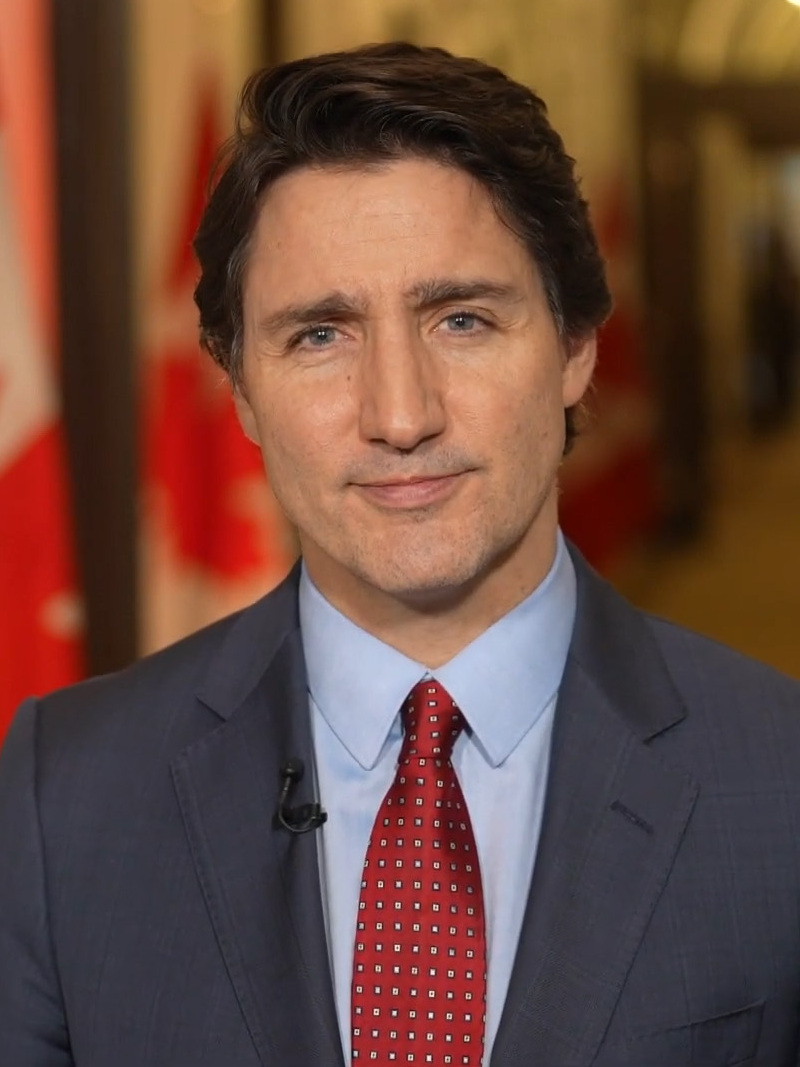
Justin Pierre James Trudeau (born December 25, 1971) is a Canadian politician who served as the 23rd prime minister of Canada from 2015 to 2025. He led the Liberal Party from 2013 until his resignation in 2025 and was the member of Parliament (MP) for Papineau from 2008 until 2025. Trudeau was born in Ottawa, Ontario, as the eldest child of then prime minister Pierre Trudeau. He attended Collège Jean-de-Brébeuf and holds a Bachelor of Arts degree in English from McGill University and a Bachelor of Education degree from the University of British Columbia. He then taught at the secondary school level in Vancouver before returning to Montreal in 2002 to further his studies. From 2002 to 2006, he served as chair of Katimavik, a youth charity. In 2006, he became chair of the Liberal Party's Task Force on Youth Renewal. In the 2008 federal election, Trudeau was elected to represent the riding of Papineau in the House of Commons. He was appointed the Liberal Party's Official Opposition critic for youth and multiculturalism in 2009 and critic for citizenship and immigration in 2010. In 2011, he was appointed to be a critic for post secondary education, youth and sport. Trudeau was elected as leader of the Liberal Party in 2013. In the 2015 federal election, Trudeau led the Liberals to a majority government, bringing the party from third party status with the largest-ever numerical increase of seats by a party in a Canadian election. Aged 43, he became the second-youngest prime minister in Canadian history (after Joe Clark) and was the first to be the child of a previous prime minister. Upon assuming office, Trudeau introduced the Canada Child Benefit, legalized medical assistance in dying, legalized recreational cannabis, pursued Senate reform by creating the Independent Advisory Board for Senate Appointments, and established the federal carbon tax. In foreign policy, Trudeau's government resettled refugees of the Syrian civil war, signed the Paris Agreement on climate change, and negotiated trade deals such as the Canada-United States-Mexico Agreement (CUSMA) and the Comprehensive and Progressive Agreement for Trans-Pacific Partnership (CPTPP). He was found twice to have violated conflict of interest law by Canada's ethics commissioner—first in the Aga Khan affair, and later in the SNC-Lavalin affair. Trudeau's Liberal Party was re-elected with a minority government in the 2019 federal election. From 2020, Trudeau responded to the COVID-19 pandemic and subsequent recession by launching financial aid measures, a nationwide vaccination campaign, and military support. His government also announced a ban on "assault-style" weapons after the 2020 Nova Scotia attacks and introduced a national $10-a-day child care program. He was investigated for a third time by the ethics commissioner for his role in the WE Charity scandal, but was cleared of any wrongdoing. Trudeau led the Liberals to another minority government in the 2021 federal election. He then invoked the Emergencies Act for the first time in Canadian history in response to the Freedom Convoy protests; the Federal Court later ruled against this action. His party signed a confidence and supply agreement with the New Democratic Party (NDP) in early 2022, which resulted in the introduction of the Canadian Dental Care Plan and a framework for national pharmacare before the NDP withdrew from the agreement in late 2024. He also launched a national school food program. Internationally, Trudeau's government responded to the Russian invasion of Ukraine by imposing sanctions on Russia and authorizing humanitarian and military aid to Ukraine. His premiership ended during a trade war with the United States, to which he responded by introducing 25% retaliatory tariffs on $30 billion of U . goods. Following a steady decline in popular support, the sudden resignation of deputy prime minister Chrystia Freeland in December 2024 and an ensuing political crisis, Trudeau announced in January 2025 that he would resign as prime minister and leader of the Liberal Party. He advised the governor general to prorogue Parliament until March 24, while the party held a leadership election. Trudeau remained Liberal leader until Mark Carney was elected as his successor on March 9. He resigned as prime minister five days later and stood down as an MP at the 2025 federal election.