
Topzle Topzle

Guru Nanak

Updated: Wikipedia source
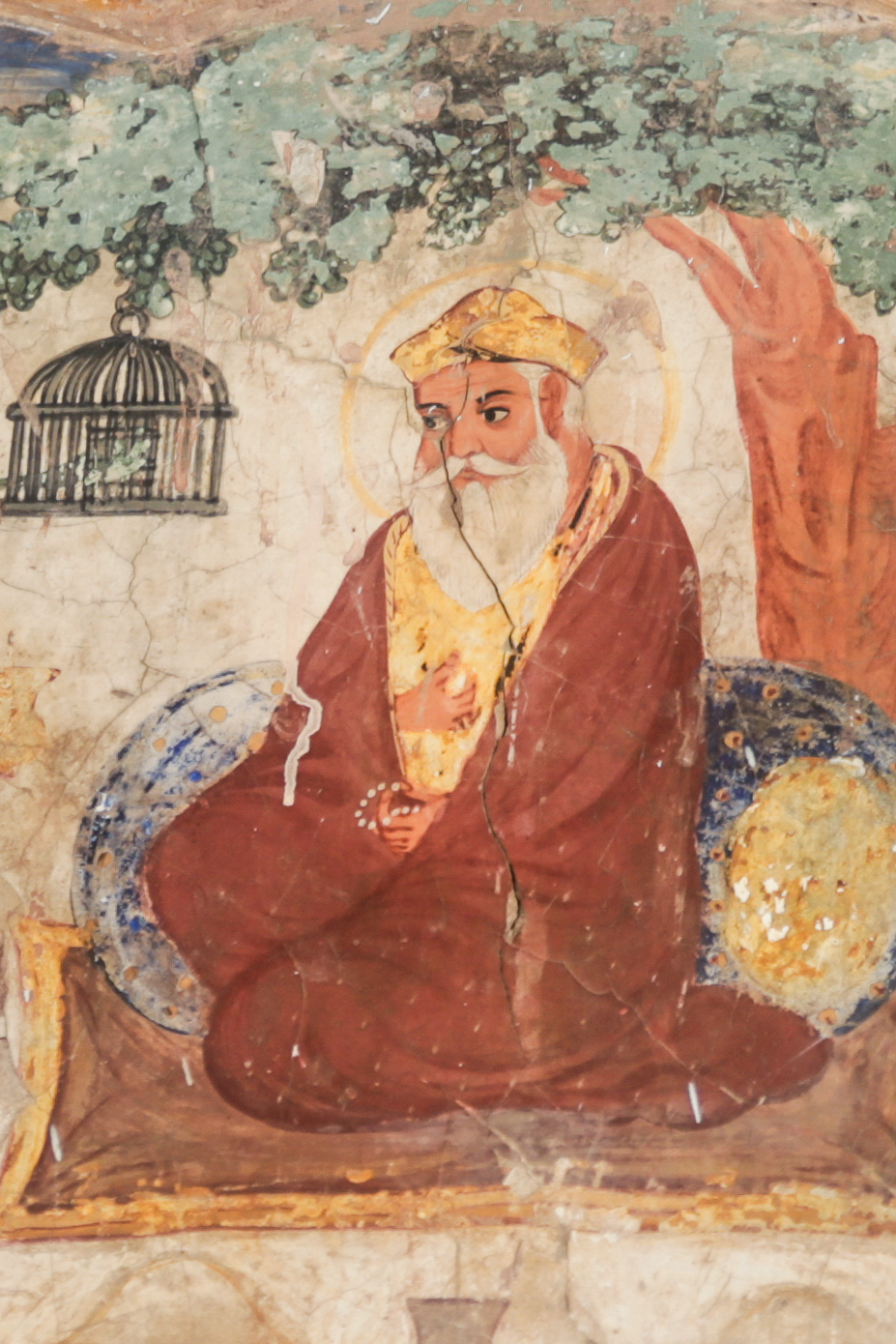
Guru Nanak

Gurū Nānak (15 April 1469 – 22 September 1539; Gurmukhi: ਗੁਰੂ ਨਾਨਕ; pronunciation: [gʊɾuː naːɳəkᵊ], ), also known as Bābā Nānak ('Father Nanak'), was an Indian spiritual teacher, mystic and poet, who is regarded as the founder of Sikhism and is the first of the ten Sikh Gurus. Nanak is said to have travelled far and wide across Asia teaching people the message of Ik Onkar (ੴ, 'One God'), who dwells in every one of his creations and constitutes the eternal Truth. With this concept, he would set up a unique spiritual, social, and political platform based on equality, fraternal love, goodness, and virtue. Nanak's words are registered in the form of 974 poetic hymns, or shabda, in the holy religious scripture of Sikhism, the Guru Granth Sahib, with some of the major prayers being the Japji Sahib (jap, 'to recite'; ji and sahib are suffixes signifying respect); the Asa di Var ('Ballad of Hope'); and the Sidh Gosht ('Discussion with the Siddhas'). It is part of Sikh religious belief that the spirit of Nanak's sanctity, divinity, and religious authority had descended upon each of the nine subsequent Gurus when the Guruship was devolved on to them. His birthday is celebrated as Guru Nanak Gurpurab, annually across India.

Infobox

Born
Nanak15 April 1469 (Katak Pooranmashi, according to Sikh tradition)Rāi Bhoi Kī Talvaṇḍī, Punjab, Delhi Sultanate (present-day Nankana Sahib, Punjab, Pakistan)
Died
22 September 1539 (1539-09-23) (aged 70)Kartarpur, Mughal Empire (present-day Punjab, Pakistan)
Resting place
Gurdwara Darbar Sahib Kartarpur, Kartarpur, Punjab, Pakistan
Spouse
Mata Sulakhani
Children
Sri ChandLakhmi Das
Parent(s)
Mehta Kalu and Mata Tripta
Known for
Founder of Sikhism Writing Japji Sahib Writing Kirtan Sohila
Other names
First MasterPeer Balagdaan (in Afghanistan)Nanakachryaya (in Sri Lanka)Nanak Lama (in Tibet)Nanak Rishi (in Nepal)Nanak Peer (in Iraq)Vali Hindi (in Saudi Arabia)Nanak Vali (in Egypt)Nanak Kadamdar (in Russia)Baba Foosa (in China)
Religion
Sikhism
Based in
Kartarpur
Period in office
c. 1500–1539
Successor
Guru Angad

Tables

· External links
Preceded by—
Sikh Guru 20 August 1507 – 7 September 1539
Succeeded byGuru Angad

References

  1. Macauliffe (1909) notes that, according to the janamsakhi of Mani Singh[broken anchor], Nanak was married at the age of
    https://en.wikisource.org/wiki/Page:The_Sikh_Religion,_its_gurus,_sacred_writings_and_authors_Vol_1.djvu/114
  2. "He was betrothed to Sulakhani, daughter of Mula, a resident of Batala in the present district of Gurdaspur." (Macauliff
    https://en.wikisource.org/wiki/The_Sikh_Religion/Volume_1/Life_of_Guru_Nanak#19
  3. "As a young man Nanak was married to Sulakhni, a daughter of Mula, a native of the newly founded town of Batala who had
  4. Trumpp (1877) transliterates the names of Nanak's children from the Colebrooke janamsakhi[broken anchor] as "Sirī-čand"
    https://en.wikisource.org/wiki/Page:The_Sikh_Religion,_its_gurus,_sacred_writings_and_authors_Vol_1.djvu/125
  5. "In its earliest stage Sikhism was clearly a movement within the Hindu tradition; Nanak was raised a Hindu and eventuall
  6. "Historically, Sikh religion derives from this nirguni current of bhakti religion." (Lorenzen 1995, pp. 1–2)
  7. "Technically this would place the Sikh community's origins at a much further remove than 1469, perhaps to the dawning of
  8. "Few Sikhs would mention these Indic texts and ideologies in the same breadth as the Sikh tradition, let alone trace ele
  9. Various appellations are connected to Nanak's father, some of them are: 'Mehta Kalu', 'Kalu Rai', 'Kalu Chand', 'Kalian
  10. Padmasambhava is alternatively known as 'Guru Rinpoche'.
  11. Gupta 1984, p. 49.
  12. Tribuneindia News Service
    https://www.tribuneindia.com/news/archive/ludhiana/booklet-on-guru-nanak-dev%E2%80%99s-teachings-released-859755
  13. Sikh Formations
    https://doi.org/10.1080%2F17448727.2019.1685641
  14. Sikh Formations
    https://doi.org/10.1080%2F17448727.2019.1685641
  15. Sikh Formations
    https://doi.org/10.1080%2F17448727.2019.1685641
  16. Sikh Formations
    https://doi.org/10.1080%2F17448727.2019.1685641
  17. Sikh Formations
    https://doi.org/10.1080%2F17448727.2019.1685641
  18. Sikh Formations
    https://doi.org/10.1080%2F17448727.2019.1685641
  19. Sikh Formations
    https://doi.org/10.1080%2F17448727.2019.1685641
  20. Sikh Formations
    https://doi.org/10.1080%2F17448727.2019.1685641
  21. Macauliffe 1909, p. lvii.
    https://en.wikisource.org/wiki/Page:The_Sikh_Religion,_its_gurus,_sacred_writings_and_authors_Vol_1.djvu/63
  22. Hayer 1988, p. 14.
  23. Sidhu 2009, p. 26.
  24. Khorana 1991, p. 214.
  25. Prasoon 2007.
  26. Singh 2006, pp. 12–13.
  27. Grewal 1998, p. 6.
  28. Gupta 1984, p. 50.
  29. Guru Nanak: Founder of Sikhism: A Biography
    http://ignca.nic.in/Asi_data/48740.pdf
  30. Gupta 1984, p. 54.
  31. Gupta 1984, p. 52.
  32. Gupta 1984, pp. 50–51.
  33. Gupta 1984, pp. 53–54.
  34. Guru Kian Sakhian Tales of the Sikh Gurus
  35. The Sikh Encyclopedia
    https://www.thesikhencyclopedia.com/sikh-scriptures-and-literature/eighteenth-century-literature/gukbilas-chhevin-patshahi/
  36. The Sikh Encyclopedia
    https://www.thesikhencyclopedia.com/sikh-scriptures-and-literature/eighteenth-century-literature/bansavalinama-dasan-patshahian-ka/
  37. Gurpur Parkash
    https://sikhbookclub.com/Book/Sri-Gur-Pur-Prakash-Part-1
  38. Macauliffe 1909, p. lxxiv.
    https://en.wikisource.org/wiki/Page:The_Sikh_Religion,_its_gurus,_sacred_writings_and_authors_Vol_1.djvu/90
  39. Gupta 1984, pp. 51–52.
  40. Abstracts of Sikh Studies
    https://web.archive.org/web/20230602073320/https://sikhinstitute.org/oc_2019/colbhupindersingh.html
  41. SGPC: Guru Nanak Sahib.
  42. Singha 2009a, p. 125.
  43. McLeod 2009, p. 86.
  44. Nankana: Rai Bular Bhatti.
  45. The Making of Punjab
  46. BBC: Religions 2011.
  47. Macauliffe 2004.
  48. Cunningham 1853, pp. 37–38.
  49. Singh 1984, p. 18.
  50. Singh 2000.
  51. Grewal 1998, p. 7.
  52. Macauliffe 2004, p. 19.
  53. Trumpp 1877.
  54. Cole & Sambhi 1978, p. 9.
    https://archive.org/details/sikhs00cole/age/9
  55. Grewal 1998, p. 8.
  56. Sikh Formations
    https://www.tandfonline.com/doi/full/10.1080/17448727.2021.1873656
  57. MANAS
    https://southasia.ucla.edu/religions/gurus-saints/guru-nanak/
  58. Singh & Kapur 2004, p. 174.
  59. Dilgeer 2008.
  60. Johal 2011, pp. 125, note 1.
  61. Callewaert & Snell 1994, pp. 26–7.
  62. Lorenzen 1995.
  63. Garg 2019.
  64. Gulati 2008, pp. 316–319.
  65. Lorenzen 1995, pp. 41–2.
  66. McLeod 2007, pp. 42–44.
  67. Ménage 1979, pp. 16–21.
  68. McLeod 2004, pp. 127–31.
  69. Oberoi 1994, p. 55.
  70. Callewaert & Snell 1994, pp. 27–30.
  71. The Economic Times
    https://economictimes.indiatimes.com/news/how-to/gurupurab-guru-nanak-devs-5-teachings-that-will-change-the-way-you-look-at-life/articleshow/87804818.cms?from=mdr
  72. Mandair 2013, pp. 131–34.
  73. Cole & Sambhi 1995, pp. 9–12.
  74. Cole & Sambhi 1997, p. 71.
  75. Singha 2009a, p. 104.
  76. www.searchgurbani.com
    http://www.searchgurbani.com/bhai-gurdas-vaaran/vaar/1/pauri/17/line/1
  77. www.sikhitothemax.org
    https://www.sikhitothemax.org/ang?ang=306&source=G
  78. www.searchgurbani.com
    http://www.searchgurbani.com/guru-granth-sahib/ang/442
  79. Singh 2011, pp. 2–8.
  80. Cole & Sambhi 1995, pp. 46, 52–3, 95–6, 159.
  81. Mandair 2009, pp. 372–73.
  82. Nayar & Sandhu 2007, p. 106.
  83. Kaur 2004, p. 530.
  84. Marwha 2006, p. 205.
  85. McLeod 2009, pp. 139–40.
  86. The Oxford Handbook of Sikh Studies
  87. Singh 1982, pp. 12, 18.
  88. Lorenzen 1995, pp. 1–2.
  89. Fenech 2014.
  90. Singha 2009b, p. 8.
  91. Grewal 1998, pp. 28–.
  92. Pruthi 2004, pp. 202–03.
  93. Rinehart 2011
  94. Cole & Sambhi 1978, pp. 9–10.
    https://archive.org/details/sikhs00cole/age/9
  95. Moreno & Colino 2010, p. 207.
  96. Kalsi 2007, pp. 41–50.
  97. Cole & Sambhi 1995, p. 200.
  98. Teece 2004, p. 4.
  99. Shackle & Mandair 2013, pp. xviii–xix.
  100. Sarwal 1996.
  101. "Nanakpanthi Saints of Sindh"
    https://www.thefridaytimes.com/2018/04/13/nanakpanthi-saints-of-sindh/
  102. Abstracts of Sikh Studies
    https://www.academia.edu/41323099
  103. The Cherished Five in Sikh History
  104. Guru Nanak: Founder of Sikhism: A Biography
  105. Two Gurus One Message: The Buddha and Guru Nanak: Legacy of Liberation, Egalitarianism and Social Justice
  106. Shri Guru Nanak Dev: Life, Travels and Teachings
  107. Lucia Galli, “Next stop, Nirvana. When Tibetan pilgrims turn into leisure seekers”, Mongolian and Siberian, Central Asi
  108. Pilgrimage in Tibet
  109. Al Islam
    https://www.alislam.org/articles/baba-guru-nanak-muslim-saint/
  110. Al Islam
    https://www.alislam.org/articles/birth-of-sikhism/
  111. Crossing the threshold : understanding religious identities in South Asia
    https://search.worldcat.org/oclc/52919440
  112. Conversions and Shifting Identities
  113. Hindustan Times
    https://www.hindustantimes.com/chandigarh/nanak-shah-fakir-review-the-movie-is-a-divine-wonder-on-screen/story-ueJSAoo6vJ3KiofwUqbnGO.html
  114. The Indian Panorama
    https://www.theindianpanorama.news/article/allegory-a-tapestry-of-guru-nanaks-travels/
Image
Source:
Tip: Wheel or +/− to zoom, drag to pan, Esc to close.