
Topzle Topzle

Eswatini

Updated: Wikipedia source
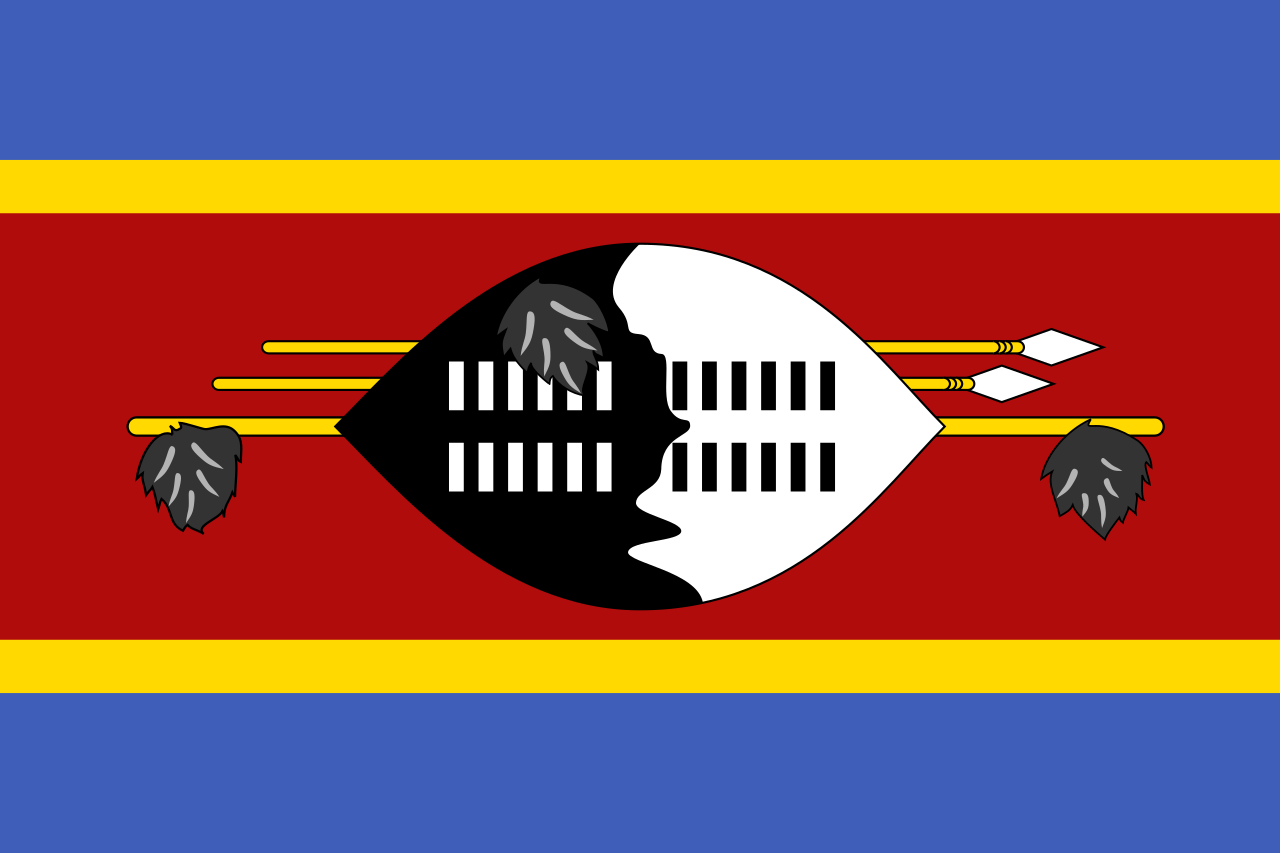
Eswatini

Eswatini or eSwatini, officially the Kingdom of Eswatini, is a landlocked country in Southern Africa. It is bordered by South Africa on all sides except the east, where it shares a border with Mozambique. At no more than 200 km (120 mi) north to south and 130 km (81 mi) east to west, Eswatini is one of the smallest countries in Africa. However, its climate and topography are diverse, ranging from a cool and mountainous highveld to a hot and dry lowveld. The executive capital and largest city is Mbabane, and the legislative and second capital is Lobamba. The population is composed primarily of ethnic Swazis. The prevalent language is Swazi (siSwati in native form). The Swazis established their kingdom in the mid-18th century under the leadership of Ngwane III. The country and the Swazi take their names from Mswati II, the 19th-century king under whose rule the country was expanded and unified. Its boundaries were drawn up in 1881 in the midst of the European Scramble for Africa. After the Second Boer War, the kingdom, under the name of Swaziland, was a British high commission territory from 1903 until it regained its full independence on 6 September 1968. In April 2018, the king changed the official name from Kingdom of Swaziland to Kingdom of Eswatini, the name commonly used in the Swazi language. Eswatini is a developing country that is classified as having a lower-middle income economy. As a member of the Southern African Customs Union and the Common Market for Eastern and Southern Africa, its main local trading partner is South Africa; to ensure economic stability, Eswatini's currency, the lilangeni, is pegged to the South African rand. Eswatini's major overseas trading partners are the United States and the European Union. The majority of the country's employment is provided by its agricultural and manufacturing sectors. Eswatini is a member of the Southern African Development Community, the African Union, the Commonwealth of Nations, and the United Nations. Eswatini's government is an absolute monarchy, the last of its kind in Africa. The country has been ruled by King Mswati III since 1986. Elections are held every five years to determine the House of Assembly and the Senate majority, but political parties are prohibited from running. Eswatini's constitution was adopted in 2005. The Swazi population faces major health issues: HIV/AIDS and (to a lesser extent) tuberculosis are widespread. Twenty-eight percent of the adult population are HIV-positive. As of 2018, Eswatini has the 12th-lowest life expectancy in the world, at 58 years. Also as of 2018, people aged 14 years or younger constitute 35% of the country's population; the median age is 22 years.

Infobox

Capital
Mbabane (executive) Lobamba (legislative) 26°30′S 31°30′E / 26 °S 31 °E / -26 ; 31
Largest city
Mbabane
Official languages
Swazi English
Ethnic groups (2017)
84% Swazi 10% Zulu 6% others
Religion (2017)
89 % Christianity 84 % Protestantism 3 % Roman Catholic 1 % other Christian 7 % no religion 2 % traditional faiths 0 % others
Demonym
Swazi
Government
Unitary diarchic absolute monarchy
• King
Mswati III
• Queen Mother
Ntfombi
• Prime Minister
Russell Dlamini
• Chief Justice
Bheki Maphalala
Legislature
Parliament
• Upper house
Senate
• Lower house
House of Assembly
• Independence granted
6 September 1968
• United Nations membership
24 September 1968
• Current constitution
2005
• Renaming
19 April 2018
• Total
$4 billion (168th)
• Water (%)
0
• 2023 estimate
1,236,126 (155th)
• 2017 census
1,093,238
• Density
66 /km2 (173 /sq mi) (135th)
GDP (PPP)
2023 estimate
• Per capita
$3,995 (122nd)
GDP (nominal)
2023 estimate
Gini (2016)
54 high inequality
HDI (2023)
0 medium (126th)
Currency
Lilangeni (SZL) South African rand (ZAR)
Time zone
UTC 2 (SAST)
Calling code
268
ISO 3166 code
SZ
Internet TLD
sz

Tables

· Geography › Climate
Summer
Summer
Spring
Summer
September–October
November–March
18 °C (64 °F)
20 °C (68 °F)
Autumn
Autumn
Spring
Autumn
September–October
April–May
18 °C (64 °F)
17 °C (62 °F)
Winter
Winter
Spring
Winter
September–October
June–August
18 °C (64 °F)
13 °C (55 °F)
Spring
September–October
18 °C (64 °F)
Summer
November–March
20 °C (68 °F)
Autumn
April–May
17 °C (62 °F)
Winter
June–August
13 °C (55 °F)
· Administrative divisions
1
1
Region #
1
Region
Hhohho
Capital
Mbabane
Area (km2)
3,625
Population (2017 census)
320,651
2
2
Region #
2
Region
Manzini
Capital
Manzini
Area (km2)
4,093
Population (2017 census)
355,945
3
3
Region #
3
Region
Lubombo
Capital
Siteki
Area (km2)
5,849
Population (2017 census)
212,531
4
4
Region #
4
Region
Shiselweni
Capital
Nhlangano
Area (km2)
3,786
Population (2017 census)
204,111
Region #
Region
Capital
Area (km2)
Population (2017 census)
1
Hhohho
Mbabane
3,625
320,651
2
Manzini
Manzini
4,093
355,945
3
Lubombo
Siteki
5,849
212,531
4
Shiselweni
Nhlangano
3,786
204,111

References

  1. In the Swazi language, emaSwati (plural) and liSwati (singular) are used.
  2. /ˌɛswɑːˈtiːni/ ⓘ ESS-wah-TEE-nee; Swazi: eSwatini [ɛswáˈtʼiːni]
  3. /ˈswɑːzilænd/ ⓘ SWAH-zee-land
  4. Historically called KaNgwane, also known by its former official names Swaziland and the Kingdom of Swaziland,
  5. "The 2017 Population and Housing Census Volume 3"
    http://www.gov.sz/images/FinanceDocuments/Volume-3.pdf
  6. "Eswatini"
    https://www.state.gov/reports/2022-report-on-international-religious-freedom/eswatini/
  7. "Diarchies Of The Modern World"
    https://www.worldatlas.com/articles/diarchies-of-the-modern-world-countries-with-two-rulers-or-heads-of-state.html
  8. "Laws"
    https://www.wipo.int/edocs/lexdocs/laws/en/sz/sz010en.pdf
  9. "Archived copy"
    https://web.archive.org/web/20190929043736/https://www.ilo.org/dyn/natlex/docs/ELECTRONIC/71892/111269/F1996008974/SWZ71892.pdf
  10. "Constitution"
    http://www.gov.sz/images/stories/Constitution%20of%20%20SD-2005A001.pdf
  11. "Population, total – Eswatini"
    https://data.worldbank.org/indicator/SP.POP.TOTL?locations=SZ
  12. "Swaziland Releases Population Count from 2017 Census"
    https://web.archive.org/web/20180807130048/https://swaziland.unfpa.org/en/news/swaziland-releases-population-count-2017-census
  13. IMF
    https://www.imf.org/en/Publications/WEO/weo-database/2023/October/weo-report?c=734,&s=NGDPD,PPPGDP,NGDPDPC,PPPPC,&sy=2020&ey=2028&ssm=0&scsm=1&scc=0&ssd=1&ssc=0&sic=0&sort=country&ds=.&br=1
  14. "Gini Index coefficient"
    https://web.archive.org/web/20210204222738/https://www.cia.gov/the-world-factbook/field/gini-index-coefficient-distribution-of-family-income/country-comparison/
  15. "Specific country data"
    https://hdr.undp.org/data-center/specific-country-data#/countries/SWZ
  16. Philip Bonner (1982). Page 9
  17. BBC News
    https://www.bbc.com/news/world-africa-43821512
  18. Times Of Swaziland
    https://web.archive.org/web/20190327101352/http://www.times.co.sz/news/118373-kingdom-of-eswatini-change-now-official.html
  19. Kings, Commoners and Concessionaires
  20. The Swazi: A South African Kingdom
Image
Source:
Tip: Wheel or +/− to zoom, drag to pan, Esc to close.