
Catholic Church in the United States
Updated: Wikipedia source
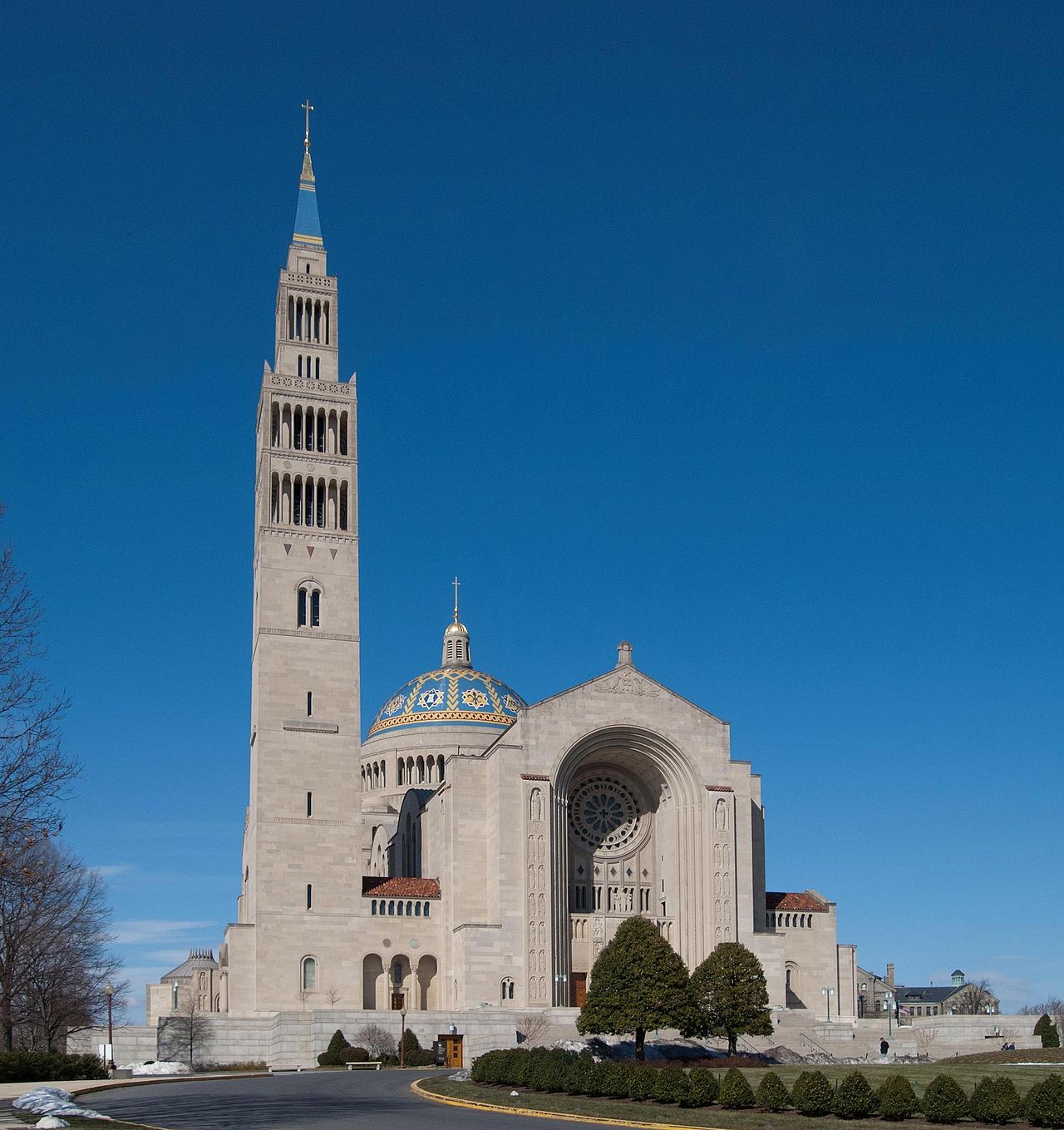
In the United States, the Catholic Church is the largest single Christian denomination and the second-largest religious tradition after Protestantism. As of 2024, an estimated 19% to 22% of the adult population in the U . identifies as Catholic. The United States has the fourth-largest Catholic population in the world, following Brazil, Mexico, and the Philippines. Catholicism has had a significant cultural, social, and institutional presence in the United States, reflected in its parishes, schools, universities, hospitals, charitable organizations, and participation in public life. Catholicism first entered the territories that would become the United States through Spanish colonization, with the earliest documented Mass celebrated in 1526 by Dominican friars, and through French colonization. More than any other empire, the French claimed and assumed vast stretches of the continent, notably the Great Lakes regions and the Mississippi Valley, which included Louisiana. During the colonial era, Maryland was founded as an English colony with a notable Catholic presence, contrasting with the predominantly Protestant colonies of Massachusetts and Virginia. Pennsylvania's policy of religious toleration also attracted Catholic settlers. Early Catholic communities were concentrated mainly in Maryland, Pennsylvania, and New York. Anti-Catholic sentiment persisted in several colonies, shaped by the sectarian divisions of the English Civil War and the influence of Puritanism. During the American Revolution, Catholics served in the Continental Army, and some served in political and military roles, most notably Charles Carroll of Carrollton. The revolutionary government maintained an alliance with France and Spain, predominantly Catholic nations, who contributed troops, naval support, and financial assistance to the American cause. George Washington, an Anglican, publicly supported religious toleration; as both general and president, he attended services of various Christian denominations, including Catholic liturgies, and issued statements affirming the civil rights and religious freedom of Catholics. Beginning in the 1840s, large waves of immigrants from Ireland, southern Germany, and other predominantly Catholic regions and countries contributed to rapid growth in the Catholic population, making Catholicism the largest single Christian denomination in the United States by the late 19th century. Additional Catholic populations entered the country as former Spanish territories were incorporated into the United States. By the early 20th century, roughly one-sixth of the U . population was Catholic. Throughout American history, anti-Catholic movements—including the Know Nothing movement in the 1840s, the American Protective Association in the 1890s, and the second Ku Klux Klan in the 1920s—periodically targeted Catholics. In the late 20th century, the Catholic Church in the United States faced renewed scrutiny due to revelations of clerical sexual abuse and institutional responses to those cases.