| Leviticus 16 (Day of Atonement) | Gospel Narrative |
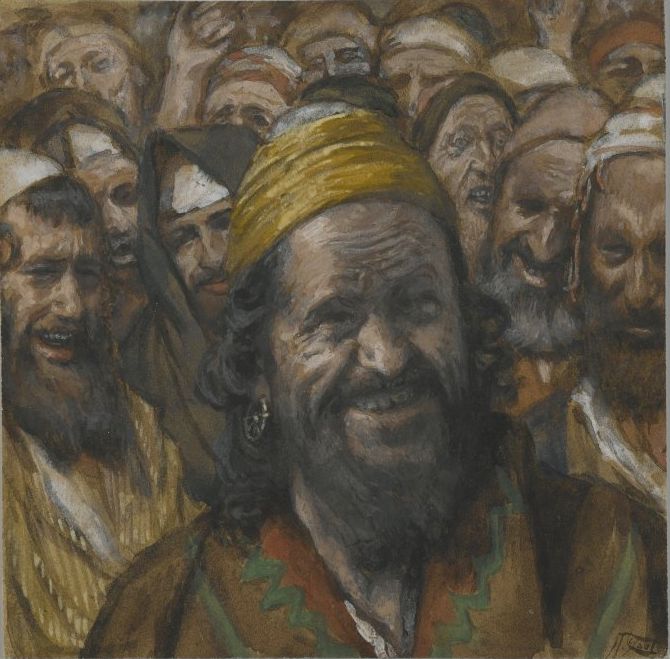
| Two goats are set before the community, lots distinguish the goat for the Lord from the goat for Azazel, and the people witness the assignment | Two prisoners are set before the crowd, Jesus of Nazareth and Barabbas, and the people determine the outcome by acclamation rather than by lots |
| The goat for the Lord is killed as the sin offering | Gospel Jesus is condemned and executed, which early Christian texts interpret as a once for all sacrificial offering that fulfills and supersedes temple sacrifice |
| The scapegoat bears the iniquities of the community and is sent out alive to the wilderness | Barabbas the ληιστης is released alive back into the social body, which typological readers construe as the bearer of communal transgression displaced from the innocent one |
| The priestly rite involves confession over the scapegoat | The crowd's shouted choice and the Matthean cry "Let his blood be on us and on our children" function as the narrative moment of transfer in the typology, though Brown and others caution that the legal setting and absence of lots mark a transformation rather than replication |