
Baltic states
Updated: Wikipedia source
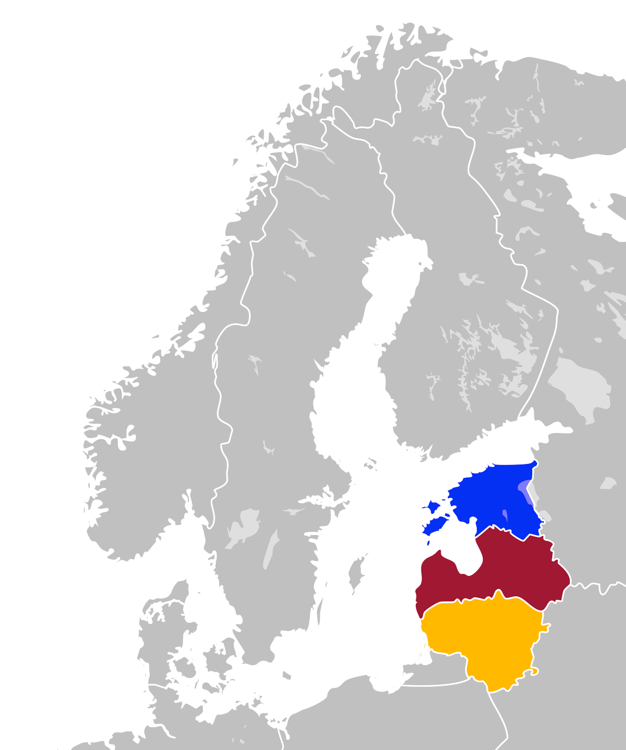
The Baltic states or the Baltic countries is a geopolitical term encompassing Estonia, Latvia, and Lithuania. All three countries are members of NATO, the European Union, the Eurozone, the Baltic Assembly, and the OECD. The three sovereign states on the eastern coast of the Baltic Sea are sometimes referred to as the "Baltic nations", less often and in historical circumstances also as the "Baltic republics", the "Baltic lands", or simply the Baltics. The region was inhabited by various peoples including the Baltic tribes between antiquity, Christianization, and Middle Ages but they have been subjugated by various foreign rules before their colonizations by the Russian and German Empires respectively. Near the end of World War I in 1918, all three Baltic states became independent countries but their sovereignty was interrupted by the start of World War II when the Soviet Union at first, began to occupy and annex all three Baltic states in 1940, followed by Nazi Germany in 1941, then re-occupation by the Soviets in 1944 where they were then faced isolation by the outside world. In 1989, during the anti-communist upheavals in Eastern Europe, the Baltic states struggled to regain their independence from Soviet domination, which culminated in their restorations of independence in 1991 in when the Soviet Union disintegrated. Since their restorations of independence, all three Baltic countries are classified as high-income economies by the World Bank and maintain a very high Human Development Index. The three governments engage in intergovernmental and parliamentary cooperation. There is also frequent cooperation in foreign and security policy, defence, energy, and transportation.