
2024 United States presidential election
Updated: Wikipedia source
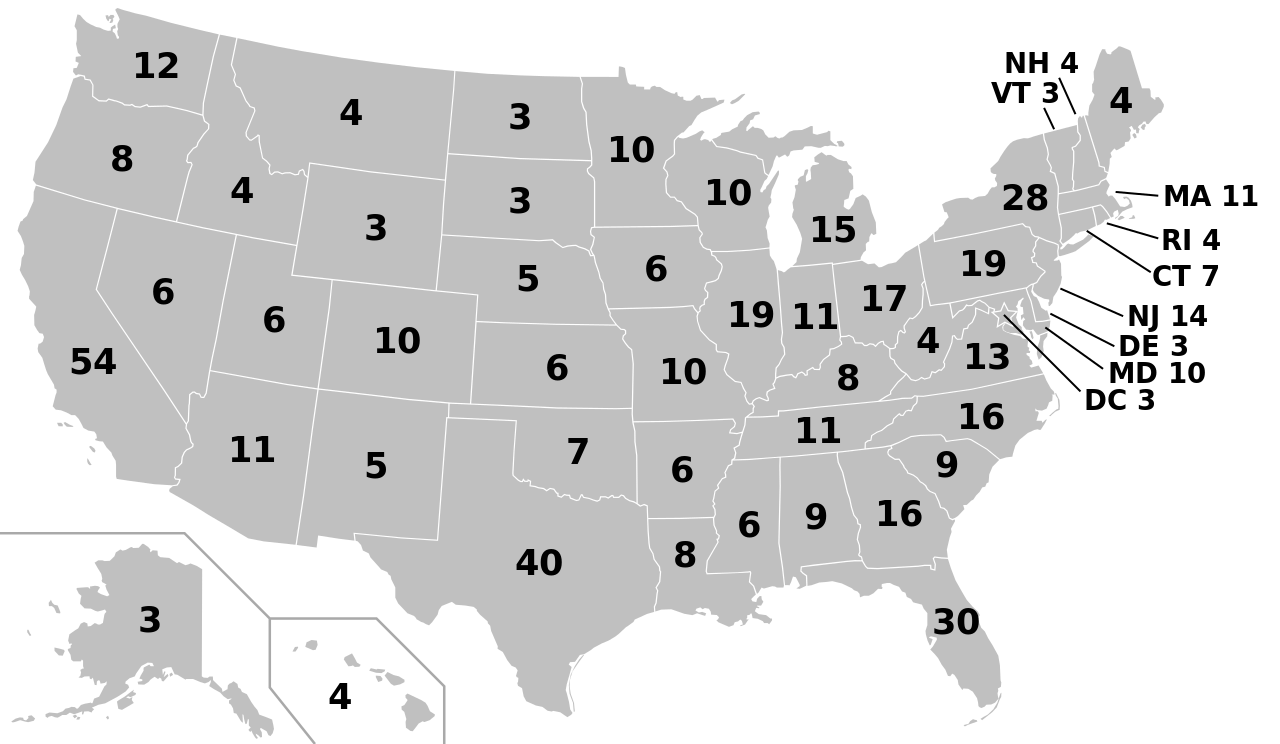
Presidential elections were held in the United States on November 5, 2024. The Republican ticket of former president Donald Trump and Ohio junior senator JD Vance defeated the Democratic ticket of incumbent vice president Kamala Harris and Minnesota governor Tim Walz. The incumbent president, Joe Biden of the Democratic Party, initially ran for re-election as its presumptive nominee, facing little opposition in the Democratic primaries. However, what was broadly considered a poor debate performance in June 2024 intensified concerns about his age and health, and led to calls within his party for him to leave the race. After initially declining to do so, Biden ultimately withdrew from the race on July 21, 2024, becoming the first eligible incumbent president to withdraw since Lyndon B. Johnson in 1968. Biden immediately endorsed Harris, who officially became the party's presidential nominee on August 5 and became the first presidential nominee who did not participate in the primaries since Vice President Hubert Humphrey in 1968. Harris selected Walz as her running mate. Trump, who lost the 2020 presidential election to Biden, ran for reelection to a nonconsecutive second term. He was shot in the ear in an assassination attempt on July 13, 2024. Trump was nominated as the Republican Party's presidential candidate during the 2024 Republican National Convention alongside his running mate, Vance. The Trump campaign ticket supported mass deportation of illegal immigrants; an isolationist "America First" and "peace through strength" foreign policy agenda with support of Israel in the Gaza war and skepticism of Ukraine in its war with Russia; policies hostile to transgender Americans; and tariffs. The campaign also made false and misleading statements, including claims of electoral fraud in 2020. Trump's political movement was seen by some historians and some former Trump administrators as authoritarian. Trump won the election over Harris, winning 312 Electoral College votes to Harris' 226. Trump won all of the seven swing states, including the first win of Nevada by a Republican since 2004. Trump won the national popular vote with a plurality of 49 %, making him the first Republican to win the popular vote since George W. Bush in 2004 (unlike his 2016 victory and 2020 defeat). Trump's victory made him the second U . president to be elected to a nonconsecutive second term, after Grover Cleveland in 1892. Surveys of 2024 election voters, nationally and in key states, found that many viewed economic conditions negatively and were motivated by the issue when they voted. Other issues that motivated voters include immigration, the state of democracy, and abortion.