
Topzle Topzle

2002 Gujarat violence

Updated: Wikipedia source
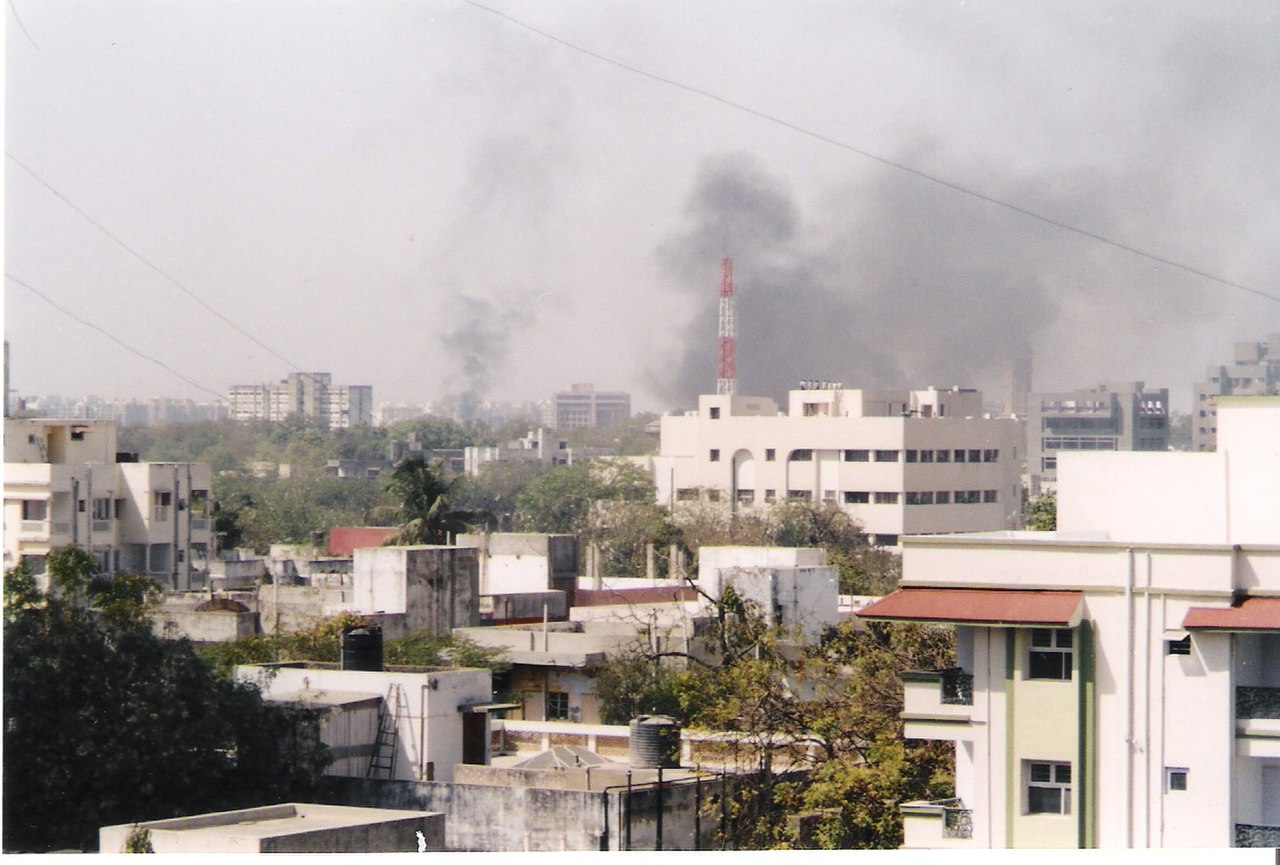
2002 Gujarat violence

On 28 February 2002, a three-day period of inter-communal violence began in the western Indian state of Gujarat. The burning of a train in Godhra the day before, which caused the deaths of 58 Hindu pilgrims and karsevaks (religious volunteers) returning from Ayodhya, is cited as having instigated the violence. Following the initial violence, further outbreaks occurred in Ahmedabad for three months; statewide, even further outbreaks of violence against the minority Muslim population of Gujarat continued for the next year. According to official figures, the riots ended with 1,044 dead, 223 missing, and 2,500 injured. Of the dead, 790 were Muslim and 254 Hindu. The Concerned Citizens Tribunal Report estimated that as many as 1,926 may have been killed. Other sources estimated death tolls in excess of 2,000. In addition to many brutal killings, many rapes were reported, as well as widespread looting and destruction of property. Narendra Modi, then Chief Minister of Gujarat and later Prime Minister of India, was accused of condoning the violence, as were police and government officials who allegedly directed the mob and gave them lists of Muslim-owned properties. Though officially classified as a communal riot, the events of 2002 have been described as a pogrom by many scholars; some commentators alleged that the attacks had been planned and that the attack on the train was a "staged trigger" to obfuscate what was actually premeditated violence. Instances of mass violence include the Naroda Patiya massacre that took place right next to a police training camp; the Gulbarg Society massacre that killed, among others, Ehsan Jafri, a former parliamentarian; and several incidents in Vadodara city. Scholars studying the 2002 riots state that they were premeditated and constituted a form of ethnic cleansing, and that the state government and law enforcement were complicit in the violence. Observers have stated that these events had met the "legal definition of genocide". In 2012, Modi was cleared of complicity in the violence by Special Investigation Team (SIT) appointed by the Supreme Court of India. The SIT also rejected claims that the state government had not done enough to prevent the riots. The Muslim community reacted with anger and disbelief. The Supreme Court rejected multiple legal challenges to the SIT report in subsequent years, and in a 2022 decision ended legal proceedings involving Modi and allegations of state complicity. Approximately 600 individuals were accused in cases related to specific incidents: As of 2022, approximately 200 people had been convicted, and 150 had received life sentences, with various appeals pending.

Infobox

Location
Gujarat, India
Date
February – March 2002
Target
Muslims in Gujarat
Attack type
Pogrom, arson, mass rape, kidnapping, mass murder, rioting
Deaths
Official: 790 Muslims and 254 Hindus Other sources: 1,926 to 2,000 total (predominantly Muslims)
Injured
2,500
Perpetrators
Rashtriya Swayamsevak Sangh Vishva Hindu Parishad Bajrang Dal Bharatiya Janata Party Government of Gujarat
Motive
Revenge for the Godhra train burning State terrorism Ethnic cleansing

References

  1. The Concerned Citizen's Tribunal (CCT) was an eight-member committee headed by V. R. Krishna Iyer, retired Judge of Supr
  2. Human Rights Watch alleged that state and law enforcement officials were harassing and intimidating key witnesses, NGOs,
  3. www
    https://www.youtube.com/watch?v=TKJDhISTtTk
  4. Heidelberg Papers in South Asian and Comparative Politics
    http://archiv.ub.uni-heidelberg.de/volltextserver/4127/1/hpsacp17.pdf
  5. The Ethics of Terrorism: Innovative Approaches from an International Perspective
    https://books.google.com/books?id=w5SlnZilfMMC&q=2000+deaths+gujarat+riots&pg=PA28
  6. Women and Property in Urban India
    https://www.researchgate.net/publication/319504819
  7. The Fundamentalist Mindset: Psychological Perspectives on Religion, Violence, and History
    https://books.google.com/books?id=oflQEAAAQBAJ&dq=In+2002+ethnic+violence+in+Gujarat,+which+for+decades+has+had+the+highest+level+of+ethnic+violence,+reached+Partition-level+proportions.&pg=PA212
  8. Routine violence: nations, fragments, histories
    https://archive.org/details/routineviolencen0000pand/page/187
  9. The Fundamentalist City?: Religiosity and the Remaking of Urban Space
    https://books.google.com/books?id=uKnHBQAAQBAJ&pg=PT34
  10. Communal Violence, Forced Migration and the State: Gujarat since 2002
    https://books.google.com/books?id=MiW8CwAAQBAJ&pg=PA98
  11. Resurgent India
    https://books.google.com/books?id=8xxqCwAAQBAJ&pg=PA70
  12. A Companion to the Anthropology of India
    https://books.google.com/books?id=98uLj5FpTHQC
  13. Ghassem-Fachand 2012, p. 1-2.
  14. Haunted Narratives: Life Writing in an Age of Trauma
    https://search.worldcat.org/oclc/841909784
  15. "Gujarat riot death toll revealed"
    https://news.bbc.co.uk/1/hi/world/south_asia/4536199.stm
  16. www
    http://www.sabrang.com/tribunal/
  17. Contemporary State Terrorism: Theory and Practice
  18. The Wire (India)
    https://m.thewire.in/article/communalism/2002-gujarat-anti-muslim-pogrom
  19. Democratic Culture: Historical and Philosophical Essays
    https://books.google.com/books?id=C4YSqkgAWUsC&pg=PA143
  20. A Micro-Sociology of Violence: Deciphering Patterns and Dynamics of Collective Violence
    https://books.google.com/books?id=-QjKAwAAQBAJ&pg=PA18
Image
Source:
Tip: Wheel or +/− to zoom, drag to pan, Esc to close.